

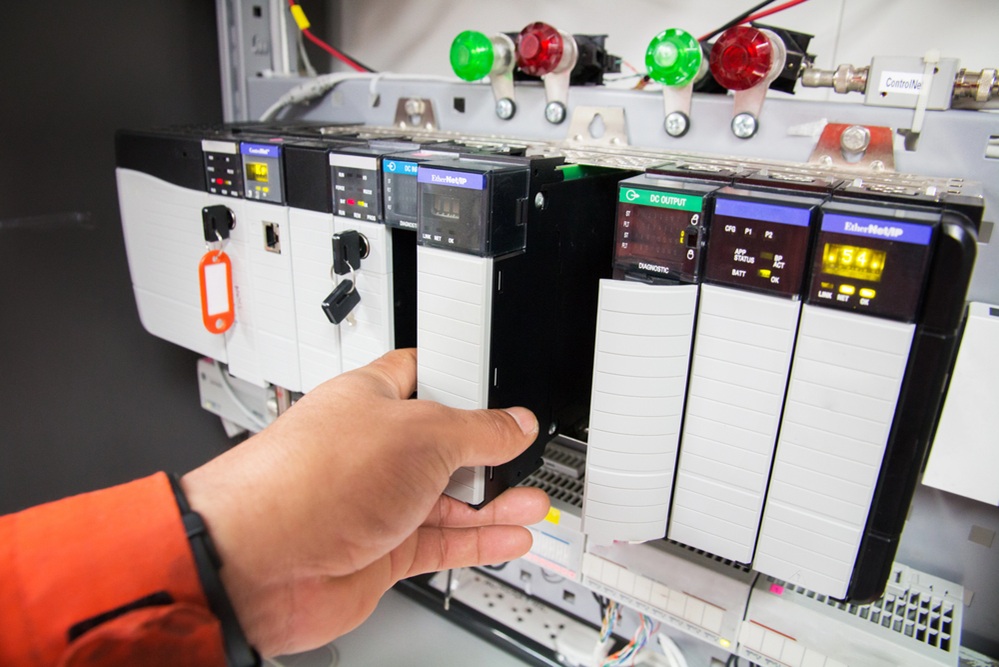
Executive summary: Aging PLC-based control systems increase downtime risk and hide operational data, yet complete replacements are often unaffordable. A phased, risk-prioritized modernization—targeting CPUs, communication modules and selected I/O—combined with careful sourcing of refurbished or surplus parts can extend asset life, enable IIoT connectivity, and deliver measurable ROI without a large capital outlay.
-
Introduction: the “Legacy” dilemma
Imagine a mid-sized production line running on a reliable but obsolete PLC family—Siemens S5 or early Allen-Bradley SLC controllers, for example. They keep the lights on until a unique module fails and replacement parts are unavailable. The result: emergency downtime, rushed engineering changes, and lost production. Beyond the immediate disruption, legacy environments carry hidden costs: scarce spare parts, minimal telemetry for process optimization, and the retirement of engineers who understand legacy ladder logic and bespoke architectures.
Modernization need not mean a tear-down. A strategic retrofit—phased, targeted, and data-driven—typically provides the best balance between cost, risk and business value.
-
Assessing your automation assets: audit before you act
Begin with a disciplined asset audit. A reliable inventory should list controller models, firmware versions, I/O counts and network interfaces; tie each component to the process it serves (safety loop, critical quality control, or non-critical auxiliary function).
- Manufacturer support: Is the PLC still supported for firmware and critical patches?
- Software compatibility: Can engineering tools be run on modern OS platforms, or do they require legacy virtual machines?
- Spare parts availability: Are key modules available new, refurbished or via reputable surplus vendors?
Not all assets require immediate replacement. Use a simple risk-stratification approach:
- High risk: Obsolete controllers that serve safety or high-availability functions, or modules with zero spare availability.
- Medium risk: Process control loops where slow failure would cause quality degradation but not immediate shutdown.
- Low risk: Stable, non-critical loops or equipment planned for scheduled replacement.
Actionable tip: Build a facility “Risk Heatmap” to visually prioritise investment—this clarifies where budget delivers the most risk reduction.
-
Phased migration: the cost-effective strategy
Contrast two approaches: the disruptive “rip-and-replace” method versus a phased migration. Rip-and-replace replaces entire controllers and I/O, often requiring full rewiring, extended commissioning and a high probability of integration bugs. Phased migration reduces both capital and operational risk by sequencing changes.
A typical phased sequence:
- HMI modernization: Replace ageing operator panels with modern HMIs to gain diagnostics and alarms without changing control logic.
- Communications uplift: Add Ethernet/IP, OPC UA or protocol gateways to legacy PLCs to enable data acquisition for analytics.
- CPU upgrades: When CPUs fail or when increased processing is needed, migrate to modern processors while retaining field I/O via gateway/adapters.
- Targeted I/O replacement: Replace only the I/O modules that require higher precision or faster responses (smart I/O), leaving stable digital points untouched.
Hybrid architectures are often the pragmatic choice: new processors or IIoT gateways communicate with legacy I/O through protocol converters or chassis adapters, avoiding the time and cost of rewiring thousands of points. For planning detail and a staged technical roadmap, see this comprehensive modernization guide which breaks down the technical stages of migration.
-
Sourcing hardware: balancing quality and budget
Supply chains for industrial components are volatile: OEM lead times can be long and prices elevated. For legacy support, the aftermarket has matured—”new surplus” and factory-refurbished modules offer cost-effective, engineering-viable alternatives. When procuring non-factory-new parts, insist on documented testing, refurbishment logs, and limited warranties where available.
Cross-border e-commerce platforms and specialist distributors make it easier to locate rare Siemens, Mitsubishi or Allen-Bradley modules that local channels no longer stock. Platforms specializing in industrial automation, such as ChipsGate, can bridge this gap by providing access to a large inventory of legacy and active PLC components.
Procurement checklist: verify seller reputation, request visual and functional test reports, require serial number traceability, and prefer sellers offering return/testing warranties.
-
Key technologies to prioritise in a budget upgrade
Gateways & protocol converters: These translators connect Modbus, ProfiBus or legacy serial devices to MQTT or OPC UA endpoints, enabling cloud dashboards and analytics without altering control logic.
Smart I/O modules: Replace only I/O channels that need faster sampling, higher ADC resolution or integrated diagnostics—this is a precise way to boost performance by exception.
HMI modernization: Modern touchscreen HMIs greatly improve operator diagnostics and can be implemented with minimal wiring changes, often delivering the fastest user-perceived improvement for the least cost.
-
FAQ: common questions about factory retrofitting
Q: Is it risky to mix old and new PLC brands?
A: While single-vendor environments simplify support, modern open protocols (OPC UA, MQTT, Ethernet/IP) and disciplined network segmentation make multi-vendor systems stable when managed with clear architecture and change control.
Q: How much downtime should I expect during a phased upgrade?
A: Phased upgrades are designed to minimise production impact; many tasks (HMI swaps, gateway installation) can be scheduled during weekend or planned maintenance windows. Full replacements typically require longer planned outages and higher re-commissioning effort.
Q: Can I upgrade the CPU and keep old I/O?
A: Yes. In many architectures you can retain legacy I/O (for example, Allen-Bradley 1771 I/O) and modernise the controller via a chassis adapter or protocol gateway—this saves rewiring costs while enabling improved processing and communications.
-
Conclusion: future-proofing on your terms
Budget constraints should not freeze progress. A disciplined audit, risk-driven prioritisation, and a phased migration strategy enable factories to modernise incrementally while preserving cash flow. The real objective is not only fault-free equipment but also the acquisition of actionable data—insights that steadily improve throughput, quality and decision-making.
Next step: run a basic asset inventory and heatmap this week; identify one near-term HMI or communications upgrade that will unlock diagnostics or telemetry. Modernization is a series of manageable steps—taken thoughtfully, they compound into substantial operational improvement.