

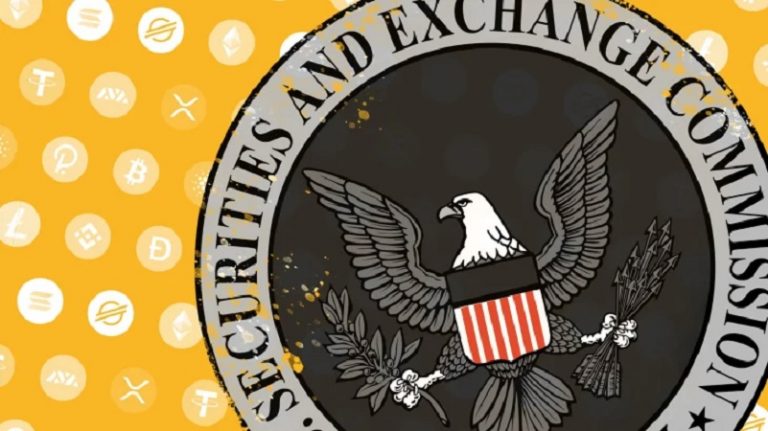
The U.S. Securities and Exchange Commission (SEC) has signaled it is prepared to develop its own cryptocurrency regulations should Congress fail to enact the Digital Asset Market Clarity Act, commonly known as the CLARITY Act.
This development highlights the growing urgency surrounding digital asset oversight in the United States as lawmakers race against the August congressional recess.
In his recent remarks, SEC Chair Paul Atkins emphasized the need for legislative action to provide long-term certainty for digital asset markets, stating that only Congress can deliver the durable framework required to support innovation while protecting investors.
Register for Tekedia Mini-MBA edition 20 (June 8 – Sept 5, 2026).
Register for Tekedia AI in Business Masterclass.
Join Tekedia Capital Syndicate and co-invest in great global startups.
Atkins, who assumed the role of SEC Chair in April 2025, has consistently advocated for a more innovation-friendly regulatory environment. He has described the CLARITY Act as essential to future-proofing the crypto sector and positioning the US as a global leader in blockchain and digital finance.
His comments come after the Polymarket disclosed that the odds of the Act being signed into law in 2026 dropped sharply to around 32%, marking an all-time low as lawmakers return to Washington for critical discussions.
The CLARITY Act Aims to Reshape U.S. Crypto Oversight

The CLARITY Act seeks to create a comprehensive regulatory framework for digital assets by clearly dividing responsibilities between the SEC and the Commodity Futures Trading Commission (CFTC).
It would define when tokens qualify as securities or commodities, establish rules for exchanges, brokers, and dealers, and introduce stronger investor protections alongside measures to combat illicit finance.
The bill has garnered bipartisan support and endorsements from major financial institutions, aiming to move the U.S. beyond the current “regulation by enforcement” approach that has created uncertainty for the crypto industry.

Industry observers note that passage of the CLARITY Act could position the United States as a leader in responsible crypto innovation while maintaining robust safeguards for consumers.
Proponents argue it would provide the long-sought regulatory clarity needed to foster growth, attract investment, and keep technological development onshore. Without it, market participants face continued ambiguity that hampers compliance and innovation.
The SEC’s readiness to act independently underscores the agency’s willingness to step in amid legislative delays. Under current leadership, the commission has indicated support for structured rulemaking that aligns with broader policy goals of balancing innovation with investor protection.
However, agency-led rules could differ in scope and flexibility from comprehensive legislation, potentially leading to a more prescriptive approach that some in the industry fear might stifle smaller players or decentralized projects.
As the Senate considers advancing the bill, timing remains critical. Lawmakers are balancing the CLARITY Act against other priorities, with a potential floor vote eyed in early August.
Failure to pass the legislation before the recess would extend uncertainty into the fall, increasing the likelihood of SEC intervention through formal rulemaking processes.
This situation reflects broader tensions in U.S. crypto policy. For years, the absence of tailored digital asset laws has led to high-profile enforcement actions, market volatility, and competitive disadvantages against jurisdictions like the European Union and parts of Asia that have implemented clearer frameworks.
The CLARITY Act represents a significant attempt to address these gaps by creating functional requirements for market participants, enhancing anti-money laundering standards, and supporting blockchain innovation.
Crypto market participants, from major exchanges to decentralized finance protocols, are closely monitoring developments. Passage of the bill could boost confidence and spur institutional adoption, while prolonged delays or a shift to SEC rulemaking might prompt mixed reactions welcomed by those seeking any certainty but criticized by others preferring legislative solutions that involve broader stakeholder input.
The coming weeks will prove decisive. Whether through congressional action or administrative measures, clearer rules for crypto appear inevitable. The outcome will shape not only the domestic industry but also America’s standing in the global race for technological and financial leadership in digital assets.