

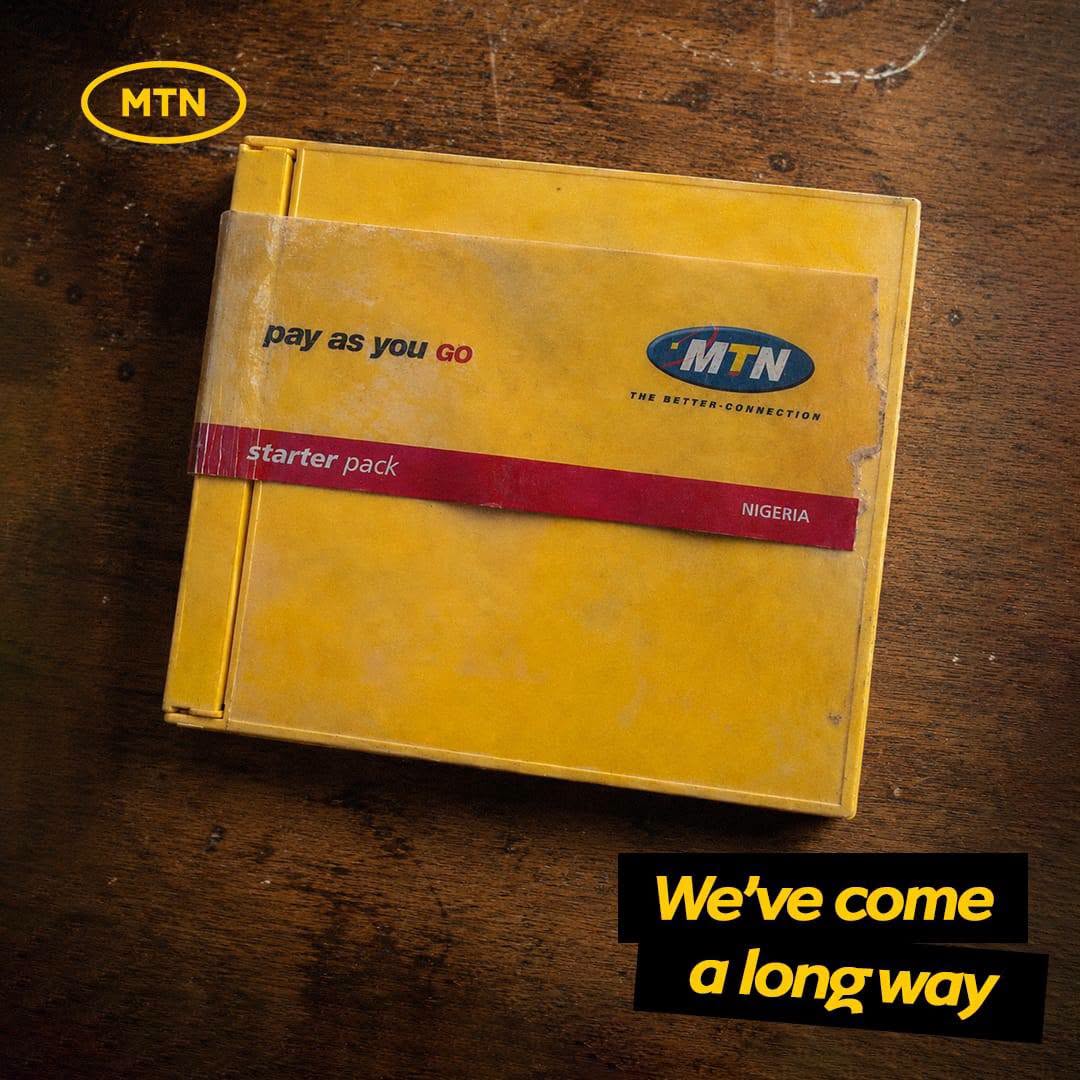
When MTN recently shared a picture of one of its earliest Nigerian starter packs on Facebook with the simple caption, “We’ve come a long way,” it was not advertising a product. It was reminding millions of Nigerians about a shared past. The yellow package, once an ordinary container for a SIM card, suddenly became something much bigger. It became a trigger for memories, conversations, humour, and expressions of loyalty.
The comments that followed reveal an important lesson for organisations in today’s digital world. People are no longer interested in simply consuming brand messages. They want to participate in them. They want to add their own stories, compare experiences, and become part of the narrative. That is exactly what happened.
Some users proudly declared, “I’m still having this pack.” Others identified the specific version they owned by calling it “the big SIM pack of 2003,” “the CD case,” or “the wallet version.” A few jokingly asked how much MTN would pay if they returned the old package, while others wondered whether there was a reward waiting for customers who had remained loyal for over two decades.
Register for the next Tekedia Mini-MBA.
Register for Tekedia AI in Business Masterclass.
Join Tekedia Capital Syndicate and co-invest in great global startups.
For many brands, history is treated as something that belongs in company archives or anniversary documentaries. MTN demonstrated that history can become an active communication asset when it invites people to remember together. A simple photograph transformed thousands of individual experiences into one collective conversation.
The old starter pack stopped being just a piece of packaging. It became a symbol of Nigeria’s early mobile revolution. For many people, it represented their first mobile phone, their first SIM registration, their first text message, or even their first salary spent on telecommunications. Those memories could not be recreated through conventional advertising because they already belonged to the audience.
The Facebook post simply opened the door. Interestingly, the users did not merely agree with MTN’s message. They expanded it. One person remembered the CD-shaped package. Another recalled the wallet edition. Others confirmed they still owned the package after more than twenty years. Collectively, they reconstructed the evolution of MTN’s early products without the company having to explain anything.

This illustrates an important shift in brand communication. The audience is no longer a passive receiver of messages. Customers actively shape what a brand means through their own experiences and public conversations. Every comment becomes another chapter in the brand’s story.
Humour also played an important role. Comments asking whether MTN would pay “millions” for the old starter pack or what reward would be given if it was returned were clearly not serious offers. Instead, they reflected how emotionally valuable the object had become. Something that originally had little financial value was now treated like a collectible because of the memories attached to it.
This emotional value is often more powerful than any promotional campaign. People rarely remember advertisements. They remember moments that connect with their own lives. The MTN post succeeded because it did not ask users to buy anything. It invited them to remember something.

There is another lesson here for organisations seeking stronger customer relationships. Digital platforms are often viewed as places for promotion, customer service, or crisis communication. Yet they are equally powerful spaces for preserving and sharing collective memory. A photograph from twenty years ago can generate more engagement than an announcement about a new product because it reminds people of who they were and how far they have come alongside the brand.
In this sense, every comment became part of a larger historical record. Someone in Lafia mentioned still owning both versions of the starter pack and even asked where the nearest MTN office was. Others confirmed details that helped build a richer picture of the company’s early years. Collectively, these users created an online archive that no corporate historian could have written alone.
For communication professionals, this carries an important implication. Authentic engagement does not always begin with new products or polished campaigns. Sometimes it begins with a forgotten photograph, an old logo, or a piece of packaging that reminds people of a shared journey. Nostalgia works because it shifts attention from what a company sells to what it has meant in people’s lives.
As organisations increasingly compete for attention in crowded digital spaces, those that succeed will be the ones that understand a simple truth. People do not just want information. They want participation. They want opportunities to tell their own stories and to see those stories reflected in the identity of the brands they support.