

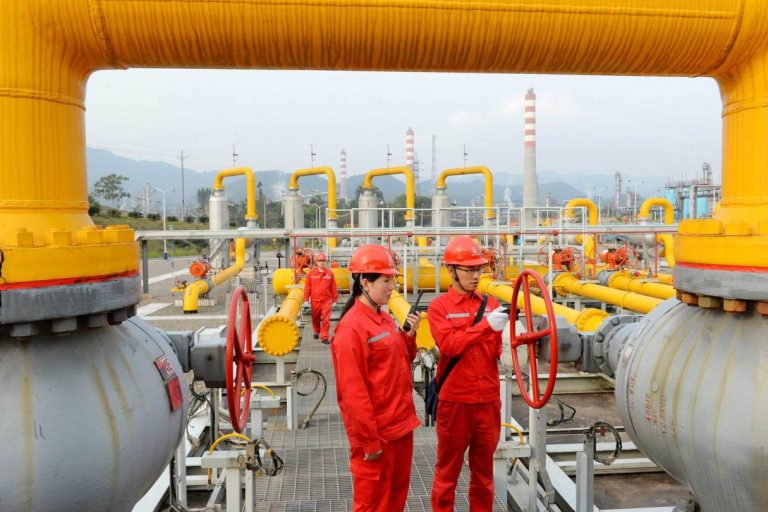
China Petroleum & Chemical Corp reported a 36.8% drop in net profit for 2025. This result points to deeper structural strains facing refiners as fuel demand softens and margins come under sustained pressure.
The company posted net income attributable to shareholders of 31.8 billion yuan ($4.62 billion), according to its Shanghai filing. The scale of the decline is notable not because volumes collapsed, but because they largely held steady. It is the economics of refining, rather than throughput, that is shifting against the sector.
Sinopec processed 250.33 million metric tons of crude last year, down just 0.8%, and expects little change in 2026. Stability at that level suggests China’s fuel market is approaching saturation. Growth that once came from rising car ownership and industrial expansion is now being offset by efficiency gains and a gradual pivot toward alternative energy.
Register for Tekedia Mini-MBA edition 20 (June 8 – Sept 5, 2026).
Register for Tekedia AI in Business Masterclass.
Join Tekedia Capital Syndicate and co-invest in great global startups.
Register for Tekedia AI Lab.
That shift is showing up most clearly in transport fuels. Gasoline production fell 2.4%, and diesel dropped 9.1%, with both volumes and prices declining. Gasoline sales slipped 2.5% to 61.1 million tons, while average prices fell 7.7%. Diesel, more closely tied to construction and freight, recorded a steeper contraction, with sales down 9.1% and prices lower by 8%. The weakness in diesel points to softer industrial activity and a less robust logistics cycle.
Jet fuel offered a partial counterweight. Kerosene production rose 7.3%, and sales increased 4% as air travel continued to recover, though nearly a 10% drop in prices diluted the benefit. Even in segments where demand is improving, pricing power remains limited.
The more consequential pressure is coming from the energy transition itself. Sinopec cited “rising substitution by new energy sources,” a phrase that captures the steady encroachment of electric vehicles and alternative fuels into what was once a reliable market for gasoline. China’s aggressive electrification push is beginning to translate into measurable demand erosion, particularly in urban centers where EV adoption is highest.

At the same time, the company’s petrochemical arm is no longer providing the cushion it once did. Revenue from chemical products fell 9.6% to 378 billion yuan, dragged down by lower prices amid persistent oversupply. The global petrochemical market has struggled to absorb new capacity, and weaker downstream demand has left producers competing on thinner margins.
However, there were pockets of resilience. Refining margins edged higher to 330 yuan per ton, supported by improved returns on by-products such as sulfur and petroleum coke. Those gains helped offset higher crude import costs and freight rates, but they were not enough to counter the broader decline in core fuel profitability.
Upstream operations remain steady but unspectacular. Domestic crude output rose slightly to 255.75 million barrels, with little change expected this year. Overseas production is projected to decline modestly. Natural gas continues to be the growth area, with output rising 4% and expected to increase further. That trajectory aligns with Beijing’s push to expand gas use as a cleaner alternative to coal and oil.

Sinopec’s spending plans suggest it is preparing for a more complex operating environment rather than retreating from it. Capital expenditure reached 147.2 billion yuan in 2025 and is set to remain elevated, with a focus on maintaining crude production, expanding gas capacity in Sichuan, and strengthening storage and transport infrastructure. The emphasis is on resilience and flexibility, not rapid expansion.
The market has drawn a clear distinction between refiners and producers. Sinopec’s Hong Kong-listed shares have been largely flat this year, modestly outperforming the Hang Seng Index but trailing PetroChina and CNOOC, which have benefited more directly from higher crude prices. Investors are rewarding exposure to upstream earnings while discounting refining-heavy business models.
What emerges from Sinopec’s results is a company caught between two cycles. In the short term, geopolitical tensions have driven crude prices higher, thereby increasing input costs. In the longer term, the shift toward electrification and cleaner energy is capping demand growth for refined fuels. That combination compresses margins from both sides.
Business leaders believe the issue is no longer simply navigating oil price swings. Sinopec is now adjusting to a market where demand growth is no longer assured, petrochemicals are less reliable as a hedge, and the transition to cleaner energy is beginning to register in its core business.
While the company’s scale remains an advantage, the direction of travel in the industry is becoming harder to ignore.
Honestly, this is one of the most impressive platforms I’ve seen recently. Everything is organized so well that you can quickly find the details you need and try any game without wasting time.