

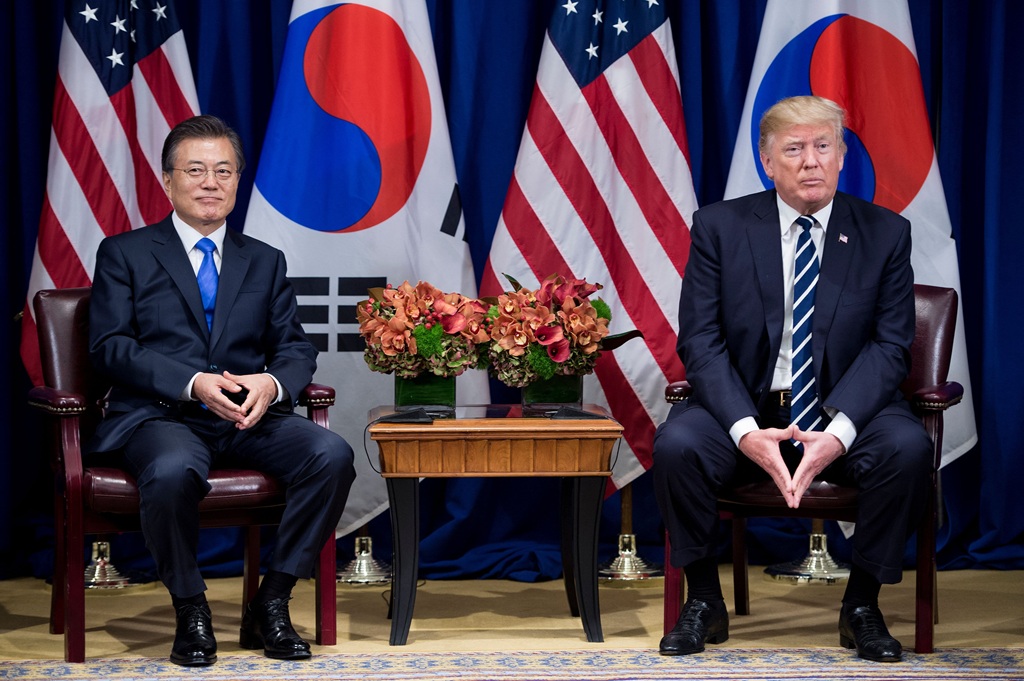
South Korea has taken a major step toward implementing one of the largest overseas investment commitments ever undertaken by an American ally, approving a presidential decree that clears the way for $350 billion in investments in the United States under a bilateral trade agreement reached last year.
The cabinet’s approval provides the legal and operational framework for deploying capital into sectors Washington considers strategically important, while revealing how trade negotiations are increasingly being tied to investment, industrial policy, and geopolitical alignment rather than tariffs alone.
At the center of the arrangement is a $200 billion investment program targeting strategic U.S. industries and an additional $150 billion dedicated to shipbuilding cooperation. In return, South Korean exports secured more favorable tariff treatment in the U.S. market, helping preserve the competitiveness of key sectors such as automobiles, machinery, batteries, and advanced manufacturing.
Register for the next Tekedia Mini-MBA.
Register for Tekedia AI in Business Masterclass.
Join Tekedia Capital Syndicate and co-invest in great global startups.
The decree establishes the rules governing how the investments will be assessed, managed, and financed. South Korea defined a “commercially reasonable” project as one capable of generating sufficient revenue to cover both principal and interest obligations over the life of the investment. The lifespan of each project will be determined through negotiations between Seoul and Washington.
To oversee the initiative, South Korea plans to establish a state-backed investment corporation with a 20-year mandate, creating an institutional vehicle capable of managing long-term capital deployment across multiple sectors.
The agreement follows the shift in global trade relations under President Donald Trump’s administration, where market access and tariff relief are increasingly linked to direct investment commitments. Rather than relying solely on traditional free-trade frameworks, Washington has been pushing allies to channel capital into U.S. industries viewed as critical to economic security, including advanced manufacturing, semiconductors, energy infrastructure, defense-related production, and shipbuilding.

The United States remains one of South Korea’s largest export destinations, and access to the American market is particularly important for industrial champions such as Samsung Electronics, SK Hynix, Hyundai, and Kia.
The investment framework also helps shield South Korean exporters from tariff uncertainty. Earlier this year, Trump threatened to raise tariffs on South Korean goods to 25%, arguing that Seoul had not yet completed legislative steps necessary to implement the trade framework that capped tariffs at 15%.
That pressure accelerated political action in Seoul. The South Korean National Assembly approved a special investment bill in March with bipartisan support, providing the legal foundation for the current decree.

Shipbuilding emerges as a strategic battleground
One of the most notable aspects of the agreement is the $150 billion commitment tied to shipbuilding cooperation. Shipbuilding has become a growing concern for Washington as it seeks to rebuild maritime industrial capacity amid intensifying competition with China, which dominates global commercial ship production.
South Korea possesses some of the world’s most advanced shipyards and maritime engineering capabilities through companies such as HD Hyundai, Hanwha Ocean, and Samsung Heavy Industries.
The investment commitment could support projects ranging from commercial ship construction and maintenance facilities to supply-chain development and advanced maritime technologies. It also aligns with U.S. efforts to strengthen domestic shipbuilding capacity without relying solely on federal spending.
Although the decree does not identify specific projects, analysts expect substantial portions of the $200 billion investment pool to flow into sectors that have become central to U.S. industrial policy.
Semiconductors remain an obvious destination. South Korean firms are already among the largest foreign investors in U.S. chip manufacturing as Washington pushes to localize critical supply chains.
Battery production is another likely beneficiary. South Korean companies have invested heavily in U.S. electric vehicle supply chains, and additional capital could accelerate factory construction and technology partnerships.
Artificial intelligence infrastructure may also emerge as a major investment target. The race to build data centers, power generation facilities, and semiconductor manufacturing capacity has triggered an unprecedented global competition for capital, with governments increasingly viewing AI infrastructure as a matter of national competitiveness.
Some analysts expect the scale of the agreement to become a template for future negotiations between the United States and other allies, particularly as governments seek to secure supply chains in semiconductors, energy, defense manufacturing, and emerging technologies.
What makes the agreement particularly notable is that it moves beyond traditional trade concessions. Instead, it blends tariffs, industrial policy, strategic investment, and geopolitical cooperation into a single framework.