

South Korea’s central bank is widely expected to deliver its first interest rate increase in more than three years on Thursday, marking the beginning of a new monetary tightening cycle as persistent inflation, stronger economic growth and a booming semiconductor industry reshape the country’s economic outlook.
A Reuters poll conducted between July 7 and July 13 found that 36 of 37 economists expect the Bank of Korea (BOK) to raise its benchmark interest rate by 25 basis points to 2.75%, with another increase likely before the end of the year. If delivered, the move would underscore policymakers’ growing confidence that the economy is strong enough to absorb higher borrowing costs even as geopolitical tensions continue to fuel inflationary pressures.
The expected rate hike comes after consumer inflation accelerated to 3.2% in June, the highest level in two-and-a-half years, remaining above the BOK’s 2% target for a fourth consecutive month. Economists expect inflation to hover around 3% through the second half of the year, supported by elevated global energy prices, a weaker South Korean won and higher import costs stemming from the renewed U.S.-Iran conflict.
Register for the next Tekedia Mini-MBA.
Register for Tekedia AI in Business Masterclass.
Join Tekedia Capital Syndicate and co-invest in great global startups.
Governor Shin Hyun-song has repeatedly signaled that the central bank’s dual mandate of supporting growth and maintaining price stability is now aligned in favor of tighter monetary policy, a relatively rare situation that gives policymakers greater confidence to begin normalizing interest rates.
“It was relatively well broadcasted at the last meeting, when the BOK raised both its growth and inflation forecasts,” said Bum Ki Son, economist at Barclays.
“The governor made it clear that the bank’s mandates were, on a rare occasion, not conflicting but pointing in the same direction for a hike. We think this meeting is likely to be one where they will deliver that hike.”

AI Chip Boom Offers A Lifeline
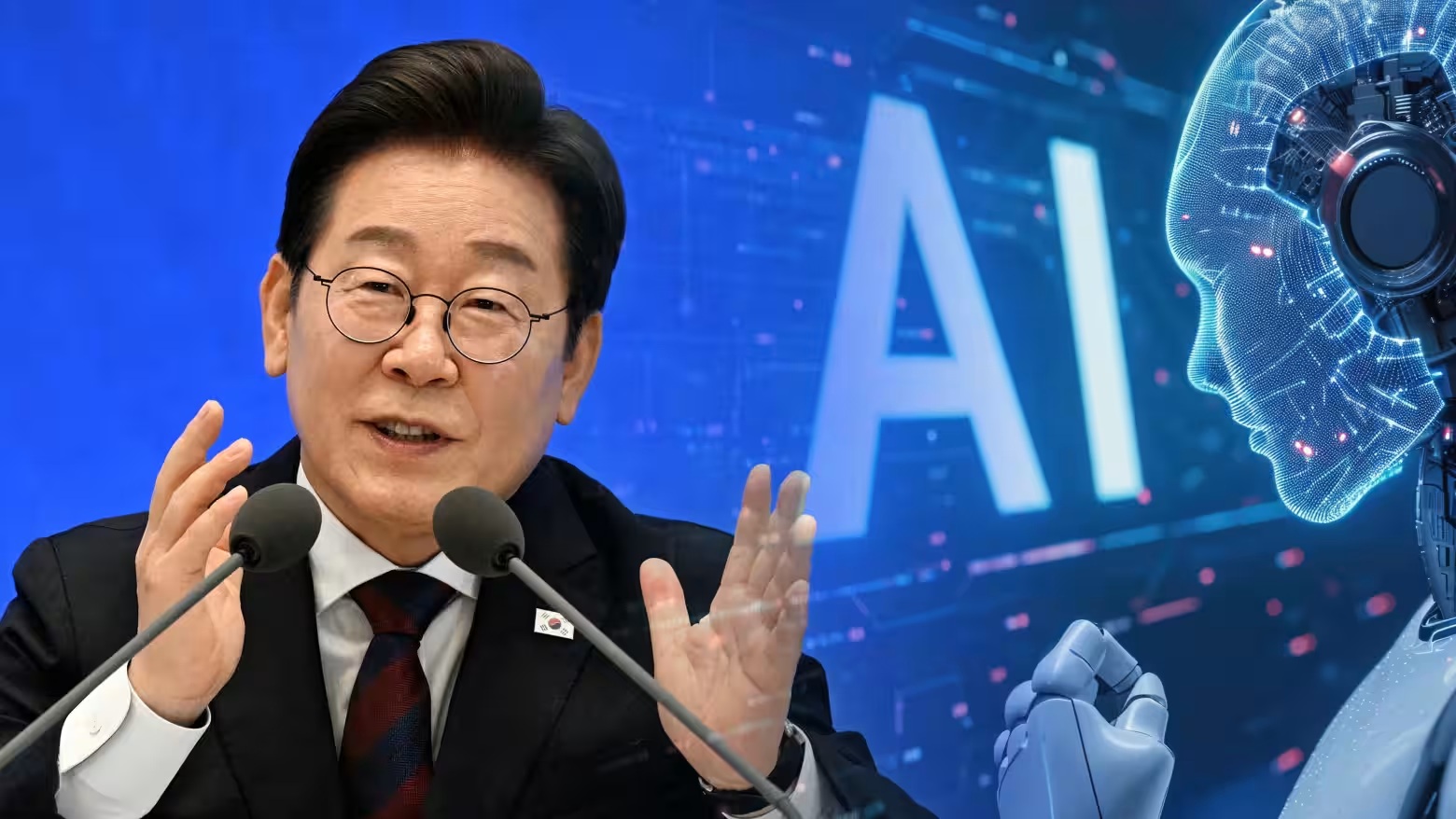
Unlike previous tightening cycles that were driven primarily by inflation concerns, the BOK now faces an economy experiencing broad-based strength. South Korea’s economy expanded at its fastest pace in nearly six years during the first quarter, powered by record semiconductor exports as global artificial intelligence investment continues to accelerate.
The AI-driven memory chip boom has transformed South Korea into one of the world’s strongest-performing major economies this year. Samsung Electronics and SK Hynix have announced investment plans worth hundreds of billions of dollars to expand domestic production capacity, while companies across the semiconductor supply chain continue to benefit from shortages of high-bandwidth memory chips used in AI servers.
The export surge has significantly improved government finances and strengthened expectations that the current expansion can withstand moderately higher interest rates.

Adding to that optimism, the finance ministry on Tuesday upgraded its 2026 economic growth forecast to 3.0%, the fastest pace since 2021 and substantially above its previous 2.0% estimate. The ministry also projected growth of 3.0% this year, citing booming semiconductor exports and robust private-sector investment.
The government has simultaneously unveiled an ambitious industrial strategy centered on artificial intelligence, semiconductors and advanced manufacturing. Three large-scale projects announced last month covering semiconductor manufacturing, AI data centers and physical AI infrastructure are expected to receive accelerated funding, with next year’s budget set to exceed 800 trillion won for the first time.
Officials have also outlined longer-term objectives of lifting South Korea’s potential growth rate above 3%, raising gross national income per capita to $50,000, and cementing the country’s position among the world’s four largest exporters.
“While robust economic indicators, such as exports, driven by a semiconductor boom are clearly opportunity factors, there remain tasks that our economy needs to overcome at the same time,” Vice Finance Minister Lee Hyoung-il said.
Despite the stronger growth outlook, policymakers remain concerned about mounting inflation risks linked to geopolitical developments.
Renewed fighting between the United States and Iran has pushed oil prices sharply higher, increasing fuel costs for one of Asia’s largest energy importers. Higher crude prices are feeding directly into transportation, manufacturing, and utility costs, raising the likelihood that producer price increases will eventually be passed on to consumers.
Currency weakness has added another layer of inflationary pressure. The South Korean won has fallen more than 4% against the U.S. dollar this year and is expected to weaken further in the coming weeks, according to a separate Reuters survey. A softer currency raises the cost of imported commodities, industrial inputs and consumer goods, making inflation more persistent.
“We expect KRW weakness to be a key focus,” said Benson Wu, Korea economist at BofA Global Research.
“While policymakers have intensified verbal intervention and coordinated messaging across ministries in recent weeks, the impact on the won appears to have been limited.”
Wu added that investors will closely monitor whether Thursday’s decision opens the door to consecutive rate increases, although BofA does not currently expect back-to-back hikes.
Beyond inflation, financial stability concerns are also strengthening the case for tighter policy. South Korea continues to grapple with elevated household debt levels and rising housing prices, both of which could worsen if borrowing costs remain too low while the economy expands rapidly.
A gradual tightening cycle would allow the BOK to lean against financial imbalances while keeping inflation expectations anchored without significantly undermining growth.
Markets will closely scrutinize the central bank’s updated policy statement and Governor Shin’s post-meeting remarks for clues about the pace of future tightening. While economists broadly expect another rate increase before year-end, much will depend on the trajectory of inflation, oil prices, exchange-rate movements and whether the current AI-driven semiconductor boom continues to support economic momentum.
However, the expected rate hike represents another sign that South Korea is entering a fundamentally different phase of the economic cycle. Rather than responding to weak demand, policymakers are now managing an economy benefiting from one of the world’s strongest AI investment booms, even as geopolitical tensions threaten to keep inflation elevated.
If inflation remains stubbornly above target and semiconductor exports continue to outperform, the Bank of Korea could become one of the few major Asian central banks embarking on a sustained tightening cycle over the coming quarters.