

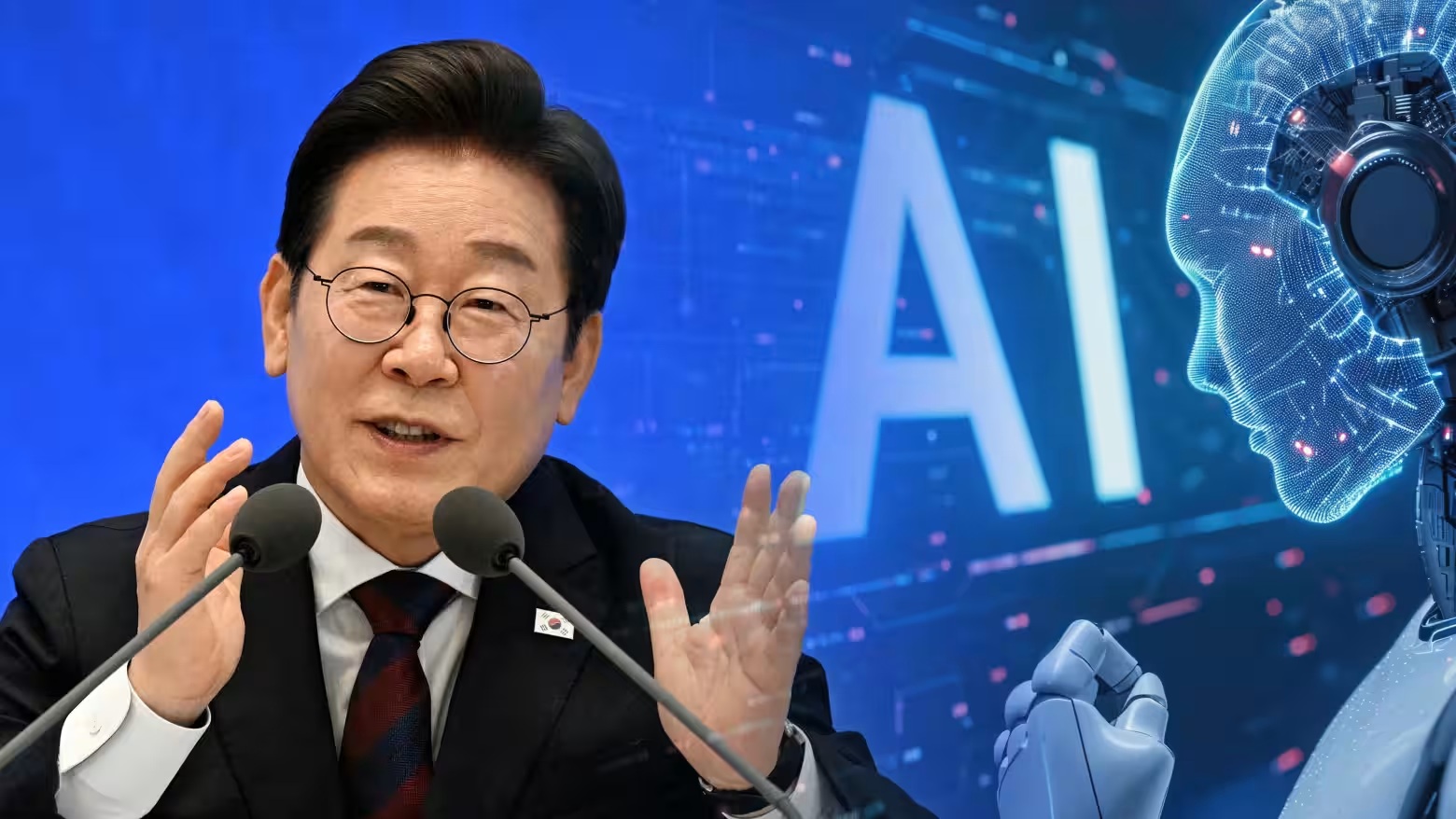
South Korea’s push to build nationally controlled artificial intelligence capabilities is reshaping its position in the global technology race, with overseas analysts now placing the country third worldwide in AI development, behind only the United States and China.
President Lee Jaemyung said the milestone underscores the impact of South Korea’s National Sovereign AI Initiative, a government-backed programme designed to ensure the country can develop, deploy, and govern AI systems independently, in line with its own laws, values, and security priorities.
In a post on his social media account, Lee wrote that South Korea has “firmly established itself as a top-three nation in the AI sector,” attributing the rise to what he described as a nationwide competition driven by the sovereign AI programme.
Register for Tekedia Mini-MBA edition 20 (June 8 – Sept 5, 2026).
Register for Tekedia AI in Business Masterclass.
Join Tekedia Capital Syndicate and co-invest in great global startups.
Register for Tekedia AI Lab.
“Thanks to South Korea’s National Sovereign AI Initiative, several Korean AI research institutes with cutting-edge intelligence have emerged,” he said, adding that the initiative has become the core engine of the country’s AI momentum.
Lee also shared an assessment from Artificial Analysis, an overseas AI research institution that tracks the performance and capabilities of leading AI labs and models worldwide. According to the group, “South Korea is now a definitive third-place nation in the AI field,” with multiple domestic labs reaching near-frontier levels of intelligence. Artificial Analysis identified the National Sovereign AI Initiative as the decisive factor behind that progress.
The concept of sovereign AI sits at the heart of Seoul’s strategy. It refers to a country’s ability to independently build and operate AI systems, covering both physical infrastructure, such as data centers and high-performance computing, and software layers, including foundation models, applications, and governance frameworks. The emphasis is on reducing reliance on foreign platforms while ensuring that AI systems reflect domestic legal standards and societal norms.

Analysts say South Korea is unusually well-positioned to pursue that goal. The country is a global leader in semiconductor manufacturing, particularly in memory chips that are critical for AI workloads. That hardware strength gives Seoul an advantage as demand for computing power surges worldwide and supply chains become more politically sensitive.
Artificial Analysis noted that South Korea is among a small group of countries capable of supporting AI development end-to-end, from chips and servers to large-scale model deployment.
Language has also been a strategic focus. South Korea has invested heavily in AI systems built around Hangul, allowing domestic models to perform strongly in Korean-language tasks without depending on foreign-language foundations. This has practical implications for public services, finance, healthcare, and education, where accuracy and cultural context are essential. Artificial Analysis highlighted this linguistic independence as a key differentiator, especially as many global AI models remain heavily skewed toward English and Mandarin.

The National Sovereign AI Initiative has been structured to foster competition and coordination at the same time. Government support is used to lower barriers to entry for research institutes and startups, while shared infrastructure and datasets help accelerate progress. Officials have argued that this model avoids fragmentation and allows smaller players to compete with well-funded global labs.
South Korea’s rise comes amid an intensifying global debate over AI sovereignty. Governments across Europe, Asia, and the Middle East are reassessing their dependence on U.S. and Chinese technology, driven by concerns over data control, national security, and long-term economic leverage. While Washington and Beijing still dominate in scale, investment, and frontier model development, countries like South Korea are increasingly carving out influence through focused, state-backed strategies.
At the same time, the approach carries challenges. Maintaining near-frontier AI capabilities requires sustained investment in compute, talent, and energy infrastructure, as well as careful regulation to balance innovation with safety. There are also questions about how sovereign AI systems will integrate with global platforms and standards, particularly in cross-border trade and research collaboration.
The emphasis on sovereign AI is part of President Lee’s broader economic and strategic agenda. By anchoring AI development domestically, the government aims to strengthen industrial competitiveness, protect sensitive data, and ensure that future technologies remain aligned with national interests. The initiative also fits South Korea’s long-standing model of close coordination between the state, research institutions, and industry.
The endorsement from Artificial Analysis gives international weight to Seoul’s claims and suggests that its strategy is beginning to deliver measurable results.