

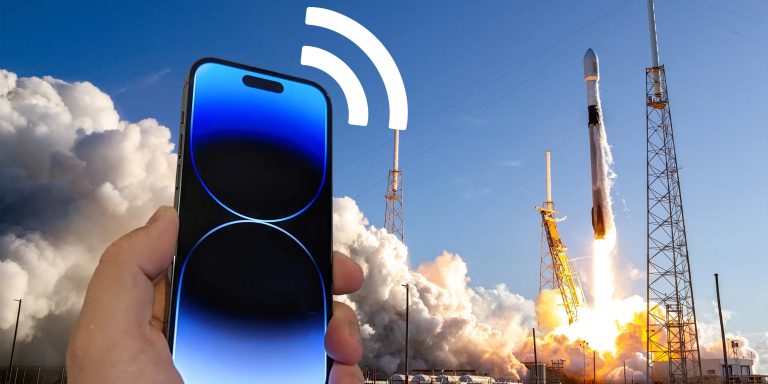
SpaceX is preparing to challenge the traditional American telecommunications industry with its ambitious plan to transform Starlink into a major mobile carrier in the United States.
The announcement has raised concerns among established telecom operators, with AT&T, Verizon and T-Mobile reportedly experiencing share price declines of more than 7% each.
The development highlights how satellite technology could reshape the future of mobile connectivity and intensify competition in an industry long dominated by conventional wireless networks.
Register for the next Tekedia Mini-MBA.
Register for Tekedia AI in Business Masterclass.
Join Tekedia Capital Syndicate and co-invest in great global startups.
Starlink, SpaceX’s satellite internet service, has already changed the way people access broadband in areas where traditional internet infrastructure is limited or unavailable.
By operating a growing constellation of satellites in low Earth orbit, the company delivers connectivity to homes, businesses, ships and remote communities.
Its ambitions in mobile communications represent a significant expansion of that business, potentially placing it in direct competition with the country’s largest wireless providers.

The prospect of Starlink becoming a major mobile carrier threatens to challenge the assumptions underpinning the traditional telecommunications business model. Companies such as AT&T, Verizon and T-Mobile have invested billions of dollars in cellular towers, spectrum licenses, fiber-optic networks and other infrastructure.
Their businesses depend heavily on subscriptions, network coverage and customer loyalty. A satellite-based alternative capable of extending connectivity beyond conventional cellular coverage could weaken some of these competitive advantages.
The emergence of Starlink as a serious mobile competitor could deliver substantial benefits. Satellite connectivity has the potential to improve coverage in rural communities, remote locations and regions where building conventional cellular infrastructure is expensive.

Travelers, outdoor workers and people living in underserved areas could gain access to more reliable communications without depending entirely on nearby cellular towers. Satellite mobile services still face important technical and commercial challenges.
Delivering dependable connectivity directly to ordinary smartphones requires sufficient satellite capacity, compatible devices, access to suitable wireless spectrum and effective integration with existing mobile networks.
Satellite connections can also face limitations involving bandwidth, congestion and service availability. Starlink must overcome these obstacles before it can consistently match the performance and capacity of established cellular operators across densely populated cities.
The reported decline of more than 7% in AT&T, Verizon and T-Mobile shares reflects the market’s sensitivity to potential disruption. Investors frequently reassess valuations when an emerging competitor threatens established revenue streams or forces companies to increase spending.
Even without immediate losses in subscribers, the possibility of a powerful new rival could pressure future pricing, margins and growth expectations. A sharp stock market reaction does not necessarily mean traditional telecom companies are approaching collapse.
These operators possess valuable infrastructure, established customer relationships, extensive spectrum holdings and years of experience managing large-scale communications networks.
They may respond through partnerships, competitive pricing, improved services and further investment in network technology. Some could also explore satellite partnerships to strengthen their own coverage.
SpaceX, entering the mobile market would create another opportunity to expand its commercial reach and generate recurring revenue. Combining satellite connectivity with mobile services could make Starlink more attractive to consumers seeking seamless communications across different environments.
Success will depend on affordability, network reliability, regulatory approvals and the company’s ability to scale its service. SpaceX’s ambition signals a potentially important turning point for American telecommunications.
If Starlink can deliver reliable and competitively priced mobile connectivity at scale, the industry could face a new era of competition. AT&T, Verizon and T-Mobile still possess considerable advantages, but satellite technology is challenging the boundaries of traditional wireless networks.
The next phase of the battle will determine whether Starlink becomes a genuine nationwide rival or remains a complementary option in an increasingly connected world.