

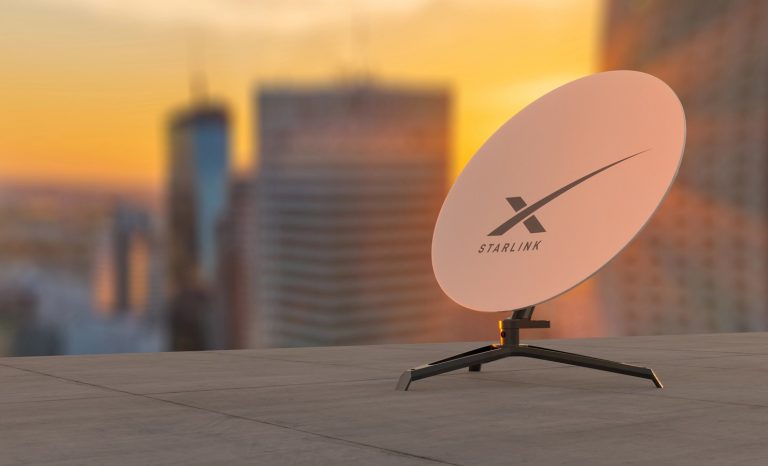
Elon Musk’s SpaceX announced on Monday that it will acquire wireless spectrum licenses from EchoStar for about $17 billion, a landmark deal seen as crucial to expanding the Starlink satellite network into the 5G connectivity business.
The agreement also includes a partnership that will allow EchoStar’s Boost Mobile subscribers to access Starlink’s direct-to-cell service, a move designed to extend mobile coverage into areas that lack terrestrial service.
According to SpaceX, the spectrum purchase will pave the way for the company to build and deploy upgraded, laser-connected satellites capable of expanding network capacity by “more than 100 times.” Gwynne Shotwell, president and COO of SpaceX, said the deal will help the company “end mobile dead zones around the world,” adding that exclusive spectrum rights will allow Starlink to develop “next-generation Direct to Cell satellites” with significantly improved performance.
Register for Tekedia Mini-MBA edition 20 (June 8 – Sept 5, 2026).
Register for Tekedia AI in Business Masterclass.
Join Tekedia Capital Syndicate and co-invest in great global startups.
Register for Tekedia AI Lab.
News of the deal sent EchoStar shares soaring by 19% in early trading, while U.S. wireless carriers AT&T (T.N) and T-Mobile (TMUS.O) fell more than 3%, and Verizon (VZ.N) declined by over 2%.
The push comes at a time of fast-rising wireless usage in the United States. In 2024, Americans consumed a record 132 trillion megabytes of mobile data, an increase of 35% from the previous all-time high, according to industry group CTIA.
Since 2020, SpaceX has launched more than 8,000 Starlink satellites into low-Earth orbit, creating a distributed network that has attracted demand from militaries, transportation firms, and rural consumers. About 600 of those satellites, which the company describes as “cell towers in space,” have been launched since January 2024 as part of its direct-to-cell initiative. These satellites orbit closer to Earth than the rest of the constellation, a crucial step toward mobile service integration.

Deployment of larger satellites remains tied to the success of Starship, SpaceX’s massive next-generation rocket that has been in development for nearly a decade. Increasingly complex test flights have brought Starship closer to its first operational Starlink missions, expected early next year.
The EchoStar deal comes just months after the Federal Communications Commission (FCC) raised questions about EchoStar’s use of its mobile-satellite service spectrum and whether the company was fulfilling its 5G deployment obligations, per Reuters. EchoStar said it expects its transactions with SpaceX and AT&T to resolve those concerns.
An FCC spokesperson welcomed the development, saying the “deals that EchoStar reached with AT&T and Starlink hold the potential to supercharge competition, extend innovative new services to millions of Americans, and boost U.S. leadership in next-gen connectivity.”

In August, EchoStar sold $23 billion worth of nationwide wireless spectrum licenses to AT&T, which included 50 MHz of mid-band and low-band spectrum, according to Reuters. Earlier in 2021, Verizon made headlines with a staggering $52 billion spectrum acquisition to clear and secure mid-band airwaves critical for its 5G rollout.
Against that backdrop, SpaceX’s $17 billion spectrum deal highlights the different strategies at play: while traditional carriers pour tens of billions into spectrum auctions and fiber rollouts, SpaceX is leveraging satellite technology to bypass costly ground infrastructure and directly challenge entrenched telecom models.
President Donald Trump had earlier pushed EchoStar and FCC Chair Brendan Carr to reach an amicable settlement over the company’s spectrum licenses, signaling political interest in seeing the assets deployed more effectively.
SpaceX will finance the deal through a mix of cash and equity, paying up to $8.5 billion in cash and issuing up to $8.5 billion in stock. It has also agreed to cover about $2 billion in interest payments on EchoStar’s debt through late 2027.
Despite the sale, EchoStar will continue to operate its Dish TV satellite service, Sling streaming platform, Hughes internet service, and Boost Mobile brand.
SpaceX had long urged the FCC to reallocate underused spectrum for satellite-to-phone service, accusing EchoStar of failing to meet deployment obligations. In April, the company wrote to the FCC claiming that EchoStar’s 2 GHz spectrum remained “ripe for sharing among next-generation satellite systems” and was being “chronically underused.”
With the acquisition, SpaceX gains direct ownership of spectrum rights, reducing its reliance on leased access from mobile carriers like T-Mobile. The deal positions Starlink not just as a global broadband provider, but as a potential disruptor in mobile telecom, competing against carriers that have historically relied on massive spectrum auctions and terrestrial infrastructure spending.
Meanwhile, Verizon has continued to double down on traditional pathways, with its $20 billion acquisition of Frontier Communications’ fiber-optic business in May, underscoring the divide between old-guard telecoms and Musk’s satellite-driven strategy.