

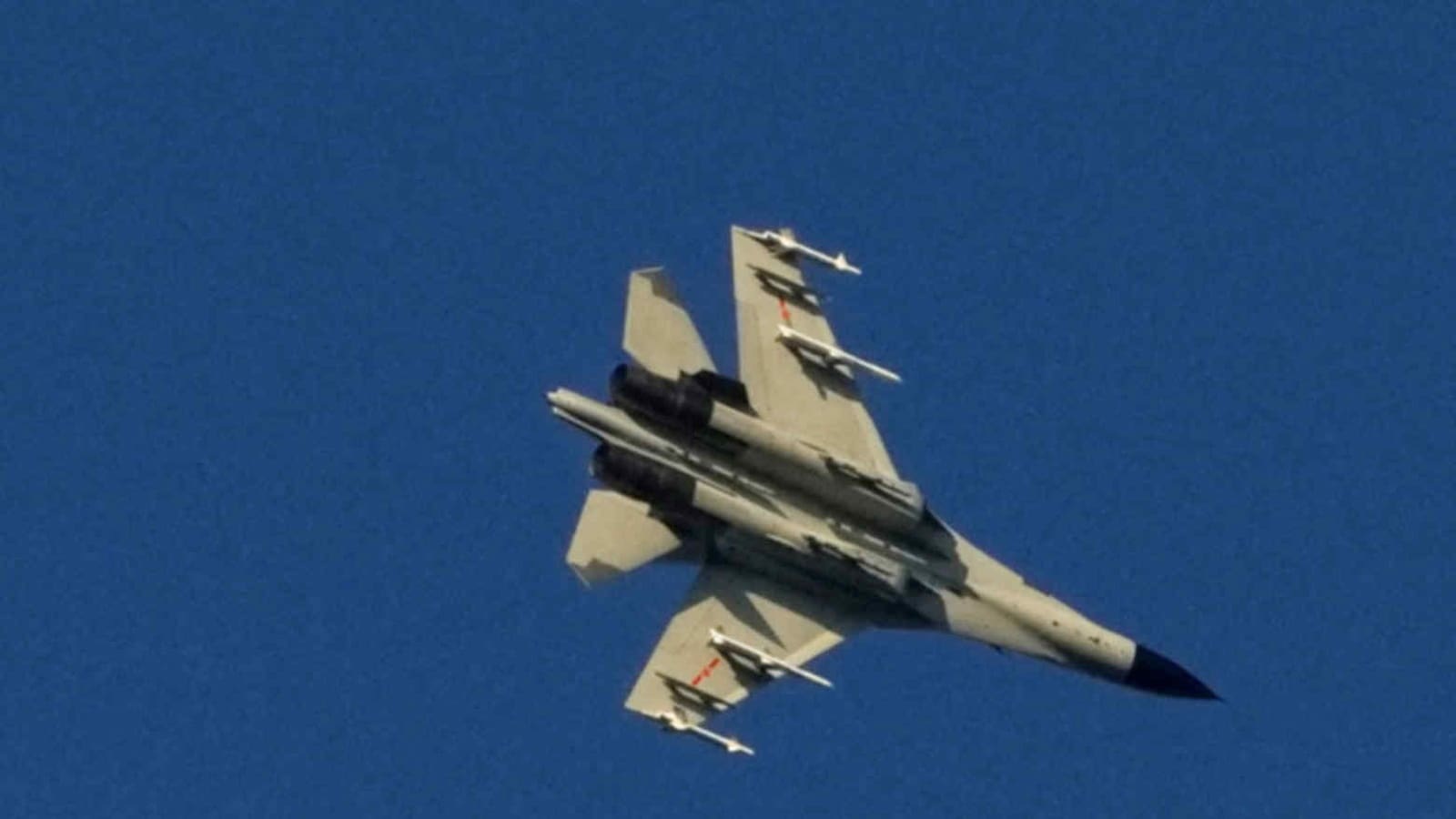
According to Taiwan’s Ministry of National Defense, they detected 26 Chinese military aircraft and 7 Chinese naval vessels operating around the island. Of those 26 aircraft, 16 entered Taiwan’s Air Defense Identification Zone (ADIZ), with activity concentrated in areas like the Taiwan Strait, and some crossing into northern, central, and southwestern sectors.
Taiwan responded by scrambling its own aircraft, dispatching naval ships, and deploying coastal missile systems to monitor the situation. This marked a noticeable surge in aerial activity compared to the prior two weeks, when PLA Air Force flights near Taiwan dropped sharply—often to zero on many days, the longest lull in such incursions since around 2021.
During that quieter period, Chinese naval presence continued without interruption, but aircraft sorties were minimal, just a handful on a few days. Analysts and reports have speculated on reasons for the earlier pause, including: Possible recalibration of Beijing’s pressure tactics. Internal factors like Xi Jinping’s reported purge of senior generals.
An effort to reduce tensions ahead of U.S. President Donald Trump’s planned visit to China (scheduled for late March 2026, around March 31–April 2).
The resumption of larger-scale flights; the highest single-day count since late February has been described as a return to more routine but provocative PLA operations. China views Taiwan as its territory and has conducted near-daily military patrols around the island for years to assert claims and normalize pressure, though Beijing has not officially commented on this specific incident.
Register for Tekedia Mini-MBA edition 20 (June 8 – Sept 5, 2026).
Register for Tekedia AI in Business Masterclass.
Join Tekedia Capital Syndicate and co-invest in great global startups.
Register for Tekedia AI Lab.
This fits into a long-term pattern of gray-zone coercion rather than an immediate prelude to conflict, but it heightens tensions in the region. Taiwan’s government has emphasized maintaining vigilance, noting that the naval threat persisted even during the aerial lull.
Gray-zone coercion refers to a strategy in international relations where a state uses coercive, aggressive, or subversive actions to advance its objectives while deliberately staying below the threshold that would typically trigger a full-scale military response or open armed conflict from the target or its allies.
These actions occupy the ambiguous space between routine peacetime statecraft and outright war. The goal is often to achieve incremental gains—such as eroding sovereignty, normalizing claims, wearing down an opponent’s resolve, or creating new facts on the ground—without provoking escalation that could lead to costly retaliation or defeat.

Actions are designed to intimidate, harass, or pressure without crossing clear “red lines” that justify war. Many tactics use proxies, non-military tools, or legal gray areas to make attribution difficult or response politically tricky. Often called “salami-slicing” or “coercive gradualism”—small steps accumulate over time to shift the status quo.
Multi-domain: Combines military, economic, diplomatic, informational, cyber, and other instruments (sometimes called “hybrid” approaches). The coercing state avoids actions that risk unacceptable costs or direct confrontation.
Gray-zone coercion draws from a wide toolkit. States like China, Russia, and others have used variations effectively. Military/paramilitary harassment — Frequent incursions into another country’s air defense identification zone (ADIZ), maritime patrols, or “freedom of navigation” challenges that assert claims without firing shots.
Maritime militia or coast guard coercion — Using fishing fleets, unmarked vessels, or coast guard ships to harass, blockade, or surveil in disputed waters under the guise of civilian activity. Targeted trade restrictions, embargoes, or inducements to punish or reward behavior.

Hacking, spreading fake news, or cognitive warfare to sow division, undermine trust, or influence elections/public opinion. Pressuring other countries to derecognize or limit ties, or using domestic/international law to justify actions. Cutting undersea cables, limited border incidents, or proxy support.
China’s approach toward Taiwan is a prominent real-world example of gray-zone coercion. Beijing views Taiwan as part of its territory and seeks “reunification,” preferably without war. Instead of direct invasion (which risks massive costs and U.S. intervention), the People’s Liberation Army (PLA), China Coast Guard, and other entities employ routine but escalating pressure.
Near-daily PLA aircraft sorties into Taiwan’s ADIZ to normalize presence and strain Taiwan’s defenses. Naval encirclements, large-scale exercises simulating blockades, or “swarm” tactics with civilian/militia vessels. Economic coercion, like banning Taiwanese imports or pressuring companies.
Cyberattacks, disinformation campaigns to erode public confidence, and efforts to isolate Taiwan diplomatically. The aim is exhaustion and psychological attrition: make resistance feel futile, divide Taiwanese society, and create conditions where unification seems inevitable or preferable to endless pressure.
Reports from think tanks like RAND, CSIS, and others describe this as “advancing without attacking” or a “slow boil” strategy. It wears down resources while testing responses and building leverage for future escalation if needed. Gray-zone coercion isn’t new, but its scale and sophistication have grown with modern tools like cyber and information operations.
It challenges targets because responding too forcefully risks escalation, while doing nothing allows gradual erosion of position. Effective countermeasures often involve exposing tactics, imposing asymmetric costs, building resilience, and coordinating with allies to raise the price without triggering war.