

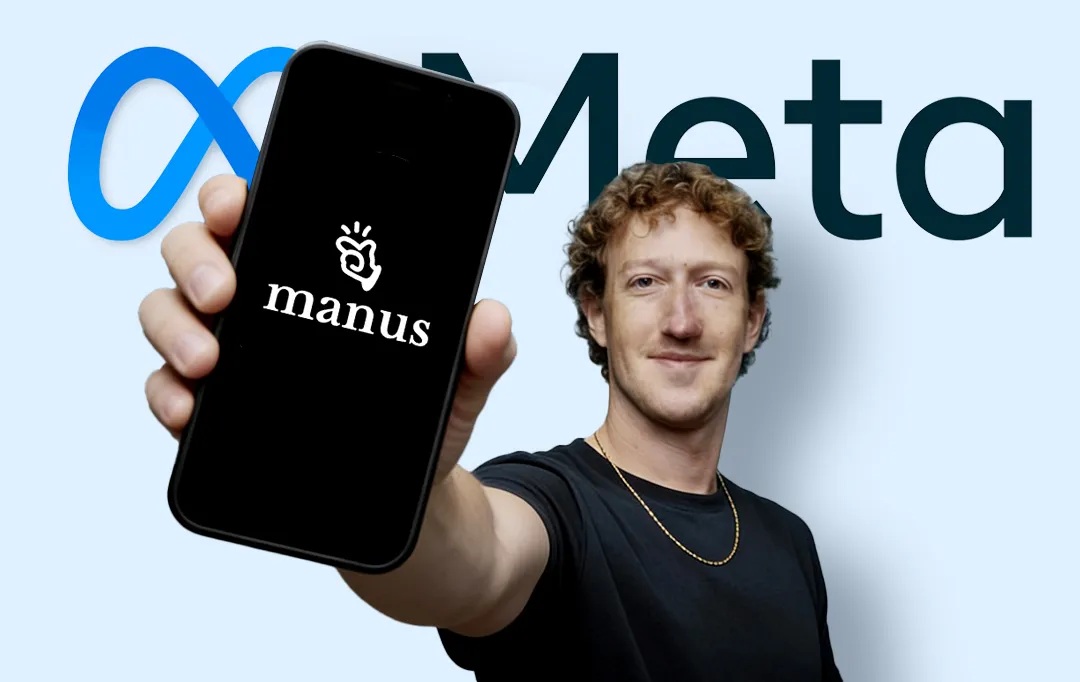
Tencent Holdings is in discussions to become the largest shareholder in artificial intelligence startup Manus as investors seek a new ownership structure after Chinese authorities ordered Meta Platforms to unwind its $2 billion acquisition of the company, according to sources cited by Reuters.
The development marks the latest twist in one of the highest-profile AI deals caught in the escalating technology rivalry between China and the United States, underscoring Beijing’s growing willingness to intervene in cross-border transactions involving strategically important artificial intelligence companies.
The Financial Times first reported Tencent’s discussions on Friday.
Register for the next Tekedia Mini-MBA.
Register for Tekedia AI in Business Masterclass.
Join Tekedia Capital Syndicate and co-invest in great global startups.
According to two people with knowledge of the negotiations, Tencent is in talks that could make it Manus’ biggest shareholder following the collapse of Meta’s planned takeover. One of the sources, together with a third person briefed on the matter, said Tencent is working alongside Manus’ existing investors, including venture capital firms ZhenFund and HSG, to buy the company back from Meta for no less than $2 billion.
The proposed transaction would effectively reverse Meta’s acquisition while returning Manus to an ownership structure led by Chinese investors.
China Forces Meta to Abandon Acquisition
Meta announced its acquisition of Manus in December as part of Chief Executive Mark Zuckerberg’s strategy to strengthen the company’s capabilities in agentic artificial intelligence, an emerging area focused on AI systems capable of completing complex tasks with minimal human supervision.

Unlike traditional chatbots that primarily respond to prompts, AI agents are designed to plan, reason and execute multi-step assignments autonomously by interacting with software, databases and digital services. Manus attracted international attention after claiming to have developed one of the world’s first general-purpose AI agents capable of independently carrying out a wide range of digital tasks.
Although Manus relocated its operations from China to Singapore last year, Chinese regulators launched a review of Meta’s acquisition in April to determine whether the transaction violated the country’s investment regulations. Authorities subsequently ordered Meta to unwind the deal, representing one of the most significant examples of Beijing intervening in an overseas acquisition involving an AI company.
The Manus case is another episode of how artificial intelligence has become increasingly entangled in geopolitical competition between China and the United States. Governments on both sides have tightened oversight of advanced AI technologies, treating frontier models and AI startups as strategically important national assets with potential military, intelligence and economic implications.

China has become reluctant to allow advanced domestic AI technologies to pass into foreign ownership, even when companies have moved their headquarters overseas. The Manus ruling also demonstrates Chinese authorities’ determination to exercise regulatory authority over companies with Chinese origins, regardless of where they are incorporated or operate.
Beijing has increasingly developed a habit of scrutinizing outbound technology transfers and cross-border investments involving sectors considered critical to national security.
Following Beijing’s order, Meta has already begun unwinding its integration with Manus. Bloomberg News reported last month that Meta had implemented an operational separation between the two companies and halted data sharing, an important step given growing concerns among governments about the movement of AI models, training data and technical expertise across national borders.
Why Manus Matters
Manus has emerged as one of China’s most closely watched AI startups. The company gained widespread attention early last year after unveiling what it described as the world’s first general AI agent, technology designed to perform tasks independently rather than simply generate text or answer questions.
The launch prompted comparisons with DeepSeek, another Chinese AI company whose rapid advances challenged assumptions about the global AI industry.
Chinese state media and industry commentators hailed Manus as a potential successor to DeepSeek, highlighting its significance within China’s ambition to build globally competitive AI companies capable of challenging leading U.S. developers. The company specializes in agentic AI, an area many researchers view as the next major frontier in artificial intelligence.
Unlike conventional generative AI systems, agentic AI aims to enable software capable of independently planning tasks, making decisions and carrying out complex workflows with limited human intervention. Major technology companies, including OpenAI, Google, Anthropic, Microsoft, Amazon and Meta, have all made agentic AI a strategic priority, viewing it as a technology that could transform enterprise software, scientific research, customer service and software development.
The acquisition, at completion, is expected to further expand Tencent’s growing presence in artificial intelligence.
The Chinese technology giant has accelerated investment in AI infrastructure, foundation models, cloud computing, and enterprise AI applications as competition intensifies among China’s largest internet companies. Adding Manus would give Tencent access to advanced agentic AI technology while keeping one of China’s most prominent AI startups under ownership aligned with Chinese investors.
The proposed deal would also fit Beijing’s broader objective of ensuring strategically important AI capabilities remain within China’s technology ecosystem. Negotiations remain ongoing, and it is currently unclear whether Tencent and Manus’ existing investors will ultimately reach an agreement with Meta.