

Tesla’s grip on Europe’s electric vehicle market continued to weaken in July, with sales plunging for the seventh consecutive month, even as Chinese rival BYD surged ahead with aggressive growth and new records.
According to data released Thursday by the European Automobile Manufacturers Association (ACEA), new registrations of Tesla cars in Europe totaled 8,837 in July, a steep 40% decline compared to the same period last year. In sharp contrast, BYD recorded 13,503 registrations, a staggering 225% year-on-year increase.
The decline for Tesla comes despite an overall rise in battery electric car sales across the continent, underscoring how the U.S. automaker is struggling to keep pace in one of the world’s most competitive EV markets.
Register for Tekedia Mini-MBA edition 20 (June 8 – Sept 5, 2026).
Register for Tekedia AI in Business Masterclass.
Join Tekedia Capital Syndicate and co-invest in great global startups.
Register for Tekedia AI Lab.
Tesla’s challenges in Europe are mounting. Analysts say the company is being squeezed by two forces: intensifying competition from Chinese automakers and reputational damage tied to Elon Musk’s polarizing public image, including his incendiary rhetoric and alignment with the Trump administration. Globally, Tesla’s difficulties have been evident—its automotive sales revenue dipped in the second quarter of the year, with Musk himself warning investors the company “could have a few rough quarters” ahead.
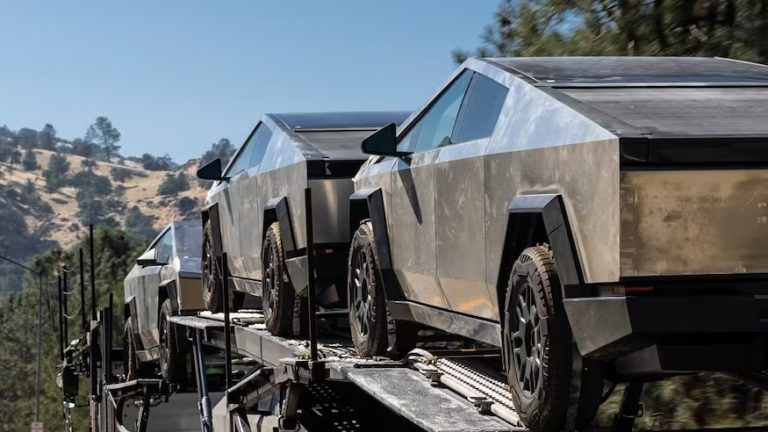
One core issue is Tesla’s aging product line. The company has not launched a major refresh of its flagship vehicles in years, and attempts at new rollouts have faltered. Its long-hyped Cybertruck has failed to deliver the blockbuster success Tesla envisioned. To counter slowing sales, the automaker has promised a more affordable electric car, with “volume production” expected later in the year. Investors are pinning hopes on this model to revive momentum.
Thomas Besson, head of automobile sector research at Kepler Cheuvreux, told CNBC that Tesla’s leadership has been trying to shift the narrative away from cars.

“They talk about almost everything else but the car they’re selling at a slower pace now because effectively, the age of their vehicle is much higher than the competition and the latest products have not been as successful as hoped, notably the Cybertruck,” Besson said.
Instead, Musk has emphasized Tesla’s investments in artificial intelligence, robotics, and autonomy as a way to convince investors that the company is more than just a carmaker. The billionaire CEO has also touted Tesla’s robotaxi as a possible frontier for growth.
Meanwhile, BYD has taken an opposite approach—doubling down on cars. The Shenzhen-based automaker has been aggressively expanding across Europe over the past two years, opening showrooms across the continent and pricing its models competitively.

This strategy has worked. In the first half of 2025, Chinese automakers collectively captured a record market share of more than 5% in Europe, according to JATO Dynamics. BYD’s rise has been especially dramatic. Last year, it overtook Tesla as the world’s largest electric vehicle maker by volume, thanks to its combination of affordability, cutting-edge technology, and rapid production cycles.
And it isn’t just about affordability. BYD has begun proving its dominance in performance as well. Its Yangwang U9 Track Edition recently became the world’s EV speed king, clocking a top speed of 293.5 mph (472.4 km/h), just shy of the fastest internal combustion cars. The standard U9 supercar, equipped with a dual-motor powertrain generating 1,287 horsepower, accelerates from 0 to 62 mph in just 2.36 seconds—placing it among the quickest cars in existence.
Tesla is not alone in feeling the heat. July also saw year-on-year declines in European registrations for other established global automakers, including Stellantis’ Jeep, South Korea’s Hyundai, and Japan’s Toyota and Suzuki. In contrast, European brands such as Volkswagen, BMW, and Renault Group posted growth in the same period, benefiting from a more localized strategy and newer product lineups.
While Tesla once defined the EV era, its slowdown in Europe highlights how the balance of power is shifting. Chinese automakers, led by BYD, are rewriting the rules of the global electric vehicle race—delivering cars that are cheaper, technologically advanced, and now even faster.
Interesting to see how BYD is taking the lead in Europe while Tesla struggles. It shows that innovation, affordability, and localized strategies really matter in the EV market. Tesla’s slowdown highlights that even pioneers can be overtaken if they don’t keep up with evolving consumer demands.