

Introduction
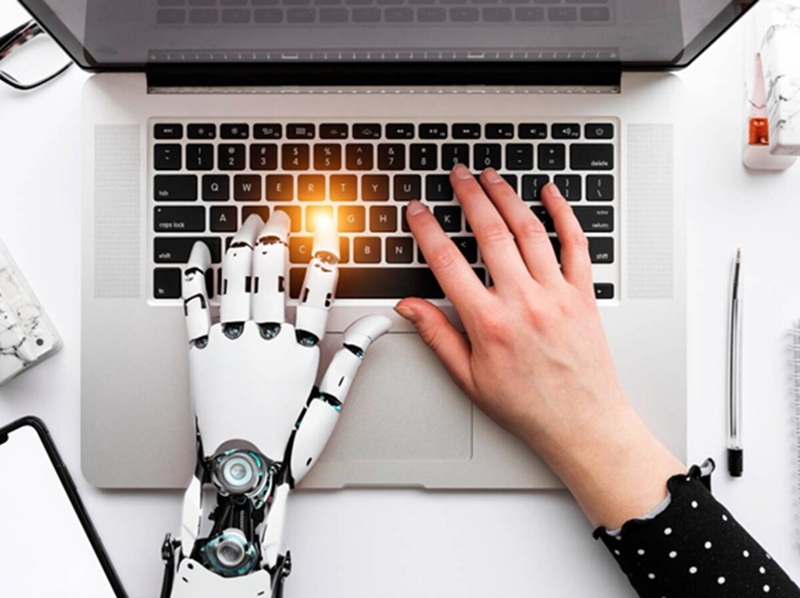
Data entry has long been considered one of the most routine and repetitive functions within organizations. For decades, it involved manually transferring information from physical documents, emails, or forms into digital systems. While this process was essential for maintaining accurate records, it was often slow, labor-intensive, and prone to human error. Today, however, the landscape of data entry is undergoing a dramatic transformation. Emerging technologies such as Artificial Intelligence AI and Robotic Process Automation RPA are redefining how businesses manage information. Rather than eliminating the human workforce, these innovations are creating a collaborative ecosystem where automation and human expertise complement one another.
The Shift from Manual Work to Intelligent Automation
Traditional data entry depended heavily on human input. Employees were responsible for typing, verifying, and organizing data across various systems. This approach, while reliable, consumed valuable time and limited productivity. With the introduction of AI-powered tools, organizations can now automate data extraction and processing tasks that once required hours of manual effort.
AI systems use technologies such as Optical Character Recognition OCR to read printed or handwritten text from scanned documents and convert it into structured digital data. Machine learning algorithms further enhance this capability by identifying patterns, correcting inconsistencies, and improving accuracy over time. Meanwhile, RPA handles rule-based and repetitive tasks such as copying data between applications, updating databases, generating reports, and sending automated notifications. These software bots operate continuously without fatigue, significantly increasing operational efficiency and reducing costs.
The combination of AI and RPA transforms data entry from simple typing into intelligent data processing. Businesses can now manage large volumes of information quickly and with greater precision than ever before.
The Enduring Value of Human Expertise
Despite the rapid advancement of automation technologies, human expertise remains indispensable. AI and RPA are powerful tools, but they are not flawless. They function based on predefined rules, algorithms, and training data. When unexpected situations arise or complex judgment is required, human intervention becomes essential.
Professionals bring critical thinking, contextual understanding, ethical reasoning, and problem-solving skills that machines cannot fully replicate. For example, in industries such as healthcare, finance, and legal services, data often contains sensitive and nuanced information. Determining whether an entry is accurate, identifying potential fraud, or interpreting incomplete records requires human insight. Humans also ensure compliance with regulatory standards and maintain accountability within automated systems.
Rather than replacing jobs, automation is reshaping them. Data entry professionals are increasingly transitioning into roles that focus on oversight, validation, exception handling, and process improvement. This evolution elevates the importance of human contribution within modern organizations.
The Rise of the Hybrid Workforce Model
The future of data entry lies in a hybrid workforce model where AI, RPA, and human professionals collaborate seamlessly. In this integrated framework, AI manages intelligent data extraction and analysis, RPA executes repetitive operational tasks, and humans supervise the overall workflow to ensure quality and strategic alignment.
Consider a practical scenario: AI extracts data from incoming invoices and identifies key fields such as vendor name, amount, and due date. RPA then transfers this data into the company’s accounting system and updates payment records. If discrepancies or unusual entries are detected, a human expert reviews and resolves the issue. This layered approach enhances both speed and accuracy while maintaining strong quality control.
Organizations that successfully implement this collaborative model gain a competitive advantage. They achieve higher productivity levels, reduce operational errors, and free employees to focus on higher-value responsibilities.
Upskilling and Workforce Transformation
As automation reshapes data entry processes, the skills required in the workforce are also evolving. Basic typing and manual data handling are no longer sufficient. Professionals must now develop digital literacy, understand automation tools, and acquire analytical capabilities.
Training programs that focus on AI fundamentals, process optimization, and data validation techniques are becoming increasingly important. Employees who adapt to these changes can pursue new career paths in automation management, data quality analysis, compliance monitoring, and digital operations. Organizations that invest in upskilling initiatives not only future-proof their workforce but also foster innovation and resilience.
The transformation of data entry is not about reducing employment opportunities; it is about enhancing the scope and impact of human roles within digital ecosystems.
Security, Compliance, and Ethical Responsibility
With greater automation comes greater responsibility. Data security and regulatory compliance remain critical concerns for businesses handling sensitive information. AI and RPA systems must be carefully configured, monitored, and audited to prevent breaches or misuse of data.
Human oversight plays a central role in maintaining ethical standards and ensuring transparency in automated decision-making processes. By combining technological efficiency with responsible governance, organizations can build trust while maximizing operational performance.
Conclusion
The future of data entry is not a competition between humans and machines but a partnership built on complementary strengths. AI provides advanced analytical capabilities, RPA delivers unmatched operational speed, and human expertise ensures thoughtful decision-making and accountability. Together, they redefine data entry as a strategic, technology-driven function rather than a purely clerical task.
As businesses continue to embrace digital transformation, the integration of AI, RPA, and human insight will become the foundation of modern data management. Those who recognize the value of collaboration and invest in both technology and people will lead the next era of intelligent and efficient operations.