

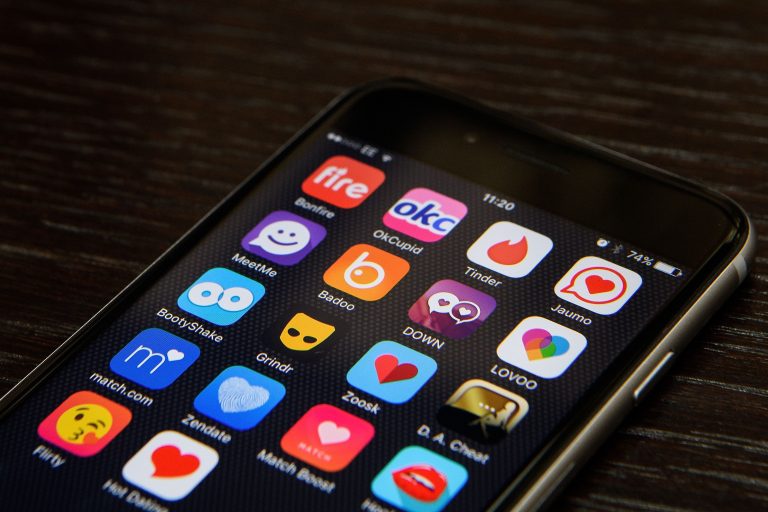
You downloaded it for free. You use it every day. But there’s a transaction happening in the background that nobody told you about. Around 80% of apps use personal data for commercial purposes, including feeding AI systems that grow smarter with every tap, scroll, and search you make. (StationX, 2024) Free apps aren’t charity. They’re data pipelines. And in 2026, that data doesn’t just target you with ads, it trains the AI models that will shape products, pricing, and decisions for millions of people. Your behavior is the raw material.
What Free Really Costs You
The economics of free apps have always rested on a simple trade: access in exchange for attention. But that bargain has quietly expanded. Where advertisers once paid for your eyeballs, AI companies now pay in compute and infrastructure for your behavior patterns. Every correction you make in a writing app, every route you adjust in a navigation tool, every product you linger over in a shopping app, feeds a model that learns from the aggregate of millions of users doing the same things.
Free Apps Track Far More Than Paid Ones
The gap between free and paid isn’t just about features. Free mobile apps are up to four times more likely to track user data than their paid counterparts. (Keywords Everywhere, 2025) That tracking often extends well beyond basic analytics. Location data, device identifiers, browsing patterns within the app, and even clipboard contents have all appeared in data collection disclosures buried deep in terms of service. Most users never read them. A May 2023 survey found that nearly three in four internet users between 18 and 29 accepted privacy policies without reading them at all. (Statista, 2023)
The result is that users hand over far more than they realize. Around half of all mobile apps share user data with third parties, with social media, dating, and food delivery apps among the most active in monetizing that information. (StationX, 2024) And when that data flows to third parties, it can be used for purposes far removed from the original app experience including training AI systems.
How Your Data Becomes AI Training Fuel
When a free app collects your data, it rarely sits idle. Companies use behavioral data to fine-tune recommendation engines, train language models, improve image recognition systems, and build predictive tools. The process is often described in vague terms inside privacy policies: phrases like “improve the user experience” or “develop and improve our services” cover a wide range of activities, including direct AI model training.
The AI Training Market Is Hungry for Data
The global AI training dataset market was valued at over $3 billion in 2025 and is projected to reach more than $16 billion by 2033 growing at a compound annual rate of 22.6%. (Grand View Research, 2025) That growth requires an enormous and continuous supply of real-world behavioral data. Free apps, used by hundreds of millions of people daily, are one of the most efficient collection mechanisms available.
This is where the concern goes beyond targeted advertising. When your data trains an AI model, it doesn’t just influence what ads you see, it shapes how that model interprets and responds to everyone. Your search queries, your corrections, your preferences, your hesitations: all of it becomes part of a system that no individual user can audit, correct, or remove themselves from after the fact.
One effective way to reduce the data trail you leave is to route your connection through a PureVPN. A VPN masks your IP address and encrypts your traffic, making it significantly harder for apps and third parties to build a persistent behavioral profile tied to your identity or location.
The Scale of the Problem in 2026
Consumer awareness of data practices is rising, but it hasn’t translated into meaningful behavioral change for most people. A 2025 survey found that 57% of consumers see AI as a significant privacy threat, and 63% have concerns about how their data is used by AI systems. (DataStackHub, 2025) Yet the same users continue to download and rely on free apps at record rates.
The tension is understandable. Free tools are useful. Convenience is real. And the consequences of data collection are abstract until they aren’t. But the scale has shifted considerably. Close to 700 million people used AI apps in the first half of 2025 alone. (Business of Apps, 2025) That figure doesn’t include the countless non-AI apps that feed data into AI pipelines indirectly. The sheer volume of behavioral data being collected and processed daily is without historical precedent.
Regulatory Gaps Still Leave Users Exposed
Regulation is catching up, but unevenly. As of early 2025, roughly 79% of the global population was covered by at least one data protection law. (DataStackHub, 2025) The EU AI Act, which came into force in mid-2024, introduced specific rules around automated decision-making and AI-related data processing. Meanwhile, the United States reached 19 active state-level privacy statutes by February 2025, with no unified federal framework in place. (Countly, 2025)
For users in regions with weaker protections including large parts of Asia, Africa, and Latin America the gap between what companies can legally collect and what users expect is still very wide. Free apps operating across these markets often apply the most permissive privacy standards available, rather than extending protections to users who aren’t legally entitled to them.
Practical Steps to Limit Your Data Footprint
You don’t have to abandon free tools entirely. But there are concrete steps that meaningfully reduce how much of your data reaches third-party AI training pipelines.
Start by reviewing app permissions. Most operating systems now allow granular control over location access, microphone use, camera permissions, and contact visibility. Restricting these to “only while using the app” or disabling them entirely for apps that don’t functionally need them is a low-effort change with a meaningful impact on passive data collection.
Consider what apps you use on which devices. Work-related activity on a personal phone, or personal browsing on a work laptop, creates cross-context data that is particularly valuable to behavioral profiling systems. Keeping contexts separate reduces the richness of the profiles any single app can build.
For users on Windows, a Windows VPN adds a consistent layer of protection across every app running on the device. Rather than managing privacy settings app by app, a VPN addresses the network layer encrypting outbound traffic and preventing ISPs, network operators, and passive data collectors from building a location-based behavioral timeline.
The Real Transaction Behind Free Apps
Free apps will continue to be part of daily life for most people. That’s not going to change. What can change is your understanding of the transaction. When you tap “accept” on a privacy policy without reading it, you’re not just agreeing to see some ads. You’re potentially contributing your behavioral data to AI training systems that operate at a scale and complexity most users have never had a reason to think about.
The tools to limit that contribution exist and are increasingly accessible. Smarter permission management, paid alternatives where they matter, and encrypted browsing habits don’t require technical expertise; they require the decision to treat your data as something worth protecting. In 2026, that’s not paranoia. It’s just accurate accounting.