

The concept of the smart home has evolved rapidly over the last decade. We have moved from simple programmable thermostats to fully integrated ecosystems where lighting, security, and climate control talk to one another. Yet, in many high tech households, one massive component remains stuck in the analog era. The garage door often relies on technology that has not changed significantly since the 1990s. As the primary entry point for a majority of modern families, bridging the gap between mechanical function and digital automation is the next logical step in home evolution.
For tech enthusiasts and homeowners alike, the garage door represents a unique convergence of heavy industrial hardware and sophisticated software. It is the largest moving object in the home, weighing hundreds of pounds, yet it must operate with the precision of a Swiss watch. Upgrading this system is not merely about convenience. It is a strategic move to enhance physical security, improve energy efficiency, and integrate the home into the broader Internet of Things ecosystem.
The Shift from RF to IP Based Control
Historically, garage door openers operated on simple radio frequencies. A handheld remote sent a signal, and the motor engaged. While effective, this system had security flaws and offered zero feedback to the user. If you drove away and forgot to close the door, you had no way of knowing until you returned.
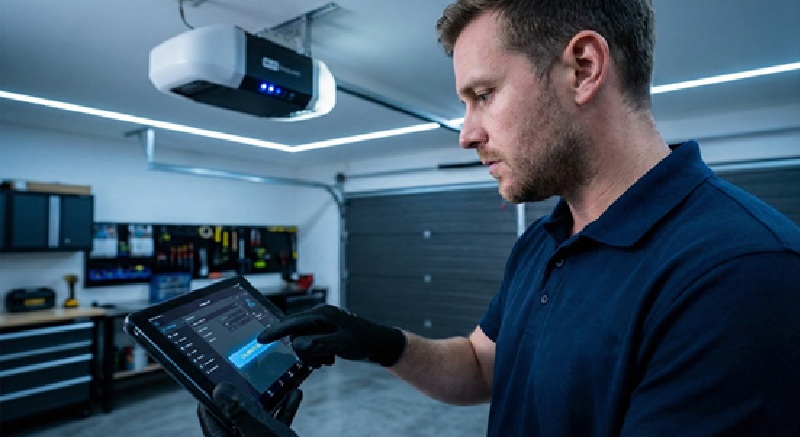
Modern access control systems have migrated to IP based connectivity. Wi Fi enabled openers connect directly to the home network, transforming the motor into a smart device. This shift allows for two way communication. The door does not just receive commands; it sends status updates. Users can verify the position of the door in real time via smartphone apps. This eliminates the anxiety of the “did I close it?” moment and provides a digital log of every entry and exit, which is invaluable for security audits.
Integration with the IoT Ecosystem
A standalone smart device is useful, but a connected ecosystem is powerful. The true value of updating garage access lies in its ability to play nice with other platforms. Modern openers can integrate with voice assistants like Amazon Alexa and Google Home, allowing for hands free operation.
Furthermore, geofencing technology uses the GPS location of a user’s smartphone to automate the process. As a vehicle approaches the driveway, the system can trigger the door to open, turn on the garage lights, and even adjust the home thermostat to a comfortable temperature. Conversely, as the user leaves the geofence perimeter, the system can ensure the door is secured and arm the home security system. This level of automation removes friction from daily routines and ensures that security protocols are followed without human intervention.
The Hardware Reality Behind the Software
While the software capabilities are impressive, they rely entirely on the mechanical integrity of the system. A smart opener cannot lift a door with a broken spring, nor can a safety sensor detect an obstruction if the tracks are misaligned. The physical infrastructure must be as robust as the digital layer.
In tech forward cities, residents are increasingly recognizing that smart homes require smart maintenance. The most advanced algorithm cannot compensate for physical wear and tear. When mechanical friction increases or components fatigue, the smart motor works harder, leading to burnout. This is why proactive residents frequently seek out garage door repair dallas to ensure that the hardware is balanced and capable of responding to digital commands instantly. The synergy between well tuned springs and a high tech opener is what delivers a seamless user experience.
Energy Efficiency as a metric of Home Performance
In the tech and business world, efficiency is a key performance indicator. The same logic applies to the home envelope. The garage door is often the largest opening in the house, acting as a massive thermal bridge. In climates with extreme temperature variances, a standard uninsulated metal door allows heat transfer that can destabilize the temperature of the entire home, especially if there are living spaces above the garage.
Upgrading to a high performance insulated door is an investment in energy efficiency. These doors utilize polyurethane foam injected between steel layers to create a thermal break. This construction significantly raises the R value of the door, minimizing heat transfer. For homeowners using the garage as a workspace or gym, this thermal regulation is essential. Even for those using it strictly for parking, maintaining a stable temperature protects vehicle batteries and tire pressure, extending the life of automotive assets.
Advanced Security Protocols
The digital age has brought new security challenges. Early garage door openers used fixed codes that could be intercepted and replayed by tech savvy thieves using code grabbers. The industry responded with rolling code technology.
Every time the remote is pressed, the transmitter and receiver generate a new, non repeating code from billions of possible combinations. This encryption makes replay attacks virtually impossible. Additionally, many smart openers now feature a “lock mode” that can be activated via app, which physically disables the remote receiver when the homeowner is on vacation. This ensures that even if a physical remote is stolen, it cannot be used to gain entry.
The Adoption of Smart Access Trends
The transition to smart garage access is accelerating. Market data suggests that homeowners are prioritizing retrofits that offer connectivity and enhanced safety features. This is not limited to early adopters; it is becoming a standard expectation in the real estate market.
This trend isn’t just theoretical; it is happening on the ground. Recent reports indicate that Dallas Homeowners Are Investing in Smarter, Safer Garage Doors to protect their assets and integrate their homes into the modern IoT ecosystem. This shift underscores a broader consumer desire for homes that are not just shelters, but responsive environments that actively contribute to the safety and efficiency of the household.
Safety Mechanisms in an Automated World
Automation requires redundancy to ensure safety. Since the garage door is a heavy, moving object, automated closure systems must have fail safes. The primary defense remains the photo eye sensor system, which projects an invisible beam across the opening.
In a smart garage setup, these sensors do more than just reverse the door. If an obstruction is detected, the smart system sends an immediate alert to the user’s phone, notifying them that the closure failed. This prevents the user from assuming the door is closed just because they tapped a button. Regular testing and alignment of these sensors are critical. A smart system is only intelligent if its inputs are accurate. Ensuring the lenses are clean and the alignment is precise guarantees that the automation logic functions correctly.
The Future of Home Access
As we look toward the future, the garage door will continue to integrate more deeply with logistics and lifestyle services. In garage delivery services are already allowing couriers to place packages securely inside the garage, mitigating package theft. Future iterations may include biometric authentication or license plate recognition for frictionless entry.
However, the foundation of this high tech future remains the reliability of the mechanical system. For the technology to deliver on its promise of convenience and security, the underlying hardware must be maintained with professional rigor. By combining robust physical maintenance with cutting edge digital tools, homeowners can transform their garage from a simple storage space into a secure, intelligent entry point that adds tangible value to their digital life.