

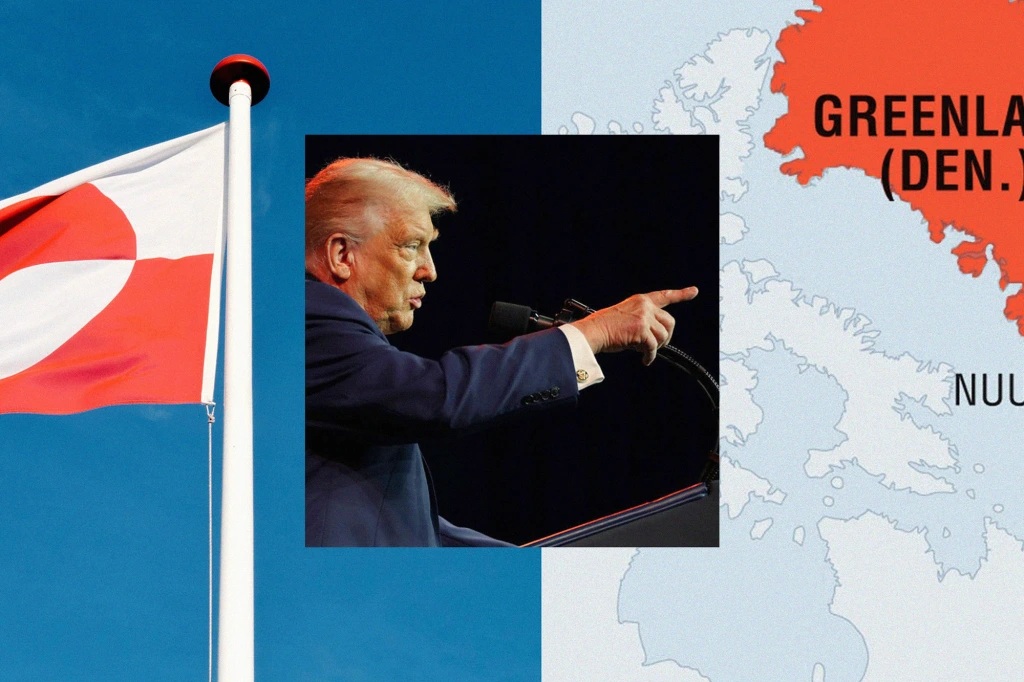
U.S. President Donald Trump’s renewed push to acquire or control Greenland—framed officially as a national security issue—is intertwined with the private interests of major American tech billionaires.
Trump has repeatedly described Greenland as strategically vital for U.S. defense, citing threats from Russia and China in the Arctic, access to rare earth minerals critical for technology and batteries, potential new shipping routes due to melting ice, and military positioning.
He has escalated rhetoric, suggesting the U.S. could pursue it “the easy way or the hard way,” even floating military options, though this has drawn sharp rebukes from Denmark which controls Greenland’s foreign affairs and Greenlandic leaders, who reject any sale or takeover.
Register for Tekedia Mini-MBA edition 20 (June 8 – Sept 5, 2026).
Register for Tekedia AI in Business Masterclass.
Join Tekedia Capital Syndicate and co-invest in great global startups.
Register for Tekedia AI Lab.
Beneath the public narrative, reports highlight how Trump’s 2024 campaign received significant funding from tech sector figures, and several have made investments in Greenland-linked ventures that could benefit enormously from greater U.S. influence or control—potentially easing regulations, mining access, or experimental projects.
Key players and their reported ties include: Peter Thiel; Backed libertarian initiatives like Praxis, which envisions building unregulated “freedom cities” or tech hubs in Greenland—low-regulation zones for AI, crypto, autonomous tech, and more, free from environmental or labor rules.
Praxis is a startup founded by Dryden Brown (and others) that aims to build new cities as part of the “network state” movement—a concept popularized by thinkers like Balaji Srinivasan, involving highly aligned online communities that crowdfund physical territory and seek eventual diplomatic recognition.

Praxis describes itself as an “internet-native nation” focused on “restoring Western Civilization” through techno-libertarian principles: minimal regulation, blockchain/crypto governance, rapid innovation in AI, autonomous tech, and experimental urban development.
The project has raised significant funding—over $525 million announced in late 2024 released in tranches tied to milestones—from investors including: Pronomos Capital (backed by Peter Thiel, a key early supporter via his libertarian “seasteading” and anti-democratic governance interests).
Thiel’s associate Ken Howery, former PayPal colleague and Trump’s ambassador to Denmark has reportedly engaged in related discussions. Jeff Bezos, Bill Gates, Michael Bloomberg, and Sam Altman invested in KoBold Metals since 2019–2022, an AI-driven exploration company hunting rare earth minerals in Greenland essential for electronics, EVs, batteries, and AI hardware.
These investments ramped up after Trump’s initial 2019 interest in buying Greenland. Ronald Lauder (Estée Lauder heir, longtime Trump confidant): Credited by sources including John Bolton with first suggesting the Greenland idea to Trump in 2018.

Lauder has since invested in a Greenlandic water bottling company and other local stakes, sometimes tied to politically connected figures, raising conflict-of-interest questions.
Other reports mention overlaps with investors in mining firms like Critical Metals Corp tied to Trump administration figures and broader Silicon Valley interest in Greenland as a “laboratory” for deregulated experiments or resource extraction to counter China’s dominance in rare earths.
Critics portray this as a “circle of grift,” where campaign support translates to policy favoring private profits—potentially at the expense of Greenland’s environment, indigenous communities, and international norms. Supporters frame it as smart resource strategy amid global competition.
Turning Greenland into a deregulated frontier for minerals and experimental governance. This aligns with Trump’s second-term actions, like pushing mining deals and Arctic focus, amid tensions with NATO allies like Denmark.
Greenland’s leaders and Denmark continue to firmly oppose any forced change in status. Praxis initially eyed locations like the Mediterranean but pivoted toward Greenland around 2019, coinciding with Donald Trump’s first public interest in acquiring the island from Denmark.
Brown visited Greenland reportedly in late 2024, met with local politician like Pele Broberg, and posted enthusiastically on X about it as an “actual frontier” and “sandbox for terraformation experiments”—framing it as practice for Mars colonization e.g., prototyping a “Terminus”-style city like Elon Musk’s vision, while tying it to mining and industrial potential.
Reports from Reuters in 2025 describe Silicon Valley investors promoting Greenland for a so-called “freedom city”—a libertarian utopia with low/no corporate regulation, environmental and labor rules, and focus on tech hubs for AI data centers, autonomous vehicles, space launches, micro nuclear reactors, and high-speed rail.
This aligns with Praxis’s vision, and sources linked it to Thiel’s circle though Thiel has denied direct involvement in Greenland plans. Other backers reportedly include Marc Andreessen, with ties to Trump’s ambassador pick Ken Howery.
Trump’s renewed push for U.S. control and ownership of Greenland, framed as national security against Russia and China, plus rare earth access has amplified these ideas. Critics call it neo-colonialism or grift: using U.S. leverage for private tech experiments and resource extraction, potentially bypassing Greenlandic and Danish sovereignty, indigenous rights, and environmental protections.
Greenland leaders and Denmark have rejected such proposals, emphasizing self-determination. Praxis remains speculative—no built city yet exists similar projects like Prospera in Honduras have struggled.
Brown has floated ideas like charter cities and states with opt-in contracts, but Greenland’s harsh climate, sparse population ~57,000, existing communities, and legal barriers make it a long shot. Supporters see it as innovative frontier development; detractors view it as elite escapism detached from reality.