

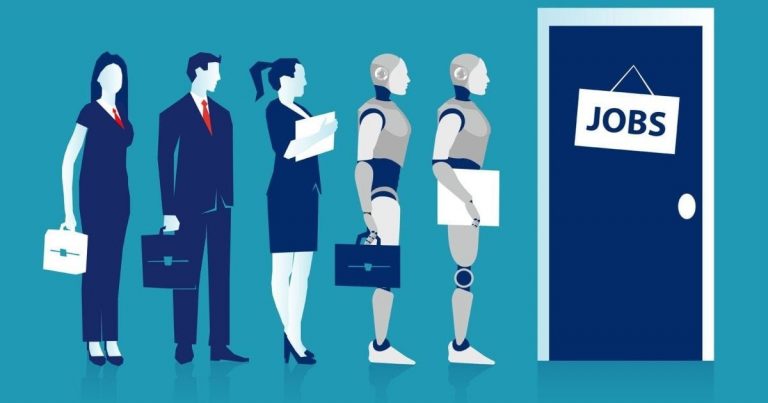
The debate over artificial intelligence and job security have intensified after author of Rich Dad Poor Dad, Robert Kiyosaki, reacted to report of Jack Dorsey laying off 4,400 employees, citing AI’s growing capabilities.
In a post on X, Kiyosaki framed the move as a defining lesson in wealth creation, arguing that those who think like employees risk being replaced by automation, while entrepreneurs who leverage AI stand to multiply their fortunes.
He wrote,
Register for Tekedia Mini-MBA edition 20 (June 8 – Sept 5, 2026).
Register for Tekedia AI in Business Masterclass.
Join Tekedia Capital Syndicate and co-invest in great global startups.
Register for Tekedia AI Lab.
“AI MAKES the RICH RICHER:
Jack Dorsey just fired 4400 hundred employees. Not because the company needed the money. Dorsey admitted each employee made his company millions of dollars. Dorsey fired 4400 employee because AI could do their jobs. RICH DAD LESSON: Think like an employee and AI will replace you. Think like an entrepreneur and hire AI to make you richer….like Jack Dorsey.”
Kiyosaki comment comes after fintech giant Block (formerly Square) made headlines last month, by slashing nearly half its workforce, approximately 4,000 employees, reducing headcount from over 10,000 to just under 6,000.
CEO Jack Dorsey didn’t frame the move as a cost-cutting necessity due to financial distress. Instead, he explicitly tied the decision to artificial intelligence, stating that “intelligence tools” now enable the company to achieve far more with smaller, flatter teams.

Part of his memo reads,
“We’re not making this decision because we’re in trouble. Our business is strong. gross profit continues to grow, we continue to serve more and more customers, and profitability is improving. But something has changed. We’re already seeing that the intelligence tools we’re creating and using, paired with smaller and flatter teams, are enabling a new way of working that fundamentally changes what it means to build and run a company. and that’s accelerating rapidly.”
Kiyosaki’s argument is blunt and polarizing. AI isn’t merely a tool, it’s a wealth-transfer mechanism. Employees who view themselves as replaceable labor are at risk. Entrepreneurs (or those who adopt that mindset) treat AI as leverage, much like hiring top talent or investing in efficient systems.

For example, tech founders are leveraging AI coding assistants to accelerate software development.GitHub, a cloud-based platform, has reportedly introduced Copilot, an AI tool that helps developers write code faster.
Startups now build products with smaller engineering teams, reducing burn rates and speeding up time-to-market. Entrepreneurs are effectively hiring an AI “junior developer” that works instantly and scales effortlessly
Several users echoed Kiyosaki’s optimism. Many saw Dorsey’s move as a bold bet on the future. AI as a force multiplier that lets founders target massive profit-per-head metrics rather than headcount growth. One user wrote, “AI won’t replace you. Someone using AI will.”
Critics, however, highlighted the broader societal implications. Several users pointed out that not everyone can or should become an entrepreneur. They noted that societies rely on nurses, teachers, mechanics, electricians, and countless other roles that resist full automation.
If AI displaces large swaths of middle-class jobs, who will have the income to purchase the products and services that drive economic growth? One user noted: “Those 4,400 people were also consumers. Less spending power now. Less demand tomorrow.”
Others questioned whether the layoffs were truly AI-driven or partly “AI-washing” a convenient narrative to justify traditional cost reductions after years of rapid hiring during the post-2020 boom.
For employees, the takeaway from Kiyosaki argument is clear; Start asking how you can own or orchestrate systems AI included that generate value with minimal ongoing human input.
It is clear that the conversation around AI and work has moved beyond hypotheticals. In boardrooms and on social media alike, people are asking the same question: Are you using AI to build wealth or waiting to be replaced by it?