

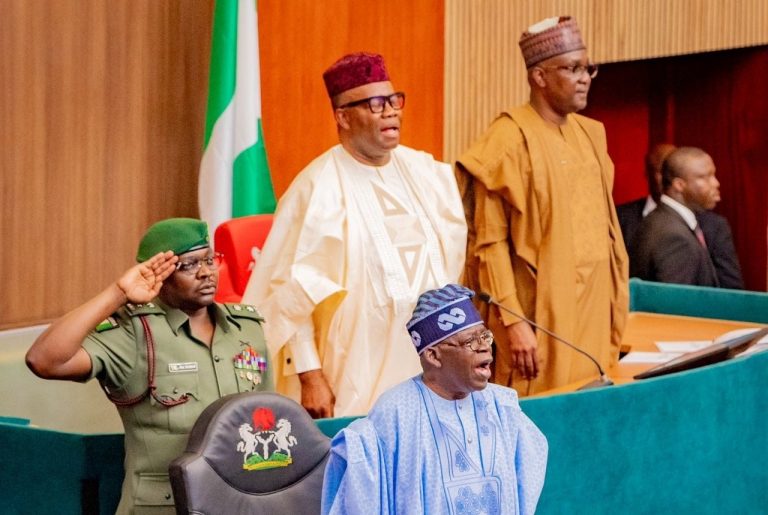
President Bola Tinubu has written to the House of Representatives requesting approval for an additional $347 million external loan to fund the Lagos-Calabar Coastal Highway, citing an upward revision in the financial requirements of the controversial project.
The request forms part of the federal government’s revised borrowing plan for the 2025–2026 fiscal period.
In the letter, Tinubu explained that the additional funds were needed to meet the adjusted scope and design of the project, a flagship infrastructure plan aimed at boosting inter-state connectivity along Nigeria’s southern corridor. The president stressed the urgency of the funding, describing the project as “critical to Nigeria’s economic competitiveness” and a strategic priority for the administration’s Renewed Hope Agenda.
Register for Tekedia Mini-MBA edition 20 (June 8 – Sept 5, 2026).
Register for Tekedia AI in Business Masterclass.
Join Tekedia Capital Syndicate and co-invest in great global startups.
Register for Tekedia AI Lab.
The House is expected to deliberate on the fresh loan request in the coming weeks, while the Senate had, on Tuesday, already given its nod to an earlier tranche of Tinubu’s expansive borrowing plan—approving a combined external loan package of $21.5 billion, €2.2 billion, and 15 billion Japanese Yen, alongside a €65 million grant.
In addition to the foreign loans, the Senate also approved a domestic bond issuance of N757.98 billion aimed at clearing outstanding liabilities under the Contributory Pension Scheme (CPS), some of which date back to December 2023. The move was widely seen as a bid to provide relief to thousands of retirees impacted by chronic delays in entitlement payments.
The Senate’s approval forms part of the 2025–2026 Medium-Term Expenditure Framework (MTEF) and Fiscal Strategy Paper (FSP), documents that lay out the federal government’s fiscal direction and economic priorities over the next two years.

Senator Aliyu Wamakko, Chairman of the Senate Committee on Local and Foreign Debts, who presented the committee’s report, disclosed that most of the proposed loans were concessional in nature—offered at low interest rates with extended repayment terms. These, he explained, are intended to finance critical sectors such as power, transportation, education, health, agriculture, and water resources without placing excessive strain on Nigeria’s fragile public finances.
In his communication to the National Assembly, President Tinubu defended the borrowing plan as necessary to address the country’s “massive infrastructure deficit” and to sustain key economic programmes at a time when government revenue has been under immense pressure, particularly since the removal of fuel subsidies.
“In light of the significant infrastructure deficit in the country and the paucity of financial resources needed to address this gap amid declining domestic demand, it has become essential to pursue prudent economic borrowing to close the financial shortfall,” Tinubu stated.

One of the most notable provisions in the Senate-approved plan is the proposed $2 billion Foreign Currency Denominated Issuance Programme in the domestic debt market. The programme, enabled by Presidential Executive Order No. 16 of 2023, is designed to raise foreign currency from domestic sources—such as diaspora remittances, foreign businesses, and private sector players operating in Nigeria—rather than international lenders.
According to the Senate, this innovative measure is aimed at deepening the local capital market, easing pressure on Nigeria’s foreign reserves, and attracting new investors. Proceeds from the programme will be ring-fenced for investment in strategic sectors including energy, digital infrastructure, and transport.
“The initiative provides an alternative to external borrowing, reduces pressure on foreign reserves, and allows investors to earn returns on their dollar holdings while contributing to national development,” the Senate committee said.
Equally pivotal is the Senate’s approval of the N757.98 billion bond issuance to settle backlogs in pension contributions under the CPS. Nigeria’s pension system has faced a crisis in recent years, with the federal government repeatedly defaulting on its obligations due to revenue shortfalls. The prolonged delays have left many retirees in financial distress, unable to meet basic needs or access healthcare.
According to Tinubu’s letter to the Senate, the Federal Executive Council (FEC) had already given prior approval for the pension bond programme in February 2025. The president said the bonds would “cushion the hardship of retirees, restore trust in the pension system, and stimulate liquidity in the domestic market.”
Lawmakers who supported the overall borrowing plan acknowledged the country’s growing public debt profile but argued that the long-term benefits—including job creation, improved infrastructure, and expanded access to health and education—outweighed the immediate costs. They insisted that the loans, grants, and bond issuance represented a necessary and strategic response to the nation’s economic realities.
The Senate said the borrowing programme is a fiscal pivot designed to put Nigeria on a more sustainable growth trajectory. It described the approval as a vital step toward stabilizing the economy, modernizing critical infrastructure, and addressing historic pension arrears that have long eroded public trust in the system.
As attention now turns to the House of Representatives for its review of the additional $347 million sought for the Lagos-Calabar Coastal Highway, Tinubu’s administration is betting heavily on borrowed funds to drive its development agenda. However, the mounting debt burden continues to spark concern among analysts and civil society groups, who warn that without corresponding increases in revenue, the borrowing spree will exacerbate Nigeria’s fiscal vulnerability.