

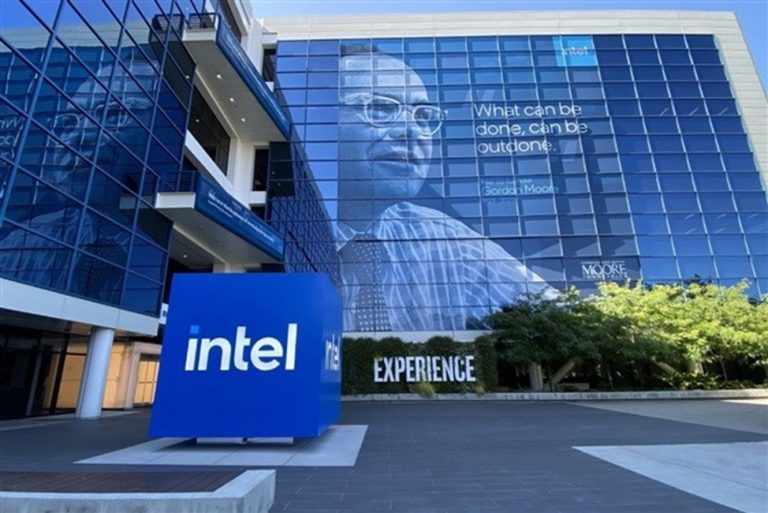
The Trump administration is reportedly discussing a plan to acquire a 10% stake in Intel Corp., potentially making the U.S. government the chipmaker’s largest shareholder.
The proposal involves converting some or all of Intel’s $10.9 billion in grants from the 2022 CHIPS and Science Act into equity, a move that could be worth about $10.5 billion at Intel’s current market value. The initiative aims to bolster domestic semiconductor production, particularly Intel’s delayed factory hub in Ohio, and reduce reliance on foreign chipmakers like TSMC and Samsung.
This follows a meeting between President Trump and Intel CEO Lip-Bu Tan, sparked by earlier tensions over Tan’s alleged ties to Chinese firms. Analysts note that while federal backing could aid Intel’s struggling foundry business, it may not address deeper issues like its weak product roadmap or challenges in attracting customers.
Register for Tekedia Mini-MBA edition 20 (June 8 – Sept 5, 2026).
Register for Tekedia AI in Business Masterclass.
Join Tekedia Capital Syndicate and co-invest in great global startups.
Register for Tekedia AI Lab.
SoftBank also recently announced a $2 billion investment in Intel, reflecting optimism about its potential turnaround. The U.S. government’s stake in Intel signals a shift toward state-backed industrial policy to secure domestic chip production, reducing reliance on foreign foundries like TSMC (Taiwan) and Samsung (South Korea).
Semiconductors are critical for everything from AI to defense systems, and Intel is the only U.S. company capable of producing advanced logic chips domestically. This move aims to bolster national security by ensuring a stable supply of cutting-edge chips, especially amid geopolitical tensions with China over Taiwan.
The equity stake could provide Intel with immediate capital to expedite its delayed $100 billion Ohio factory hub, intended to be the world’s largest chipmaking facility. This would enhance U.S. capacity to produce advanced chips (e.g., 18A and 14A nodes), positioning Intel to compete with TSMC’s cost advantages and technological lead.

Intel’s stock surged 7-9% after initial reports of the potential stake, reflecting investor optimism about government backing. However, Intel’s 60% market value loss in 2024 and a high debt-to-EBITDA ratio (27.47x) highlight its financial struggles. The government’s investment could stabilize Intel’s balance sheet, fund R&D, and support its capital-intensive foundry business, which has yet to secure major clients like Nvidia or Apple.
Government contracts, such as the $3 billion Secure Enclave program for the Pentagon, ensure a steady revenue stream, reducing Intel’s dependence on volatile commercial markets. This could make Intel a more attractive partner for chip designers, strengthening its foundry ambitions.
The Intel stake follows other Trump administration moves, such as a 15% revenue cut from Nvidia and AMD’s China AI chip sales, a $400 million stake in MP Materials, and a “golden share” in U.S. Steel. This suggests a broader strategy of government intervention in critical industries, moving away from laissez-faire policies.
A 10% stake would make the U.S. Intel’s largest shareholder, potentially influencing corporate governance and strategic decisions. Other nations, like Taiwan with its 6.4% sovereign wealth fund stake in TSMC, use similar models to support strategic industries. The U.S. adopting this approach could normalize government equity stakes in tech, potentially extending to other CHIPS Act recipients.

Competitive Dynamics with TSMC and Samsung
TSMC and Samsung dominate advanced chip manufacturing, with TSMC producing over 90% of the world’s cutting-edge chips. Intel’s 18A node technology aims to close this gap, but delays and operational challenges have hindered progress. Government backing could accelerate Intel’s technological advancements, making it a viable alternative to TSMC for U.S. chip designers like Nvidia, AMD, and Qualcomm.
Trump’s proposed 100-300% tariffs on imported semiconductors could incentivize chip designers to partner with Intel to avoid punitive costs, indirectly boosting Intel’s foundry business. However, this could raise electronics prices globally, impacting consumers and potentially straining U.S. relations with allies reliant on TSMC and Samsung.
The stake aligns with efforts to counter China’s technological ascent, particularly after export restrictions and concerns over Intel CEO Lip-Bu Tan’s past investments in Chinese firms. By securing Intel, the U.S. aims to insulate its supply chain from Chinese influence and potential disruptions in Taiwan, a critical chokepoint for global chip supply.
The focus on Intel’s Ohio project, coupled with political support from figures like VP JD Vance, underscores the domestic political calculus. A successful factory could boost jobs and economic growth in a key swing state, aligning industrial policy with electoral strategy. A government stake could politicize Intel’s operations, with fears of reduced corporate autonomy akin to the U.S. Steel “golden share” precedent, where the government holds veto power over certain decisions.
Analysts argue that Intel’s struggles—weak product roadmap, failure to capitalize on the AI boom, and lack of major foundry customers—may not be fully addressed by government funding. Execution risks, such as further delays in Ohio or 18A/14A node development, could undermine the investment’s impact. Critics warn that state intervention could distort free-market dynamics, favoring Intel over competitors like AMD or GlobalFoundries.
By bolstering Intel’s domestic manufacturing, the U.S. aims to achieve a fifth of the world’s advanced chip production by 2030, reducing dependence on TSMC and Samsung. This aligns with both Trump and Biden administration goals to reshore critical tech infrastructure. A successful Intel foundry could attract major U.S. clients, weakening TSMC’s near-monopoly on advanced chips.
China’s push to develop its own semiconductor industry, despite U.S. export controls, poses a long-term threat. Intel’s government-backed revival could ensure the U.S. maintains a technological edge, particularly in 2nm+ chip production critical for AI and defense. However, Intel’s past ties to Chinese firms, as highlighted by Trump’s initial criticism of CEO Lip-Bu Tan, underscore the need for stringent oversight to prevent technology leakage.
SoftBank’s $2 billion investment in Intel, announced alongside the government’s plan, signals confidence in Intel’s turnaround potential, particularly in chip design for AI applications. This dual backing could draw further private investment, helping Intel scale its foundry business to compete with TSMC and Samsung. However, Intel must demonstrate operational success to sustain this momentum.
A successful Intel stake could serve as a model for future government investments in strategic sectors, redefining U.S. industrial policy. If Intel regains process technology leadership (e.g., with 18A), it could validate state capitalism as a tool for technological supremacy.