

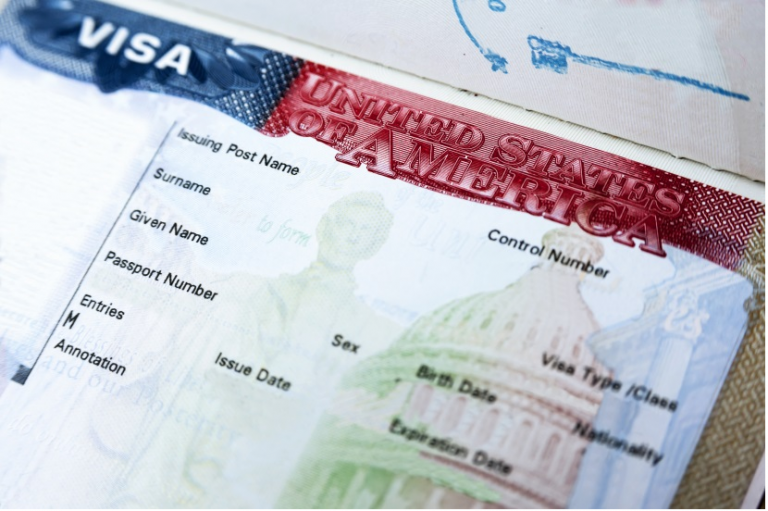
U.S. President Donald Trump’s administration is considering a sweeping expansion of its travel restrictions by potentially banning citizens of 36 additional countries—including Nigeria—from entering the United States.
This follows a fresh proclamation signed by Trump earlier this month, targeting 12 countries on national security grounds. The proposed extension, detailed in an internal State Department cable, has sparked outrage in Nigeria and raised fresh diplomatic tensions between Washington and Africa’s most populous nation.
Signed by U.S. Secretary of State Marco Rubio, the diplomatic cable lists concerns such as national security risks, unreliable identity documentation, non-cooperation in deportation processes, and visa overstays.
Register for Tekedia Mini-MBA edition 20 (June 8 – Sept 5, 2026).
Register for Tekedia AI in Business Masterclass.
Join Tekedia Capital Syndicate and co-invest in great global startups.
Register for Tekedia AI Lab.
“The Department has identified 36 countries of concern that might be recommended for full or partial suspension of entry if they do not meet established benchmarks and requirements within 60 days,” the cable stated. The warning is that failure to address U.S. security and procedural benchmarks could result in blanket or partial travel bans for citizens of those countries.
Nigeria’s inclusion has stirred deep anger and disappointment among citizens, many of whom have taken to social media to express outrage at the country’s leaders for relegating it to what some describe as a “diplomatic low.” Many note that the situation is a direct consequence of years of poor governance, data management failures, and Nigeria’s inability to meet global security protocols, despite its status as a regional power.
This is not the first time Nigeria has come under Trump’s immigration crosshairs. During his first term, Trump attempted to ban Nigerians from entering the U.S. as part of a controversial immigration crackdown targeting Muslim-majority and African countries. The United States imposed an immigrant visa ban on Nigeria as a result of the country’s failure to comply with its established identity management and information-sharing criteria.

At the time, the Nigerian government expressed disappointment, and then-President Muhammadu Buhari set up a committee, that recommended the establishment of a National Criminal Information Management, fashioned after the INTERPOL model, and a National Criminal DNA Laboratory, to aid criminal investigation, administration of criminal justice as well as sharing of relevant information.
Although the move was later overturned by President Joe Biden in 2021, the resurgence of Nigeria on a new travel ban list under Trump’s second term has reignited long-standing concerns about Nigeria’s deteriorating diplomatic stature.
The State Department memo outlines why these countries are under scrutiny. Among the factors are the lack of competent governance to issue verifiable passports, failure to take back deported nationals, and the participation of some citizens in terrorist activities or anti-American behavior. Although the memo clarifies that not every concern applies to every country listed, it maintains that systemic weaknesses pose a risk to U.S. national security.

If the policy is implemented, Nigeria could face a full or partial suspension of visa issuance and entry into the U.S. This would severely affect students, business travelers, families, and medical tourists who rely on the U.S. for education, commerce, and healthcare. Countries identified alongside Nigeria include Angola, Ethiopia, Cameroon, Egypt, South Sudan, and Syria. Others span the Caribbean, Pacific islands, and Central Asia.
This fresh proclamation builds on Trump’s broader immigration crackdown since his return to office. Alongside new travel bans, his administration has recently deported hundreds of Venezuelans suspected of gang activity, restricted foreign student visa renewals, and enforced tighter screening protocols for visa applicants.
A senior State Department official, responding to media inquiries, said, “We are constantly reevaluating policies to ensure the safety of Americans and that foreign nationals follow our laws.”
“The Department of State is committed to protecting our nation and its citizens by upholding the highest standards of national security and public safety through our visa process,” the official added while refusing to confirm the internal deliberations made public by the leaked cable.
As the 60-day deadline ticks down, pressure is mounting on the Nigerian government to act decisively. Analysts warn that failure to address the issues identified by Washington could see Nigeria facing another prolonged period of strained relations with the United States—potentially more damaging than before.
What’s clear is that the Trump administration’s approach has shifted from broad immigration rhetoric to targeted policy, and countries like Nigeria are being held to specific benchmarks. With the prospect of a renewed travel ban, Nigeria faces a critical diplomatic test—one that many argue should never have arisen in the first place if its leadership had prioritized institutional reforms, security cooperation, and transparent governance.