

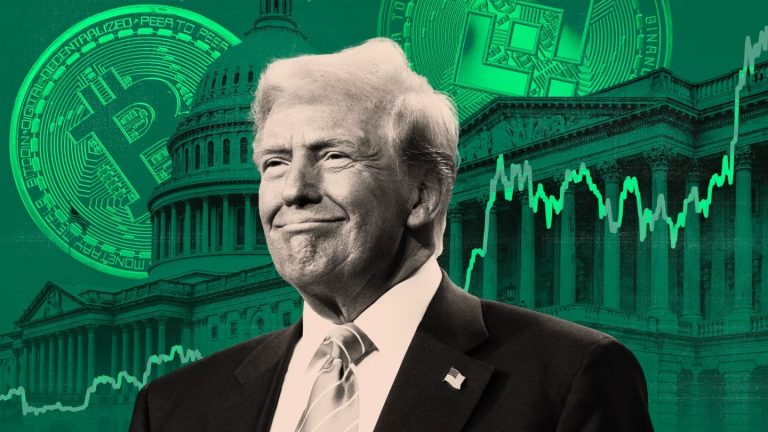
President Donald Trump’s expanding footprint in digital assets has taken a new turn with reports that his crypto venture awarded UFC fighters $250,000 in bonuses highlighting the growing intersection between politics sports and blockchain finance in the United States digital economy
The crypto initiative associated with Donald Trump has positioned itself as a high-profile entrant in the evolving Web3 ecosystem seeking to leverage celebrity branding and political capital to attract users investors and partners across decentralized finance markets.
While details of the venture’s operational structure remain limited public reporting suggests it focuses on tokenized engagement platforms and promotional partnerships that merge entertainment and blockchain incentives
The decision to award $250,000 bonuses to fighters associated with the Ultimate Fighting Championship reflects a broader strategy of embedding crypto-linked incentives within mainstream sports entertainment. The bonuses reportedly aim to reward athlete participation in promotional campaigns tied to the venture’s digital asset ecosystem enhancing visibility among combat sports audiences and younger retail investors already engaged in crypto markets.
Register for the next Tekedia Mini-MBA.
Register for Tekedia AI in Business Masterclass.
Join Tekedia Capital Syndicate and co-invest in great global startups.
Such cross-industry incentives illustrate how political figures and affiliated enterprises are increasingly using sports platforms to amplify blockchain adoption narratives. UFC events provide a global broadcast stage that aligns with high engagement demographics making them attractive for experimental marketing strategies involving digital tokens NFTs and fan engagement tools that promise new monetization pathways.
However the move also raises questions about regulatory oversight transparency and the blending of political influence with speculative financial instruments. Critics argue that crypto-linked rewards in professional sports could expose athletes to volatile asset ecosystems while complicating existing sponsorship disclosure frameworks already under scrutiny in both securities and advertising law contexts.
Despite these concerns supporters view the initiative as an innovative fusion of entertainment branding and financial technology that could redefine athlete compensation models in the digital era. Whether such experiments become mainstream or remain niche will depend on regulatory clarity market adoption and the long-term stability of crypto driven reward systems.

The UFC has long been a commercial powerhouse in combat sports leveraging pay-per-view revenue sponsorship deals and global expansion to build a highly monetized ecosystem that naturally aligns with emerging digital asset experiments.
By integrating crypto-based rewards into fighter compensation structures even in limited promotional contexts the organization and its partners can test audience response to tokenized incentives without fundamentally altering core contractual pay systems.
Donald Trump’s broader engagement with digital assets reflects a wider trend among high-profile political figures who increasingly explore blockchain platforms as tools for fundraising community building and media amplification.
The integration of athlete bonuses into promotional crypto structures also serves as a signaling mechanism demonstrating market seriousness to retail traders and institutional observers who closely monitor celebrity backed token initiatives for legitimacy and long term viability in an increasingly competitive digital finance landscape.
The reported UFC bonuses highlight a convergence of entertainment economics and speculative finance that is reshaping how value is distributed across sports ecosystems. While the long-term implications remain uncertain the experiment underscores the accelerating role of crypto ventures in mainstream cultural industries where visibility engagement and financial incentives are becoming increasingly intertwined.

This development will likely attract continued scrutiny from regulators athletes and industry stakeholders evaluating its sustainability and fairness over time. Additionally market analysts expect further experimentation with crypto based reward systems in professional sports ecosystems globally expanding.