

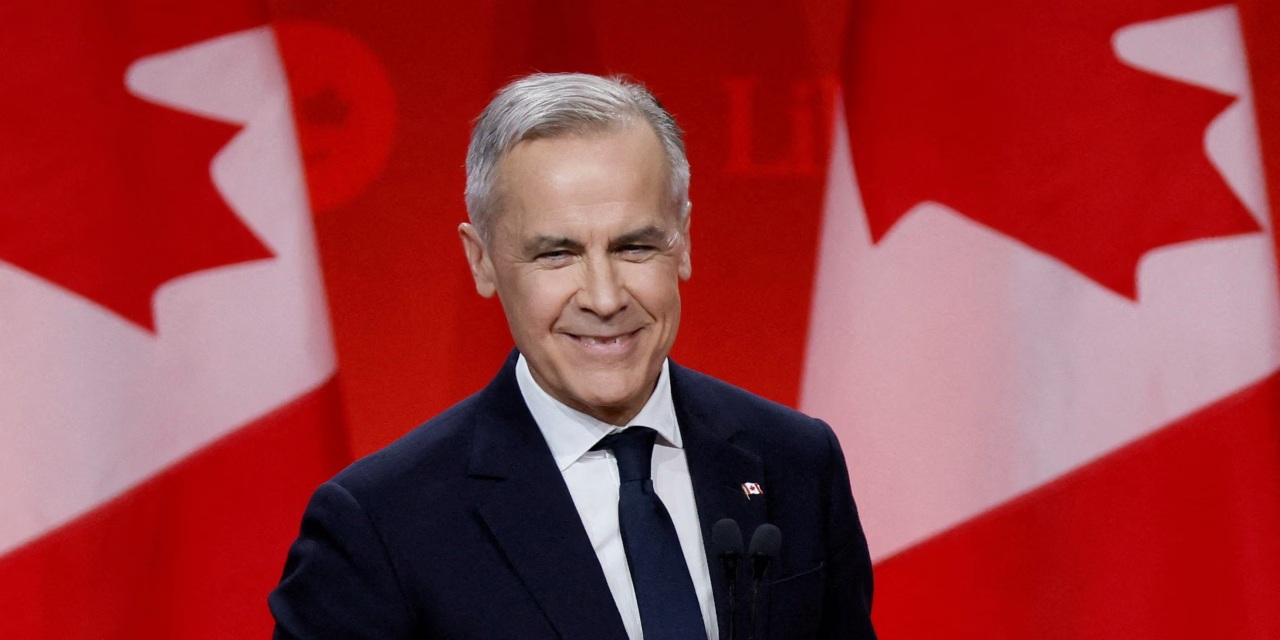
US President Donald Trump said on Tuesday that Washington was close to reaching a trade agreement with Canada, while Canadian Prime Minister Mark Carney indicated that negotiations had advanced but remained incomplete, with the United States withdrawing some of its earlier demands.
Speaking in an interview with Fox News, Trump expressed confidence that the two countries would soon reach an agreement.
“Canada is very good, we’re going to make a deal with Canada very soon. We’re going to make a great deal,” he said.
Register for the next Tekedia Mini-MBA.
Register for Tekedia AI in Business Masterclass.
Join Tekedia Capital Syndicate and co-invest in great global startups.
Carney offered a more cautious assessment, saying the negotiations had moved forward but that both sides still needed to resolve outstanding issues. His comments followed a summit in Antigua, where he addressed the state of discussions with Washington.
“We’ve made progress, but we haven’t finished. You know, if I were to paraphrase it, it’s they’re asking less and they’re offering more, but we’re not quite there,” Carney told a televised news conference.
The different assessments reveal the gap between Trump’s public confidence and the more measured position of the Canadian government as both countries seek to resolve a trade dispute that has led to billions of dollars in tariffs on goods crossing their shared border.

Carney said Washington had withdrawn several demands that had complicated negotiations, including a proposal that would have given the United States final approval over trade agreements Canada might pursue with other countries. That demand touched on a central issue for Ottawa: preserving its ability to negotiate independent trade arrangements rather than allowing Washington to influence or control its commercial relationships with other economies.
Removing the proposal could reduce one of the obstacles to an agreement, although Carney’s comments suggest that other differences remain unresolved. Neither leader provided details of the concessions under discussion or a timetable for concluding negotiations.
The issue also carries implications beyond the immediate tariff dispute. Canada has an established network of trade relationships outside the United States, and any arrangement that restricts its ability to negotiate with other partners could affect its longer-term trade policy.

Washington securing concessions from Canada has been part of Trump’s broader effort to reshape US trade relationships through tariffs and bilateral negotiations. The extent to which the two governments can reconcile those objectives will determine whether the latest progress leads to a lasting agreement.
Trump and Carney said on Sunday that they had spoken about a potential trade deal, signaling renewed engagement after months of tariff tensions.
The dispute has become an increasingly visible issue in parts of the United States, particularly northern border states such as Michigan and Maine, where trade with Canada is closely connected to regional businesses and supply chains.
Billions of dollars in tariffs imposed by both governments have increased uncertainty for companies operating across the border. Businesses that rely on cross-border trade face the possibility of higher costs, disrupted supply arrangements and difficulty planning investments while the two countries remain locked in negotiations.
The political sensitivity of the dispute has also grown ahead of Tuesday’s US midterm elections. Tariffs on Canadian goods have emerged as an issue in some border states, where economic ties with Canada make trade policy a direct concern for businesses and workers.
A negotiated settlement could ease some of that uncertainty, although the economic consequences would depend on the terms of any agreement and whether the two governments can prevent further tariff escalation.
For now, Trump’s statement that a deal is close has not been matched by a firm commitment from Ottawa. Carney’s description of Washington as asking for less and offering more suggests that the balance of negotiations has shifted, but his warning that the two sides are not yet there indicates that significant work remains.
Following the results of the U.S. mid-term elections that have yielded a massive blue wave, many expect a lot to change, including tariff negotiations. However, it is not clear what the next stage will be. Some analysts expect to be influenced by both governments’ ability to translate the concessions discussed in recent conversations into an agreement that addresses US demands without compromising Canada’s independent trade policy.