

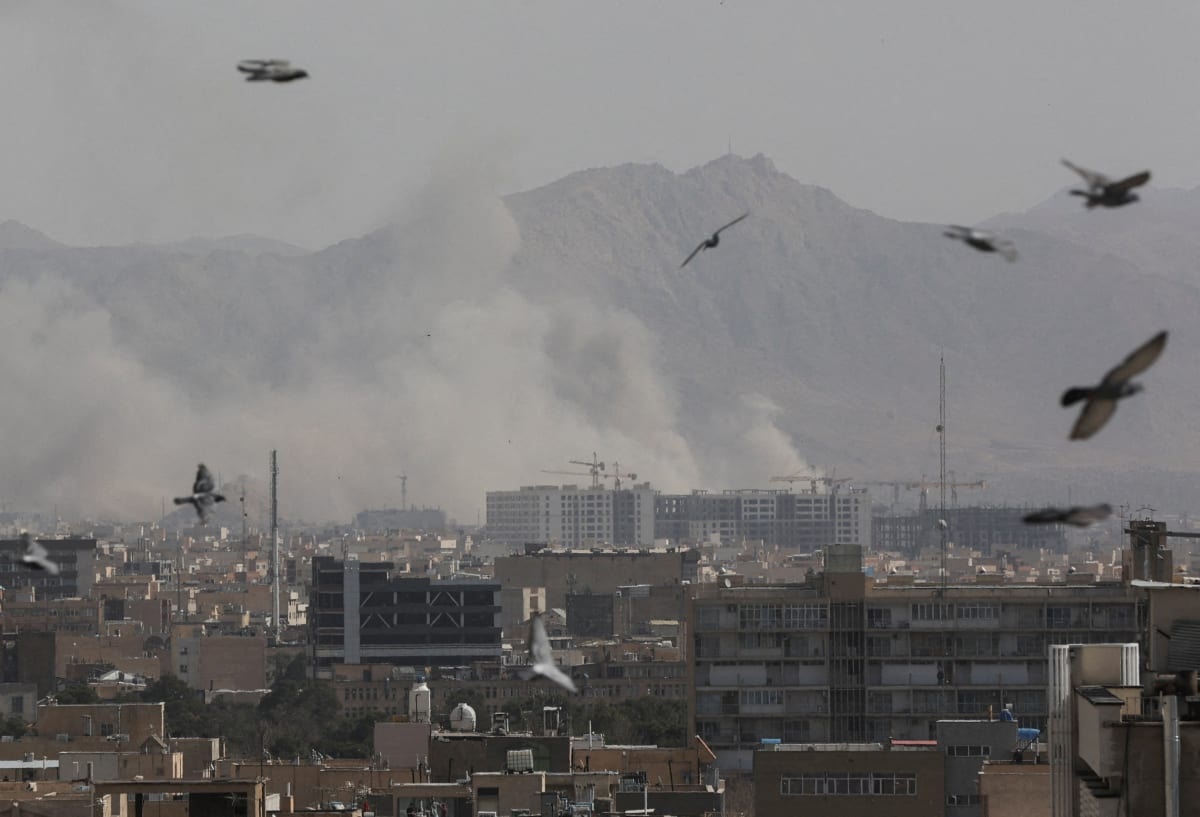
President Donald Trump is signaling a possible wind-down of U.S. military operations against Iran, even as the conflict shows signs of entrenching, with Tehran continuing to absorb and respond to sustained strikes from U.S. and Israeli forces.
In a post on Truth Social, Trump said: “We are getting very close to meeting our objectives as we consider winding down our great Military efforts in the Middle East with respect to the Terrorist Regime of Iran.”
He added that the burden of securing the Strait of Hormuz should fall on other nations. “The Hormuz Strait will have to be guarded and policed, as necessary, by other Nations who use it — The United States does not! If asked, we will help these Countries in their Hormuz efforts, but it shouldn’t be necessary once Iran’s threat is eradicated.”
Register for Tekedia Mini-MBA edition 20 (June 8 – Sept 5, 2026).
Register for Tekedia AI in Business Masterclass.
Join Tekedia Capital Syndicate and co-invest in great global startups.
Register for Tekedia AI Lab.
Yet events on the ground point in a different direction. Iranian media reported that the Shahid Ahmadi-Roshan nuclear enrichment facility in Natanz was struck on Saturday. Officials said there were no radioactive leaks and no immediate danger to nearby residents, but the attack underlines the widening scope of targets, now extending deeper into Iran’s nuclear infrastructure.
From the outset, Trump and his advisers had expected a rapid collapse in Iranian resistance, banking on overwhelming military pressure to force Tehran into submission or negotiations within days. That assumption is proving misplaced. Iran has neither capitulated nor signaled willingness to concede. Instead, it has escalated retaliation, deploying missiles and drones across the Gulf and targeting energy assets central to the global supply chain.
The consequence is a conflict with no clear endpoint. Trump’s assertion that the war could soon wind down sits uneasily alongside the reality of a campaign that continues to expand in both geography and impact. Backing away without securing a decisive outcome risks being seen, politically and militarily, as a defeat—raising the likelihood that operations will persist even as the economic costs mount.

“He’s finding it difficult to drive the news cycle, as he’s accustomed to, because he still can’t explain why he’s taken this country to war and what comes next,” said Brett Bruen, a former foreign policy adviser in the Obama administration who now heads the ?Situation Room strategic consultancy in Washington. “He seems to have lost his mojo on messaging.”
Inside the administration, that tension is increasingly visible. Trump declared in recent days that the war “was Militarily WON,” a claim that contrasts with ongoing Iranian strikes and the near-disruption of maritime traffic through the Strait of Hormuz.
A White House official defended the campaign, saying: “This has been an undisputed military success,” citing the killing of senior Iranian figures, the destruction of much of its navy, and damage to its missile arsenal.

Even so, Tehran has continued to impose costs. Since the war began on February 28, more than 2,000 people have been killed in Iran, according to reports. Iranian forces have leveraged remaining capabilities to strike oil and gas facilities across the region, contributing to a roughly 50% surge in global oil prices. The inflationary effect is already being felt, feeding into higher fuel and energy costs for consumers and businesses worldwide.
Iran’s pressure campaign has also focused on maritime chokepoints. The Strait of Hormuz, through which about a fifth of global oil supply passes, has been partially disrupted by attacks on commercial vessels and the laying of mines. Trump’s insistence that other countries should take over its security has met resistance, particularly from NATO allies who were not consulted before the war began.
Privately, U.S. officials acknowledge frustration within the White House over the lack of allied support. Trump has publicly accused NATO partners of cowardice for declining to deploy naval forces to secure the waterway. The dispute has exposed strains in long-standing alliances at a moment when coordination would typically be expected.
The conflict has also revealed fissures with Israel. Trump said he had no advance knowledge of an Israeli strike on Iran’s South Pars gas field, while Israeli officials indicated the operation had been coordinated. The development has added to uncertainty over how closely aligned the two countries are as the war unfolds.
On the battlefield, the confrontation continues to widen. Iranian gas flows to Iraq were briefly halted after the South Pars strike before resuming, highlighting the vulnerability of regional energy networks. Attacks on infrastructure in Iran and neighboring Gulf states have compounded supply disruptions, tightening markets already on edge.
Within Washington, debate is intensifying over how to proceed. Some advisers are urging the president to find an “off-ramp” and define limits to the campaign. Others argue that stepping back now would embolden Iran and undermine U.S. credibility. Analysts say the administration is grappling with the consequences of early assumptions about how the conflict would unfold.
“They failed to think through the contingencies around ways in which a conflict with Iran could go sideways, where it might not go according to the plan as they laid out,” said John Bass, a former U.S. ambassador.
Aaron David Miller, a veteran Middle East negotiator, offered a sharper assessment: “Trump has built himself a box called the Iran war, and he can’t figure out how to get out of it.”
The war is also beginning to test Trump’s political standing at home. Rising energy costs are feeding voter anxiety, particularly as the administration heads toward elections that could shift control of Congress. Trump had campaigned on avoiding prolonged foreign conflicts, but the current trajectory suggests a campaign that may endure longer than anticipated.
“As the economics play themselves out, people will start to say: ‘Why am I paying high gas prices again? … Why is the Strait of Hormuz now determining whether or not I can take a vacation next month?’” Republican strategist Dave Wilson noted, pointing to the economic pressure building on voters.
Beyond the United States, governments are preparing for further fallout. Keir Starmer is expected to convene senior officials and the governor of the Bank of England to examine support measures for households facing rising energy and borrowing costs. The UK has already announced a £53 million package aimed at helping vulnerable households cope with higher heating bills.
The central contradiction, currently, remains unresolved. Trump is signaling a desire to wind down a war he expected to end quickly. Iran, far from yielding, is sustaining resistance and extending the fight into domains that carry global consequences. With neither side prepared to concede and the cost of disengagement rising, the conflict appears set to drag on.