

David Sacks, President Donald Trump’s appointed czar for artificial intelligence and cryptocurrency, delivered a sharp rebuke Wednesday to a proposed ballot measure in California that would impose a one-time 5% tax on the net worth of residents worth $1 billion or more, branding it an unprecedented “asset seizure” that could mark the start of a dangerous new era in U.S. taxation.
Speaking from the World Economic Forum in Davos on CNBC’s “Squawk Box,” Sacks, a prominent venture capitalist and co-founder of Craft Ventures, described the Billionaire Tax Act as fundamentally different from traditional income or property taxes.
“This is not a tax, this is an asset seizure,” he said. “Never been anything like this before in American history.” He argued that while proponents frame it as a one-time levy, “it’s not a one-time, it’s a first time,” warning that passage would invite repeated impositions and erode property rights.
Register for Tekedia Mini-MBA edition 20 (June 8 – Sept 5, 2026).
Register for Tekedia AI in Business Masterclass.
Join Tekedia Capital Syndicate and co-invest in great global startups.
Register for Tekedia AI Lab.
The initiative, officially titled the 2026 Billionaire Tax Act, is spearheaded by the Service Employees International Union–United Healthcare Workers West (SEIU-UHW). It aims to generate substantial revenue—estimates range from tens to around $100 billion—to bolster state-funded health care programs like Medi-Cal, public education, and food assistance amid concerns over potential federal funding cuts.
The tax would target California residents as of January 1, 2026, with net worth exceeding $1 billion, encompassing assets such as businesses, securities, art, collectibles, and intellectual property, though excluding real property, pensions, and certain retirement accounts. Payments could be spread over five years starting in 2027.
Proponents, including the union, argue the measure addresses fiscal pressures exacerbated by broader economic uncertainty and would fund essential services without burdening middle-class taxpayers. Supporters like Vermont Sen. Bernie Sanders have endorsed similar concepts nationally, viewing it as a step toward greater equity in a state with the nation’s highest concentration of billionaires.

The proposal remains in the signature-gathering phase, cleared for circulation by California Attorney General Rob Bonta in late December 2025. Organizers need approximately 546,651 to 875,000 valid signatures (depending on the exact threshold tied to prior election turnout) by mid-2026 to qualify for the November ballot.
A recent poll by the Mellman Group, commissioned by opponents including high-net-worth individuals, showed initial support at 48% with 38% opposed and 14% undecided, though backing weakened to 46% when voters heard balanced arguments.
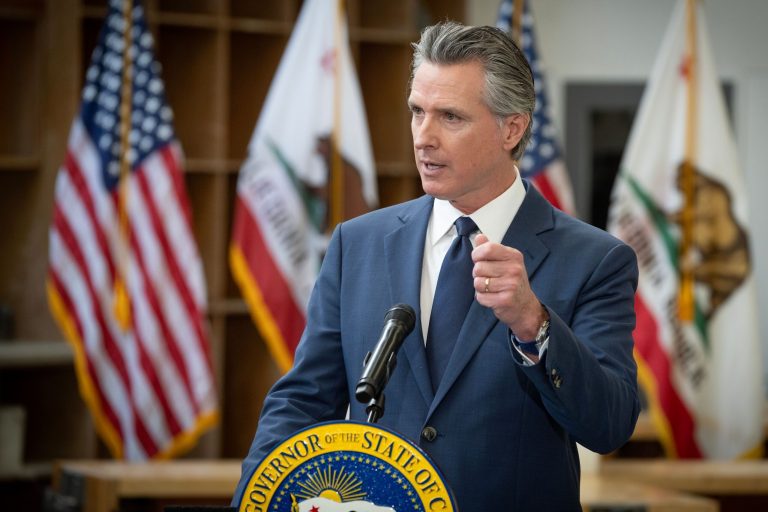
Opposition has mobilized swiftly, particularly from Silicon Valley. Sacks, who relocated from California to Texas after three decades in the state, predicted the measure has a “good chance” of passing and could trigger similar efforts elsewhere. He criticized Gov. Gavin Newsom for what he called delayed and insufficient opposition, claiming it has already driven a “trillion dollars” in net worth out of California and created a “huge hole” in tax collections. Newsom has publicly opposed the initiative, calling it poorly drafted and warning it could drive away high earners and innovation.

The backlash has spurred an exodus among some ultra-wealthy residents and firms. Figures like PayPal co-founder Peter Thiel (who moved to Florida), Google co-founder Larry Page, Oracle’s Larry Ellison, and Sacks himself have shifted residences or opened offices in lower-tax states like Texas and Florida ahead of the January 1, 2026, snapshot date. Tech investors, including Chamath Palihapitiya, Vinod Khosla, and Y Combinator’s Garry Tan, have voiced strong criticism, with some forming opposition groups and chat networks to coordinate resistance.
Sacks highlighted the irony for large corporations anchored in California—such as Nvidia, led by Jensen Huang, and OpenAI, under Sam Altman—which have indicated they plan to stay despite the potential hit.
“They’ve got large companies in the state, and California’s network effect is powerful,” he said. “That’s why progressives think they can get away with this.”
Smaller businesses and entrepreneurs, he argued, face greater flexibility to relocate. Critics, including the Tax Foundation, have pointed out that the effective rate could exceed 5% due to the mechanics of taxing unrealized gains and assets, potentially requiring sales that trigger additional taxes and liquidity issues. The Legislative Analyst’s Office has noted possible long-term reductions in state income tax revenue if wealthy residents depart.
Sacks’ comments align with his role in the Trump administration, where he advocates for policies fostering innovation in AI and crypto sectors heavily represented in California but sensitive to tax burdens. His intervention from Davos, amid global economic discussions, amplifies the national debate over wealth taxation at a time when federal policy shifts under Trump add further uncertainty to state-level fiscal experiments.
The Billionaire Tax Act has already reshaped conversations in Silicon Valley and Sacramento, pitting progressive funding goals against fears of capital flight and precedent-setting government overreach.