

U.S. President Donald Trump has declared the new trade framework with the European Union as the “biggest trade deal ever made,” touting it as a win for the American auto industry and a key step toward rebalancing trade between the two economic giants.
Announced Sunday after intense negotiations with European Commission President Ursula von der Leyen, the deal imposes a 15% blanket tariff on most European goods entering the U.S., including automobiles and auto parts. The new rate significantly reduces the looming threat of a 30% tariff Trump had threatened to enforce from August 1, while cutting nearly half of the existing 27.5% levy on European cars.
While the announcement has calmed fears of an escalating trade war, industry groups and economic analysts have warned that the tariff regime—though milder than anticipated—still poses serious risks to European automakers and could lead to long-term disruption in the global auto supply chain.
Register for Tekedia Mini-MBA edition 20 (June 8 – Sept 5, 2026).
Register for Tekedia AI in Business Masterclass.
Join Tekedia Capital Syndicate and co-invest in great global startups.
Register for Tekedia AI Lab.
The Tariff Burden
CNBC reports that Germany’s powerful auto lobby, the VDA (German Association of the Automotive Industry), welcomed the deal for averting an outright trade dispute but described the 15% tariff as “a significant burden.” In a statement, VDA President Hildegard Müller stressed that the costs to German automakers would still run into billions of euros annually, exacerbating financial pressures at a time when the industry is already grappling with the high costs of transitioning to electric vehicles and digital manufacturing.
“The decisive factor now will be how the agreement is structured in concrete terms and how reliable it is,” Müller said, while urging both the U.S. and EU to support supply chains and maintain competitive investment environments. “A 15% tariff remains painful and burdensome.”
The European Automobile Manufacturers’ Association (ACEA) echoed those concerns. While acknowledging that the agreement provides some relief from the cloud of uncertainty, ACEA Director-General Sigrid de Vries warned that retaining elevated tariffs will continue to negatively impact both European and American automotive sectors.

“Nevertheless, the US will retain higher tariffs on automobiles and automotive parts, and this will continue to have a negative impact not just for industry in the EU but also in the US,” she said.
Margins Under Pressure
Rico Luman, a senior economist for transport and logistics at Dutch bank ING, said the agreement represents a reprieve but not a resolution.
“Margins are under pressure in a multi-challenge market and the bill can’t be fully passed on to customers without volume losses,” Luman told CNBC by email.

The tariff hit comes as automakers continue to digest the second-quarter earnings season, which already reflected pain from earlier tariff regimes and currency fluctuations. Luman added that the weakened dollar makes U.S. car imports more expensive, further complicating pricing strategies.
That’s why global car makers are all looking for ways to adjust manufacturing footprints within current facilities,” he added.
Winners and Losers
In market reaction, the Stoxx Europe Autos Index initially climbed 1.6% on news of the deal, but later reversed into negative territory as investors digested the implications of the new tariff floor.
Shares of some parts suppliers like Valeo jumped as much as 4.3%, while luxury carmaker Ferrari rose nearly 0.9%. But Germany’s biggest automakers — BMW, Mercedes-Benz, and Volkswagen — all slid more than 1.3%, indicating market skepticism about the agreement’s short-term upside.
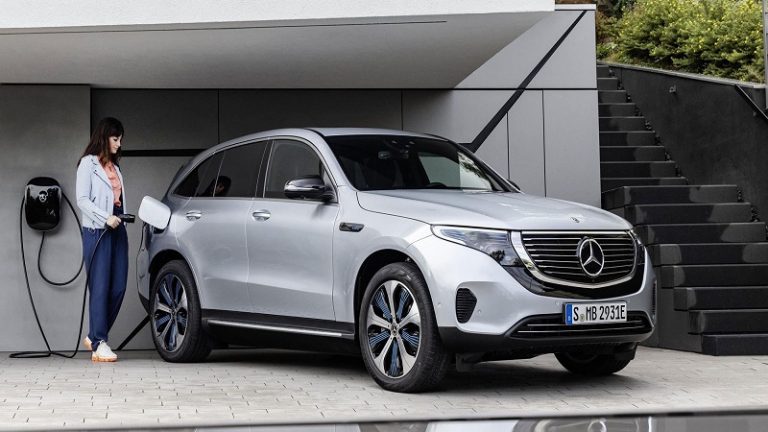
Morningstar analyst Rella Suskin said the deal’s benefits will be unevenly distributed. Automakers that rely heavily on EU-based production for U.S. exports — such as Porsche, Mercedes, BMW, and Volkswagen — stand to gain relative protection from the reduced tariff, though the cost is still high. Stellantis, on the other hand, which imports only a single-digit share of its volumes from the EU into the U.S., is expected to see minimal impact.
What Comes Next?
Analysts warn that the deal, while momentarily stabilizing, is still fraught with uncertainty over enforcement, duration, and broader trade dynamics. While the Trump administration has portrayed it as a victory for American workers and manufacturing, European officials appear cautious, emphasizing that the details still need to be negotiated and finalized.
The European Commission has called for parallel measures to support EU-based manufacturers and make Europe more attractive to global investors. Without such support, analysts warn the EU could lose its edge in auto innovation and production, especially amid fierce global competition from China and emerging markets.
As it stands, the 15% tariff framework may be better than the feared alternative, but for automakers on both sides of the Atlantic, it remains a costly compromise.