

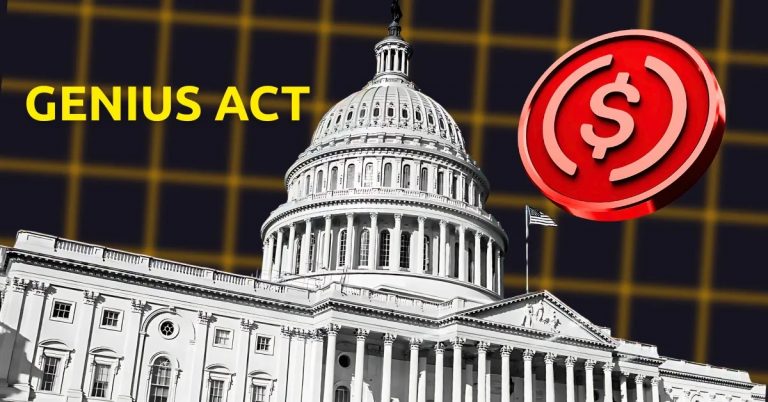
The U.S. Senate has passed the GENIUS Act, a comprehensive bill designed to regulate stablecoins—digital tokens pegged to fiat currencies such as the U.S. dollar.
The legislation’s passage marks the most significant step yet by American lawmakers to bring structure and oversight to a previously unregulated sector, with analysts forecasting that the move will unlock massive institutional adoption of stablecoins both in the United States and globally.
With institutional clarity long viewed as the missing piece for mainstream use, the GENIUS Act lays out a framework requiring that all stablecoins be fully backed by highly liquid assets—such as dollars and short-term Treasury bills—and that issuers provide monthly public disclosures of their reserves.
Register for Tekedia Mini-MBA edition 20 (June 8 – Sept 5, 2026).
Register for Tekedia AI in Business Masterclass.
Join Tekedia Capital Syndicate and co-invest in great global startups.
Register for Tekedia AI Lab.
The bill also introduces guidelines on licensing and consumer protections, setting the stage for trusted integration of stablecoins into sectors ranging from banking to retail to global payments.
The bill now moves to the Republican-controlled House of Representatives, where it is widely expected to pass before heading to President Donald Trump, whose administration has expressed strong support for blockchain-backed finance and whose own allies have already launched stablecoins tied to his brand.
From Crypto Niche to Financial Keystone
Stablecoins began as tools for crypto traders to transfer value between volatile tokens, but over time, they’ve evolved into crucial infrastructure for the global digital economy. Today, these tokens underpin remittance services, facilitate cross-border commerce, power decentralized finance (DeFi), and are increasingly viewed as an on-ramp for national digital currencies.

Experts say the GENIUS Act could transform how stablecoins are perceived—from high-risk instruments into regulated financial assets capable of supporting trillion-dollar ecosystems.
Big Banks and Corporations Eye Entry
The formalization of stablecoin regulation comes as several major banks and corporations prepare to launch or expand their own tokens:
- Bank of America CEO Brian Moynihan earlier this year hinted at the possibility of issuing a BofA stablecoin, though without confirming any timeline.
- Morgan Stanley CEO Ted Pick said the bank is open to playing a mediating role in crypto transactions, including those involving stablecoins, depending on how regulators move forward.
- Societe Generale, one of France’s largest banks, announced in June plans to launch a publicly tradable, dollar-backed stablecoin through its digital asset subsidiary, further signaling Europe’s growing appetite for regulated crypto products.
Retail behemoths Amazon and Walmart have been linked to early-stage discussions on creating stablecoins to streamline payments, improve loyalty programs, and reduce dependency on card networks. While Walmart denied any ongoing pilot, a recent Wall Street Journal report confirmed that both companies have evaluated the viability of issuing proprietary digital tokens.

Stablecoins, say insiders, could allow such companies to create seamless, low-cost ecosystems for purchases, subscriptions, and financial services, particularly as consumers increasingly shift toward digital wallets.
Financial Institutions Already Deep In
A number of financial and crypto-native firms are already deeply entrenched in the stablecoin space:
- PayPal launched its PYUSD stablecoin in August 2023, becoming the first major U.S. fintech company to deploy a fully regulated dollar-pegged token.
- Circle Internet Financial, the company behind USDC, operates one of the world’s most trusted stablecoins, with a market cap of $61.5 billion, used by exchanges, fintech apps, and DeFi protocols.
- Paxos, a regulated blockchain infrastructure provider, issues USDP and USDG, and formerly partnered with Binance on BUSD, which became one of the top global tokens before winding down under regulatory pressure.
- Tether, the issuer of USDT, holds the title of the world’s largest stablecoin with over $155 billion in market value. Despite criticism over its reserve transparency in past years, USDT remains dominant, particularly in emerging markets and global trade.
- MakerDAO, the decentralized protocol behind DAI, offers a crypto-collateralized stablecoin with a market cap of $5.4 billion, often used in the DeFi economy.
Trump-Linked USD1 Adds Political Dimension
Adding a political twist, World Liberty Financial, a crypto venture affiliated with President Trump, launched its own stablecoin earlier this year called USD1. The token, pegged to the U.S. dollar, now has a market cap of $2.2 billion, according to CoinGecko. Blockchain analysis shows that USD1 has generated millions in trading fees, with benefits flowing to entities linked to the Trump brand.
The GENIUS Act, if enacted, could provide regulatory validation for tokens like USD1, further accelerating efforts by Trump-aligned companies to entrench themselves in the growing stablecoin economy.
Stablecoins as a Strategic Asset
With the U.S. dollar facing competitive pressure from foreign central bank digital currencies (CBDCs) like China’s e-CNY, stablecoins have become a strategic financial and geopolitical tool. A regulated stablecoin regime not only shores up investor confidence but extends the influence of the U.S. dollar into digital ecosystems worldwide.
The House of Representatives is expected to consider the GENIUS Act in the coming weeks. If passed and signed into law by President Trump, it would mark the first federal law specifically tailored to stablecoins, bringing the U.S. in line with global efforts like the EU’s MiCA regulation and Japan’s Payment Services Act.
With regulatory clarity finally within reach, the stablecoin era may be entering a new phase—one driven not just by traders and developers, but by CEOs, CFOs, and lawmakers looking to anchor the future of digital finance in legitimacy and trust.