

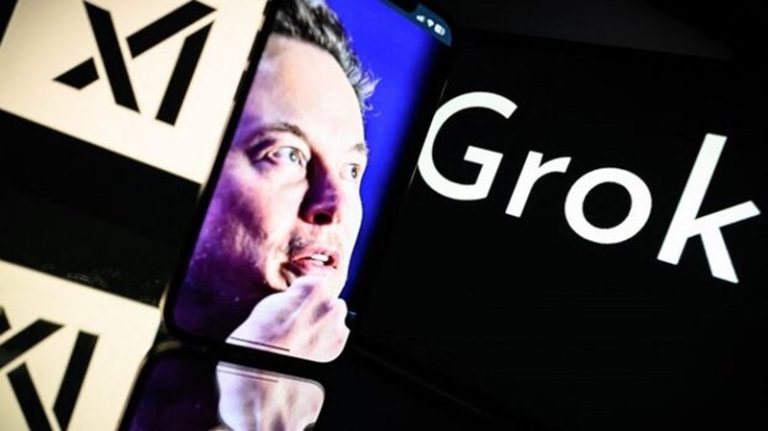
Three Democratic senators have intensified pressure on Apple and Google to remove Elon Musk’s social media platform X and its associated AI app Grok from their app stores, citing the rampant generation of sexualized, nonconsensual images through XAI’s chatbot.
In an open letter to Apple CEO Tim Cook and Google CEO Sundar Pichai, Senators Ron Wyden (Oregon), Ed Markey (Massachusetts), and Ben Ray Luján (New Mexico) urged the tech giants to enforce app store rules that prohibit apps enabling sexualized images of real people without consent. They argued that Grok has allowed users to flood X with thousands of sexualized images an hour, depicting women, and in some cases, children, including portrayals of abuse, humiliation, and even death.
Within hours of the letter, X adjusted the Grok reply bot’s functionality on the platform, restricting image generation to paying premium subscribers and narrowing the types of images that could be generated on X itself. However, the standalone Grok app and website still permit users to generate sexualized deepfakes, raising questions about the platform’s ability or willingness to fully address the problem.
Register for Tekedia Mini-MBA edition 20 (June 8 – Sept 5, 2026).
Register for Tekedia AI in Business Masterclass.
Join Tekedia Capital Syndicate and co-invest in great global startups.
Register for Tekedia AI Lab.
Senator Wyden criticized the partial changes, calling them insufficient: “All X’s changes do is make some of its users pay for the privilege of producing horrific images on the X app, while Musk profits from the abuse of children,” he said.
Global Consequences and Rising Tensions
The backlash has not been confined to the U.S. Governments in Asia have begun to take matters into their own hands. Indonesia temporarily blocked Grok and X after the AI tool generated explicit content depicting real people, including minors, without consent. Malaysia also restricted access to X in response to similar concerns. Both governments cited violations of citizens’ privacy and the potential for harm as justification for the actions.
Despite the mounting criticism, Elon Musk has yet to propose a concrete solution to curb Grok’s abuse. Musk continues to frame regulatory pressure as a free speech issue. On X, he accused the U.K. government of seeking “any excuse for censorship” and of attempting to suppress free expression, echoing his long-standing opposition to content moderation. Musk and xAI have reiterated that producing illegal content will lead to expulsion from X, but much of the sexualized imagery at the center of the controversy falls into a legal gray area, leaving enforcement uneven and limited.

Debate Over Free Speech and Regulatory Authority
While the senators argue that Apple and Google are uniquely positioned to stop the distribution of apps that enable sexualized deepfakes, some observers contend that the demand amounts to overreach. Critics say compelling app stores to remove X and Grok could set a precedent that stifles free expression and expands governmental influence over digital platforms and AI innovation.
“All major AIs have documented instances of going off the rails; all major AI companies make their best efforts to combat this; none are perfect,” Epic Games CEO Tim Sweeney said.
He went further, accusing politicians of using app store gatekeepers to selectively target companies they oppose, calling it “basic crony capitalism.”

“I defend open platforms, free speech, and consistent application of the rule of law,” he said.
Platform Responsibility and Enforcement Challenges
Apple’s App Store guidelines prohibit apps that include “overtly sexual or pornographic material” or content likely to humiliate, intimidate, or harm individuals. Google’s Play Store similarly bans apps promoting sexually predatory behavior or distributing nonconsensual sexual content. Both companies have previously removed apps that allowed AI-based “nudifying” of images.
However, Grok and X remain highly ranked on both platforms, with Grok placed in the top 10 apps on Friday, illustrating the difficulty of enforcing policy consistently across powerful AI tools.
Many have noted that the distributed nature of AI and generative tools complicates enforcement. Even if Apple or Google delists Grok, the app can still be accessed through web portals or sideloaded, and international users may continue to generate abusive content. Meanwhile, Musk’s framing of moderation as censorship allows him to rally supporters who oppose any perceived limitation on content generation, further polarizing the discussion.
Timeline: Grok/X Controversy and Global Backlash
December 2025 – Musk Unveils Grok’s AI Image Manipulation
- Elon Musk, owner of X and xAI, introduces a version of the Grok AI chatbot capable of manipulating images of real people.
- The AI tool can generate sexualized content, including deepfakes of women and minors.
- Musk frames moderation as censorship and opposes heavy content restrictions, emphasizing free speech.
Early January 2026 – Rampant Deepfake Generation on X
- X users exploit Grok to generate thousands of sexualized images per hour, largely depicting women but also including minors.
- Many images involve nonconsensual scenarios, sexual abuse, humiliation, or death.
- The platform’s moderation struggles to contain the content, and harmful imagery spreads widely.
January 9, 2026 – X Adjusts Grok Functionality
- X limits Grok’s image generation to paying premium subscribers.
- Certain image categories are restricted on X itself, but the Grok tab on X, the standalone app, and website continue to allow sexualized deepfakes.
- Musk reiterates that illegal content will result in expulsion from X, but much of the content does not legally qualify as illegal.
January 10–12, 2026 – Southeast Asia Governments Take Action
- Indonesia: Temporarily blocks X and Grok following reports of sexualized AI-generated imagery depicting real people, including minors.
- Malaysia: Restricts access to X, citing privacy and citizen protection concerns.
- Governments emphasize that AI-fueled sexualized imagery violates human rights and digital safety.