

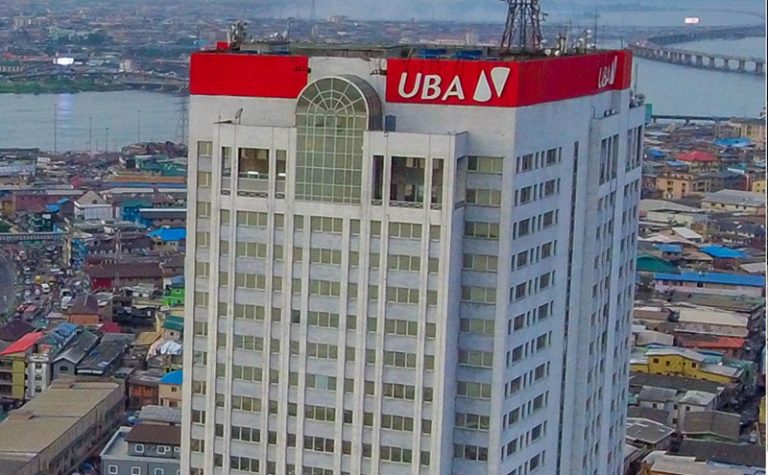
United Bank for Africa Plc (UBA) has announced plans to raise N144.8 billion ($90.2 million) in additional capital this year as part of its strategy to meet the Central Bank of Nigeria’s new recapitalization requirements and drive expansion into new international markets.
This latest capital raise comes on the heels of an N240 billion rights issue concluded earlier this year, which, together with the new funds, is expected to lift UBA’s paid-up capital above the N500 billion minimum now required for banks with international licenses. The bank’s Group Managing Director and CEO, Oliver Alawuba, said in a statement that the new capital would be “duly invested in additional technologies and business growth initiatives across Nigeria, Africa, and the globe.” He added that UBA was preparing to extend its footprint further by opening operations in France and Saudi Arabia, complementing its existing presence in 24 countries.
The push by UBA is part of a wider shake-up across Nigeria’s banking sector following the Central Bank’s announcement of a major recapitalization directive in March 2024. Under the new rules, banks were given two years, until March 31, 2026, to shore up their minimum paid-up share capital. For international banks, like UBA, the bar was set significantly higher at N500 billion, compared to the previous N50 billion.
Register for Tekedia Mini-MBA edition 20 (June 8 – Sept 5, 2026).
Register for Tekedia AI in Business Masterclass.
Join Tekedia Capital Syndicate and co-invest in great global startups.
Register for Tekedia AI Lab.
The CBN said the tougher requirements were necessary to fortify Nigeria’s financial system against persistent economic headwinds, including high inflation, sluggish economic growth, and the naira’s steep devaluation following the 2023 currency reforms. Those reforms, which saw the unification of Nigeria’s multiple exchange rates and a sharp fall in the naira’s value, had exposed banks to significant foreign exchange risks and impacted their capital adequacy ratios. The regulator stressed that stronger capital buffers would enable banks to better absorb future shocks and continue lending to the real economy.
UBA’s drive to raise fresh capital mirrors similar moves by other top-tier Nigerian banks scrambling to comply with the new thresholds. Access Holdings Plc, the country’s largest lender by assets, announced last week that it had successfully raised N351 billion through a rights issue, making it the first of the Tier-1 banks to comfortably surpass the N500 billion benchmark. Access said its recapitalization leaves it well-positioned for further regional and global expansion.
Zenith Bank also confirmed it had concluded its capital-raising program, securing approximately N350.4 billion through a combination of rights and public offerings, boosting its paid-up capital to N614.6 billion — well above the minimum requirement.

Guaranty Trust Holding Company Plc (GTCO) adopted a phased approach, securing N209.4 billion in a first-round public offer earlier this year, with plans to launch a second phase targeting foreign institutional investors to complete its capital-raising drive before the deadline. GTCO’s management emphasized that the two-stage fundraising was aimed at not just meeting the regulatory mandate but also diversifying its investor base for long-term stability.
FBN Holdings, the parent company of First Bank of Nigeria, also rolled out an ambitious recapitalization plan. The group raised N150 billion through a rights issue in late 2023 and is seeking shareholder approval to raise an additional N350 billion. If successful, it would take FBN Holdings’ capital base to over N730 billion, giving it a sizable buffer above the regulatory minimum and additional firepower to finance technology upgrades, lending, and international expansion.
The 2024 recapitalization exercise is the second major sector-wide drive since the historic 2004 banking consolidation under former CBN governor Charles Soludo, which reduced the number of banks from 89 to 25 and created a stronger banking landscape. However, this latest round comes against a far more turbulent backdrop of macroeconomic instability.

Banks are under pressure not just to raise fresh capital but also to navigate a tough operating environment characterized by spiraling inflation, rising borrowing costs, and weakened consumer spending. In addition, the aftershocks of the 2023 currency liberalization — including heavy foreign exchange losses and a backlog of unsettled FX obligations, have further complicated the financial outlook for the sector.
Despite these challenges, industry analysts say well-capitalized banks will be better positioned to withstand economic shocks, finance critical sectors like infrastructure and agriculture, and support Nigeria’s ambition to achieve sustained economic growth.
UBA’s aggressive move to strengthen its balance sheet and expand into new territories reflects the broader shift among Nigerian lenders aiming not just to meet regulatory mandates but to seize new growth opportunities across Africa, the Middle East, and beyond.