

The UK government has sealed a defense deal with US spy-tech firm Palantir, a move officials say will unlock £1.5 billion ($2 billion) in investment and create up to 350 new jobs, while positioning Britain as a hub for military-focused artificial intelligence.
The announcement coincided with U.S. President Donald Trump’s state visit to the UK, which was marked by a string of American tech investment pledges the government claimed could be worth up to £31 billion ($42 billion) for artificial intelligence and digital infrastructure, per The Register.
Under the arrangement, Palantir will establish its European headquarters for defense in the UK, creating up to 350 new jobs. The Denver-based data analytics company, which was founded with funding from the CIA-backed venture arm In-Q-Tel, has long attracted controversy for supplying profiling tools to the CIA and for contracts with U.S. Immigration and Customs Enforcement (ICE). But UK officials brushed aside those concerns, pointing instead to the military and industrial benefits of the new deal.
Register for Tekedia Mini-MBA edition 20 (June 8 – Sept 5, 2026).
Register for Tekedia AI in Business Masterclass.
Join Tekedia Capital Syndicate and co-invest in great global startups.
Register for Tekedia AI Lab.
Signed by Defense Secretary John Healey, the agreement centers on developing AI-powered battlefield systems. The UK military will partner with Palantir to adapt digital capabilities tested in Ukraine, aimed at speeding up decision-making, mission planning, and targeting. Healey said the partnership would “transform lethality on the battlefield” by advancing AI-driven tools in data analysis, intelligence, and decision support systems.
“The work will unlock billions of pounds of investment into UK innovation, creating hundreds of skilled UK jobs and making defense the leading edge of innovation in NATO,” Healey said in a prepared statement. “Palantir and the UK military will work together to transform lethality on the battlefield, supporting the development of data and AI-powered capabilities across data analysis, intelligence, decision support and targeting systems. This will see the government delivering on a key theme of the Strategic Defence Review and Defence Industrial Strategy: to make the UK the leading edge of innovation in NATO.”
The deal falls under the Digital Targeting Web program, outlined in the Strategic Defense Review published in June, which seeks to integrate data from both open-source platforms and classified military systems. The aim is to give commanders faster and more precise options for identifying and engaging enemy targets.

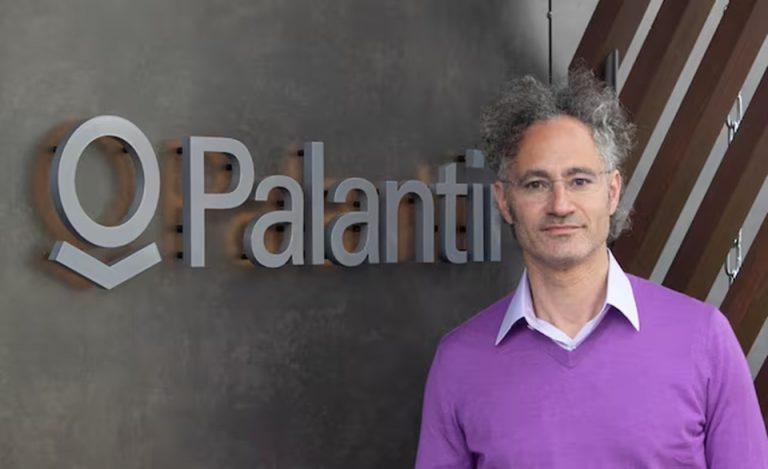
Palantir CEO Alex Karp said his company would invest up to £750 million ($1 billion) in the UK as part of the deal.
“It will reinforce the UK’s position as a major military force protecting the West from our adversaries,” Karp said. “And it will underline the UK’s status as our largest presence outside of the U.S.”
Karp, who is known for his stark rhetoric about Palantir’s mission, has previously told investors that the company’s products help ensure “people were not goose-stepping on the streets of Europe,” and that Palantir was built to “power the West to its obvious innate superiority.”

Officials in London also suggested the Palantir partnership could open doors for UK defense startups and technology suppliers, allowing them to expand into the U.S. market while also feeding into Britain’s broader defense industrial base.
The Palantir deal is part of a much larger wave of U.S. tech commitments announced during Trump’s state visit. Microsoft pledged to invest $30 billion in AI infrastructure and ongoing operations across the UK, Google announced a $6.83 billion two-year investment, CoreWeave committed $2 billion in datacenter spending, and Salesforce revealed a fresh $2 billion UK investment. Nvidia and OpenAI also signed up for UK initiatives under the investment package, which officials described as a once-in-a-generation boost to Britain’s AI sector.
Together, the government said, the commitments represent £31 billion ($42 billion) of new investment from U.S. technology leaders into Britain’s AI and defense ecosystems.
For the UK, the Palantir deal symbolizes both opportunity and controversy: a chance to place itself at the forefront of NATO’s military tech race, while tying itself closer to a company whose surveillance tools remain hotly debated.
In comparative terms, Palantir’s £1.5 billion commitment may seem modest next to Microsoft’s $30 billion or Google’s multi-billion-dollar projects, but its significance lies in the defense sector — an area where such collaborations remain rare and politically sensitive. Unlike consumer- and enterprise-focused investments by Microsoft or Google, Palantir’s deal directly embeds an American firm into Britain’s military modernization strategy, underscoring a deepening US-UK defense-tech partnership.
The deal also highlights a dual strategy for the UK that leverages Silicon Valley’s financial muscle for domestic AI infrastructure while tying its defense modernization to American expertise. But for Washington, it reflects a broader push to align NATO allies around US-developed technologies, particularly those tested on active battlefronts like Ukraine.