

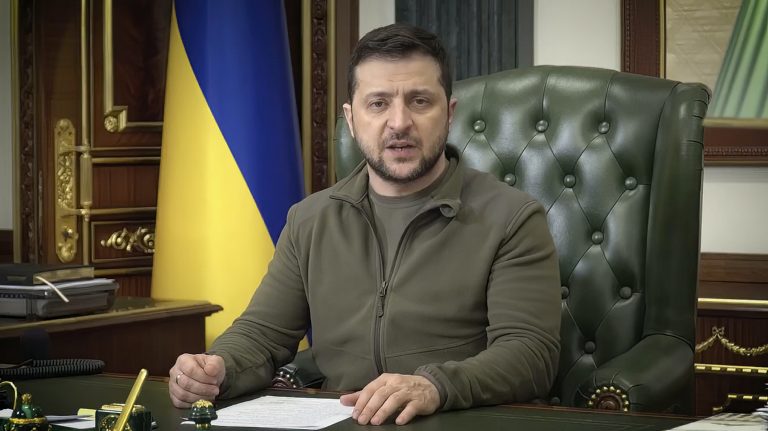
Ukraine’s parliament has passed legislation aimed at legalizing and regulating cryptocurrency, marking a significant step toward integrating digital assets into the country’s financial and economic framework.
The move reflects growing recognition of cryptocurrencies as an important part of the modern financial system, particularly as governments increasingly seek to establish rules for digital asset markets rather than leave them operating in regulatory uncertainty.
The legislation could provide a clearer legal foundation for cryptocurrency exchanges, digital asset service providers, investors and businesses operating within Ukraine.
Register for the next Tekedia Mini-MBA.
Register for Tekedia AI in Business Masterclass.
Join Tekedia Capital Syndicate and co-invest in great global startups.
By establishing a regulatory framework, authorities hope to improve transparency, strengthen oversight and create conditions for legitimate crypto-related activities to develop under defined legal standards.
Ukraine has maintained a complicated relationship with digital assets. Cryptocurrencies have become increasingly relevant to the country’s economy.
Particularly amid the war, disruptions to traditional financial infrastructure and the growing importance of international financial assistance and digital fundraising.

Digital assets have played a role in donations, cross-border transfers and other financial activities, drawing attention to their potential as alternative financial instruments.
The passage of the legalization law could help transition cryptocurrency activities from a loosely defined environment into a more structured market.
Regulation may establish requirements for businesses dealing with digital assets, potentially covering licensing, taxation, reporting obligations, investor protection and anti-money laundering compliance.

The precise implementation of these provisions will be critical in determining how attractive Ukraine becomes to cryptocurrency companies and investors.
Legal clarity is particularly important for businesses seeking to operate across borders. Cryptocurrency companies often face uncertainty when regulations are fragmented, inconsistent or insufficiently developed.
A comprehensive legal framework could reduce some of these concerns, allowing firms to evaluate operational risks more confidently and potentially expand their presence in Ukraine.
The legislation also places Ukraine within a broader international movement toward cryptocurrency regulation.
Governments across Europe, Asia and other regions are increasingly developing policies to oversee digital asset markets, address financial risks and encourage innovation.
Ukraine’s approach could become particularly relevant as it continues pursuing closer economic integration with European institutions and aligning its financial regulations with international standards.
However, legalization does not automatically translate into widespread adoption or immediate economic benefits. Effective implementation, regulatory enforcement, institutional capacity and investor confidence will determine whether the law delivers meaningful results.
Authorities must also balance the opportunities presented by digital assets with risks involving fraud, market manipulation, cybercrime and financial instability.
For cryptocurrency businesses, the law could create opportunities to establish compliant operations, attract investment and develop services for Ukrainian consumers and international markets.
For investors, clearer rules may provide greater confidence that digital asset activities are being conducted within a recognized legal framework, although regulation cannot eliminate market volatility or investment risks.
Ukraine’s decision to legalize and regulate cryptocurrency represents an important policy shift that could influence its financial sector in the coming years.
As digital assets continue evolving, the country is positioning itself to participate more actively in the global crypto economy. The success of this initiative will ultimately depend on how effectively lawmakers.
Regulators and businesses translate the new legislation into a functioning, competitive and transparent digital asset market.
Ukrainian Drone Strikes in Libya and Trump’s Iowa Military Decision Raise Security Questions
Meanwhile, satellite images have reportedly captured a Ukrainian naval drone strike on a Russian warship in Libya, more than 1,000 miles from the battlefield in Ukraine.
While the US Army’s plan to destroy explosive materials in Iowa has been suspended after President Donald Trump intervened.
The incidents demonstrate how military decisions, technological capabilities and political oversight are increasingly shaping security debates far beyond conventional frontlines.
Ukraine’s reported naval drone operation against a Russian warship in Libya illustrates the expanding geographical dimension of the conflict.
The war between Russia and Ukraine has increasingly involved drones, long-range weapons, intelligence networks and unconventional tactics that challenge traditional assumptions about the boundaries of warfare.
Satellite imagery documenting a strike thousands of miles from Ukraine suggests that the consequences of the conflict may extend into strategically important locations outside Europe.
Naval drones have become a significant component of Ukraine’s military strategy, allowing the country to threaten Russian maritime assets without deploying conventional naval forces on the same scale.
Their relatively lower cost, compared with traditional military platforms, has made unmanned systems an attractive tool for asymmetric warfare.
The reported Libyan operation, if confirmed in its full details, would further underscore the potential reach of drone warfare and its implications for military planners.
The presence of Russian military assets in locations beyond the immediate Ukrainian battlefield also reflects Moscow’s broader geopolitical interests.
Russia has maintained strategic relationships and military connections across parts of Africa and the Mediterranean, making these regions increasingly relevant to the broader security environment.
Ukraine’s ability to potentially target Russian assets outside its immediate theatre of war could complicate Moscow’s calculations regarding the protection of military infrastructure and equipment.
Meanwhile, in the United States, the Army’s plan to destroy explosive materials in Iowa has encountered political and operational complications.
The initiative, which reportedly involved blowing up explosives, has become controversial enough for Trump to intervene and suspend the project.
The decision highlights the sensitivity surrounding military activities that involve potentially hazardous materials, particularly when they raise questions about environmental risks, public safety, infrastructure or local concerns.
The suspension also demonstrates how military institutions may face political scrutiny when their operational plans generate controversy.
While the Army operates within established defence procedures, projects involving explosive materials can create significant concerns for communities, regulators and elected officials.
Presidential intervention can therefore reshape the timeline and direction of military initiatives, especially when public confidence or political priorities become involved.
These developments reflect two different challenges confronting modern military institutions. Ukraine’s drone operation highlights the changing nature of warfare, where relatively compact unmanned platforms can potentially threaten assets across distant geographical locations.
The Iowa explosives controversy, meanwhile, illustrates the importance of balancing military operational requirements with political accountability and public considerations.
As drone technology continues to evolve and military infrastructure decisions face greater scrutiny, governments will increasingly have to navigate a complex intersection of security, technology, politics and public trust.
The battlefield is expanding in technological reach, while military decisions at home are becoming more politically consequential.