

The United States may have an advantage in developing the world’s most advanced artificial intelligence models, but constraints on electricity and data-center infrastructure could limit how quickly those models are deployed, creating an opening for China to narrow the gap, according to Citadel Securities.
Nohshad Shah, head of EMEA fixed-income sales at Citadel Securities, said in a September 26 blog post that the AI race will ultimately depend on more than the quality of the underlying models. The ability to deploy AI across factories, vehicles, robots, drones and industrial systems could prove equally important, particularly if China can pair cheaper models with a much larger physical infrastructure base.
“China does not need the world’s best model in every domain if it can combine a slightly less capable (and much cheaper) one with more factories, robots, vehicles, drones, and industrial equipment,” Shah wrote.
Register for the next Tekedia Mini-MBA.
Register for Tekedia AI in Business Masterclass.
Join Tekedia Capital Syndicate and co-invest in great global startups.
The argument underpins a distinction between AI development and AI deployment. The United States has built a strong position in frontier-model development through companies such as OpenAI, Anthropic, and other leading AI laboratories. But deploying those models at scale requires enormous amounts of electricity, data-center capacity, semiconductor infrastructure, and physical facilities.
The infrastructure gap has resulted in a potential bottleneck for the US at a time when demand for computing power is accelerating.
Shah identified electricity as the most significant constraint. Data centers supporting powerful AI systems require large and reliable supplies of power, while projects in the US are encountering delays involving grid connections, permitting, and opposition from local communities.

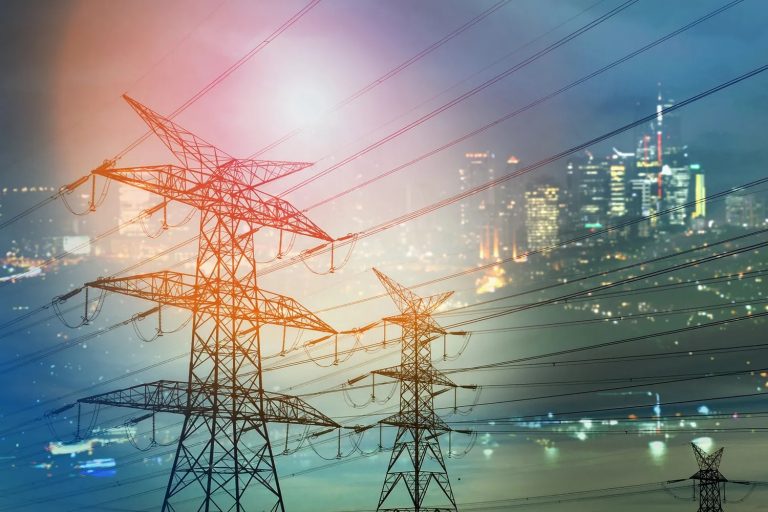
China, meanwhile, is expanding its electricity-generating capacity at a substantially faster pace.
“China will add almost six times as much power-generation capacity as the US over the next five years, whilst America remains constrained by grid connections, permitting, and local opposition to data centers,” Shah wrote.
“That creates an uncomfortable possibility: America develops the better models but China has more places to run it.”

The comparison has become necessary because the economic value of AI will increasingly depend on how widely the technology can be integrated into the real economy. A more capable model does not necessarily translate into greater economic impact if there is insufficient computing and electricity capacity to run it at scale.
China’s manufacturing base could further amplify that advantage. AI systems can be incorporated into industrial robots, autonomous vehicles, drones, and production equipment, creating demand for inference capacity outside traditional cloud-computing environments.
That could allow a country with slightly less advanced models to generate substantial economic value through much broader deployment.
The infrastructure issue is becoming more significant as the AI industry pushes toward larger models and increasingly compute-intensive applications. Data centers are already placing new demands on electricity grids, while technology companies and infrastructure developers compete for power, land and transmission capacity.
In the US, opposition to new data centers has also emerged as a political and community issue. Shah said local resistance, together with permitting constraints and grid limitations, could become a greater threat to the country’s AI ambitions.
He argued that the next major constraint on AI development may not be chips or computing hardware but permission to build the infrastructure required to operate them.
Shah made a similar argument in August, saying that regulation and permitting could become the next major AI bottleneck.
His latest assessment also challenges the assumption that the country with the most sophisticated frontier models will automatically dominate the AI economy. Development and deployment are separate stages of the technology’s expansion, and the second requires physical infrastructure that cannot be produced simply by improving software.
Shah also connected the infrastructure challenge to the increasingly prominent debate over AI safety and potential social disruption. He argued that warnings about AI eliminating jobs or creating extreme risks could make it harder for the industry to secure the public support needed for new data centers and power infrastructure.
“The mistake is to tell the public that AI may eliminate their jobs (or indeed humanity itself!) and then ask the same public to provide the land, electricity and permits required to build it,” Shah wrote.
“The industry has spent several years making the strongest possible case for why AI is powerful and the weakest possible case for why ordinary people should want it.”
Shah does not argue that China is certain to overtake the US. Rather, he said the US can maintain its lead, but doing so would require greater political support for infrastructure development and fewer regulatory obstacles.
The emerging competition now extends beyond the race to build more capable AI models. It is also becoming a contest over electricity generation, transmission networks, data centers, industrial capacity, and the ability to deploy AI across the wider economy.
The challenge for the US is that technological leadership can be undermined if physical infrastructure cannot keep pace with the rapid growth in computing demand. For China, a less advanced model ecosystem could become less of a disadvantage if its expanding power and industrial base allow it to deploy AI more extensively.
The divergence has made the power grid an important part of the global AI race, alongside chips, models and capital.