

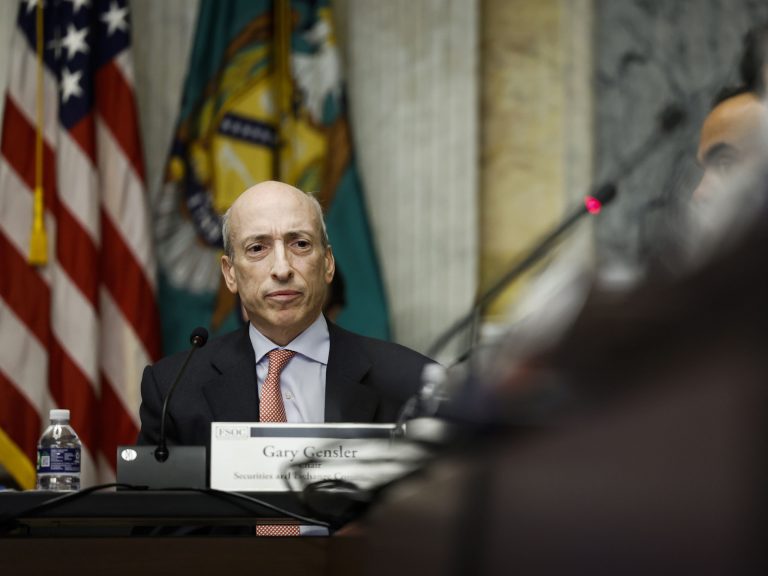
The SEC has officially acknowledged in its fiscal 2025 enforcement results that certain Gary Gensler-era crypto cases delivered no meaningful investor benefit, reflected a misinterpretation of federal securities laws, and represented a misallocation of agency resources.
In a public statement accompanying its FY 2025 enforcement report, the agency highlighted: Seven crypto registration cases and six dealer definition cases from FY 2022–2024 that applied novel legal theories without establishing clear investor harm. These actions identified no direct investor harm and produced no investor benefit or protection. The current Commission views them as demonstrating a misinterpretation of the federal securities laws, a misallocation of Commission resources, and a bias for volume of cases brought versus matters of investor protection.
The report also critiqued a broader set of 95 recordkeeping actions mostly off-channel communications cases that generated $2.3 billion in penalties but similarly yielded no direct investor protection benefits. This marks a clear pivot from the regulation by enforcement approach under former Chair Gary Gensler who left in January 2025. Under Gensler, the SEC pursued dozens of crypto-related actions—peaking at 46 in 2023—often targeting unregistered securities offerings, staking, exchanges, and related activities using the Howey Test.
Current Chair Paul Atkins has emphasized redirecting resources toward high-harm misconduct like fraud, market manipulation, and abuses of trust, rather than pursuing volume or novel theories with limited investor impact. He stated: “We have redirected resources toward the types of misconduct that inflict the greatest harm… and away from approaches that prioritized volume and record-setting penalties over true investor protection.”
Register for Tekedia Mini-MBA edition 20 (June 8 – Sept 5, 2026).
Register for Tekedia AI in Business Masterclass.
Join Tekedia Capital Syndicate and co-invest in great global startups.
Register for Tekedia AI Lab.
This aligns with broader changes since early 2025: Dismissals or closures of high-profile cases against Coinbase, Binance, Kraken, Consensys, and others. Overall drop in enforcement actions; down ~22–30% in some metrics and a sharper decline in crypto-specific cases. Establishment of a Crypto Task Force and moves toward clearer rulemaking rather than litigation-driven regulation.
The admission is notable because it comes directly from the SEC itself—not just critics or industry groups. It validates long-standing complaints from the crypto sector that many actions were overly aggressive, created regulatory uncertainty, and diverted resources from genuine fraud cases. Critics of the Gensler era argued this regulation by enforcement chilled innovation, cost the industry hundreds of millions in legal defense, and pushed activity offshore.
Supporters countered that widespread noncompliance in crypto necessitated strong action to protect investors. The current SEC appears to be signaling to courts, industry, and Congress that it wants to reset expectations: focus on clear harm and fraud, while exploring rulemaking and innovation-friendly frameworks. This doesn’t mean the SEC is abandoning oversight—fraud and manipulation remain priorities—but it does represent an explicit rejection of parts of the prior strategy as inefficient and legally strained.

The development reflects the broader policy shift following the 2024 election and leadership change at the agency. The SEC’s April 2026 acknowledgment that certain Gensler-era crypto enforcement actions produced no direct investor harm or benefit, involved novel legal theories, and represented a misallocation of resources has triggered several tangible and ongoing impacts across the industry, markets, regulation, and legal landscape.
The SEC dismissed often with prejudice at least seven major crypto cases starting in February 2025, including actions against Coinbase, Binance, Consensys, Kraken (Payward), Cumberland DRW, Dragonchain, and Balina. This removed significant legal overhang for these firms, halting protracted litigation over unregistered securities offerings, staking, and platform operations.
Investigations or actions involving entities like Gemini, Uniswap Labs, OpenSea, Crypto.com, Robinhood, and Ondo Finance were dropped or wound down for policy reasons, shifting away from regulation by enforcement. By publicly labeling these approaches as flawed or misguided, the SEC has undermined the legal foundation for future cases relying on the same novel interpretations of the Howey Test or dealer definitions. This strengthens defendants’ positions in any remaining or new litigation.
