

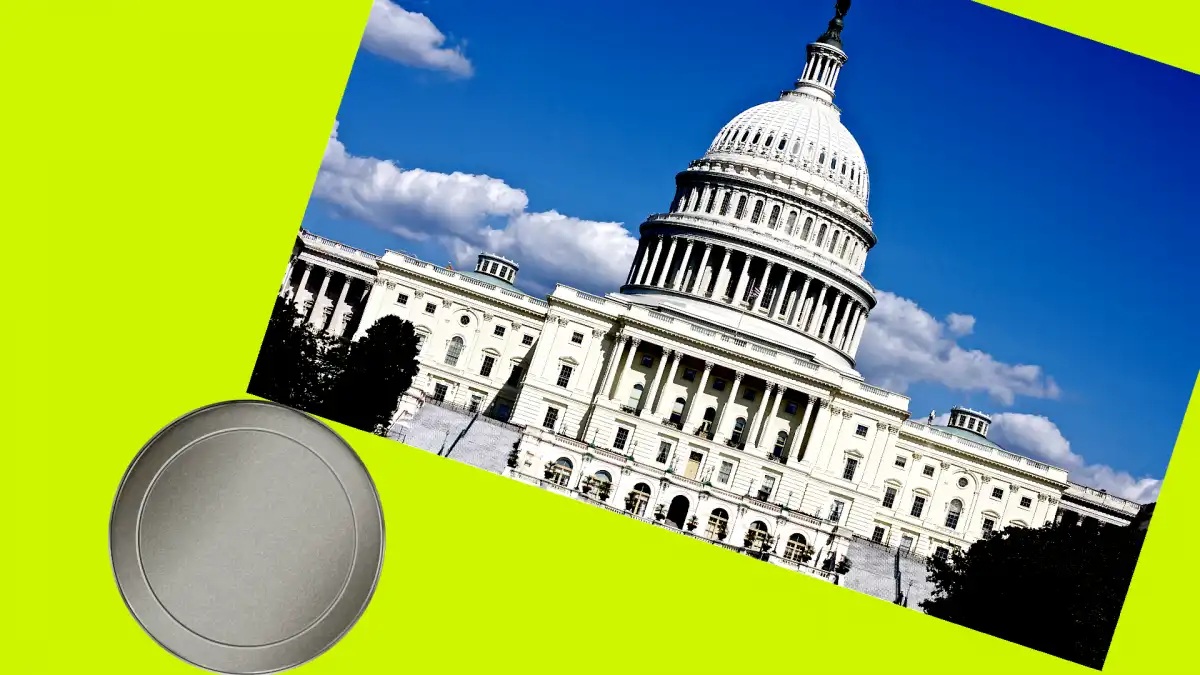
The movement of the CLARITY Act through the United States Senate marks another significant moment in the evolution of cryptocurrency regulation in America.
As lawmakers prepare to formally mark up the legislation, new polling data showing bipartisan voter support reaching 52% underscores a growing shift in public opinion toward clearer digital asset oversight. The combination of political momentum and public backing suggests that the crypto industry may finally be approaching a regulatory turning point after years of uncertainty, enforcement battles, and fragmented policymaking.
The CLARITY Act, designed to establish a more comprehensive framework for digital assets and blockchain-based financial products, aims to define the roles of federal agencies overseeing cryptocurrencies. One of the central challenges facing the crypto sector in the United States has been the lack of consistent rules regarding whether certain digital assets should be treated as securities, commodities, or entirely new financial instruments.
This ambiguity has created confusion for investors, startups, exchanges, and institutional participants alike. For years, the industry has argued that innovation has been slowed by regulation through enforcement rather than through transparent legislation.
Register for the next Tekedia Mini-MBA.
Register for Tekedia AI in Business Masterclass.
Join Tekedia Capital Syndicate and co-invest in great global startups.
Companies operating in the space have often faced investigations and lawsuits without having a clear understanding of the rules beforehand. The CLARITY Act seeks to address this issue by outlining clearer jurisdictional boundaries between regulators such as the Securities and Exchange Commission and the Commodity Futures Trading Commission.
Supporters believe that a defined structure would reduce legal uncertainty while still protecting consumers and financial markets. The timing of the Senate markup is especially important because it coincides with increasing political interest in digital assets ahead of future election cycles.
Cryptocurrency has evolved from a niche technological experiment into a mainstream financial and political issue. Millions of Americans now own digital assets either directly or through investment vehicles such as ETFs, retirement accounts, or tokenized financial products. As adoption grows, lawmakers can no longer ignore the economic significance of the sector.
The reported 52% bipartisan voter support is perhaps one of the most noteworthy developments surrounding the legislation. In a deeply polarized political environment, bipartisan agreement on complex financial regulation is relatively rare. The polling suggests that voters across party lines increasingly view digital assets as a legitimate component of the modern economy rather than merely speculative instruments.

Younger voters in particular tend to favor innovation-friendly regulation over outright restriction, placing pressure on elected officials to engage more constructively with the industry. Institutional interest has also played a major role in shifting perceptions. Major financial firms, banks, payment companies, and asset managers have expanded their involvement in blockchain infrastructure.
This institutional participation has made it more difficult for policymakers to dismiss the sector as temporary or insignificant. Instead, the conversation has shifted toward how to regulate the industry responsibly while maintaining American competitiveness in global financial innovation. Critics of the CLARITY Act, however, remain cautious.
Some consumer advocates warn that overly permissive regulation could expose retail investors to excessive risk, fraud, and market manipulation. Others fear that rapid legitimization of digital assets could encourage speculative behavior without addressing systemic vulnerabilities within the crypto ecosystem. These concerns ensure that debate around the bill will remain intense as lawmakers negotiate final provisions.

The Senate’s decision to move forward with the markup signals growing recognition that regulatory clarity is no longer optional. Whether the CLARITY Act ultimately passes in its current form or undergoes significant revisions, its advancement represents a major milestone in the relationship between Washington and the cryptocurrency industry.