

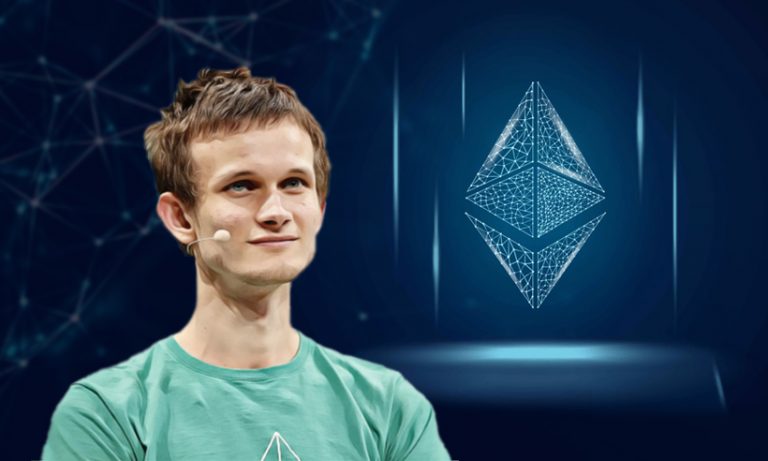
Vitalik Buterin posted on X stating that the original vision for Layer 2s (L2s) in Ethereum no longer makes sense due to recent developments.
In the post he argues: Progress on L2s reaching stage 2 (full decentralization and maturity) and achieving strong interoperability has been much slower and harder than anticipated. Meanwhile, Ethereum’s L1 (base layer) is scaling effectively: fees are very low, and significant gas limit increases are planned for 2026 and beyond.
He explains that the classic “rollup-centric roadmap” treated L2s as essentially “branded shards” of Ethereum—providing scaled block space fully backed by Ethereum’s security guarantees (valid, uncensored, etc.).
But with L1 scaling directly, L1 no longer needs L2s just for basic scaling, and many L2s aren’t or can’t/won’t deliver the full trustless properties expected of true branded shards. We should abandon viewing L2s as literal extensions/scaling solutions in the old sense.
Register for Tekedia Mini-MBA edition 20 (June 8 – Sept 5, 2026).
Register for Tekedia AI in Business Masterclass.
Join Tekedia Capital Syndicate and co-invest in great global startups.
Register for Tekedia AI Lab.
Instead, treat them as a broad spectrum of chains with varying degrees of Ethereum connection and security. Users can choose based on their needs. He suggests L2 teams pivot to focus on unique value-adds beyond plain scaling, such as: Specialized VMs.
App-specific efficiency. Extreme scaling beyond what L1 will offer. Non-financial use cases (social, identity, AI). Ultra-low latency or custom sequencing. Built-in features like oracles or dispute resolution. He still recommends at least stage 1 security for any L2 handling ETH/assets, plus maximum interoperability with Ethereum.
On the Ethereum side, he expresses growing support for a native rollup precompile especially with enshrined ZK-EVM proofs for L1 scaling, which would make trustless EVM verification easier, enable synchronous composability, and allow L2s to innovate on top securely.

The post is not declaring L2s dead or useless—it’s a call to evolve their role away from being primarily “Ethereum’s scaling crutch” since L1 is handling more of that toward specialized, innovative chains that complement a stronger L1. This aligns with his earlier posts emphasizing L2 progress but reflects a pragmatic update given L1’s momentum and L2 maturation delays.
With fees already very low and major gas limit increases planned for 2026 potentially tripling or more via upgrades like parallel processing in proposed hard forks, L1 reclaims its role as the go-to place for simple, high-security transactions.
This reduces the “necessity” of L2s for everyday scaling, potentially increasing direct L1 usage and validator/economic activity on the mainnet. Shift away from “rollup-centric” dependency: The old roadmap treated L2s as the main scaling path with L1 staying minimal.

Now, Ethereum can pursue aggressive L1 improvements without as much pressure to offload everything. This could lead to better synchronous composability and simpler user experience in the long run. Some analyses frame 2026 as Ethereum “reclaiming lost ground” from years of L2 fragmentation—fewer trust assumptions, less liquidity splintering across bridges, and a stronger core protocol.
General-purpose L2s lose their core selling point as L1 fees drop. Vitalik explicitly urges pivoting to unique value-adds: Specialized VMs. App-specific optimizations (gaming, DeFi primitives, AI inference). Extreme scaling beyond L1 limits. Non-financial use cases (social networks, identity, decentralized AI).
Ultra-low latency, custom sequencing, built-in oracles/dispute systems. Survival of the fittest: Reports and predictions from 21Shares’ 2026 L2 outlook suggest many L2s may not survive consolidation in 2026.
Those stuck at Stage 1 indefinitely due to tech, regulatory, or control reasons face criticism for not delivering full Ethereum security guarantees—some may be reframed as “just another L1” rather than true Ethereum extensions.
Vitalik still pushes for at least Stage 1 (permissionless fault proofs/validity proofs) for any chain handling ETH/assets, plus maximum Ethereum interoperability. This could accelerate efforts like shared sequencing, cross-L2 standards, or native Ethereum tools for easier trustless verification.
For Users and Developers
Better choices, but more fragmentation risk short-term: Users gain clarity—they can pick L2s based on real needs rather than defaulting to “Ethereum-scaled” ones. However, if many L2s fail to differentiate, liquidity and attention could consolidate around a few winners potentially improving UX long-term but causing short-term confusion/bridge fatigue.
Developers get license to build wildly different chains under the “Ethereum-aligned” umbrella, potentially sparking new use cases that L1 alone can’t handle efficiently. Immediate reactions mixed to bearish on generic L2s: Posts show shock with some calling it a “reality check” or “light bulb moment.”
Token prices for broad L2 ecosystems could face downward pressure if investors see reduced “scaling narrative” value, though specialized projects might rally. This challenges the multi-chain/L2-maximalist story that dominated 2023–2025. Competitors may try to capitalize, but Ethereum’s direct scaling progress strengthens its “secure settlement layer” positioning.
Some view it as bullish for ETH long-term (stronger L1 = stronger security moat). This isn’t “L2s are dead”—it’s a pragmatic evolution: abandon the outdated “L2s as Ethereum’s only scaling crutch” view, embrace L1’s momentum, and demand L2s justify existence through genuine innovation rather than cheap txs.
2026 looks like a consolidation year for the ecosystem, with winners being those that adapt fastest to specialization and interoperability.