

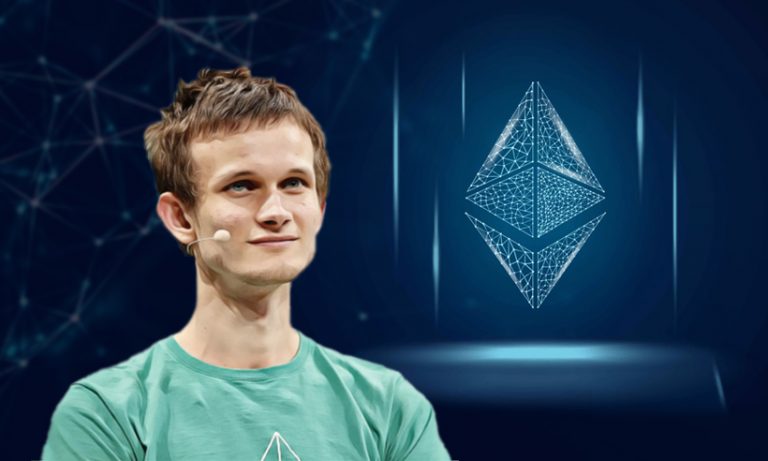
Vitalik Buterin, Ethereum’s co-founder, recently shared an updated vision on integrating Ethereum with artificial intelligence (AI), explicitly critiquing the mainstream “race to AGI” (artificial general intelligence) framing as flawed and undifferentiated.
Instead of rushing toward raw power concentration; where the winner simply dominates, he advocates for a deliberate, positive direction that prioritizes human freedom, empowerment, and safety—avoiding scenarios where AI displaces humans or entrenches unchallengeable power structures.
In a detailed X post, Vitalik outlined why he sees Ethereum playing a central role in a safer, decentralized AI ecosystem, building on his earlier 2024 essay on crypto + AI intersections. He emphasizes four key short-term areas where Ethereum can lead: More trustless and private AI interactions — Tools like local LLMs (large language models), zero-knowledge (ZK) payments for API calls (to avoid identity linking), cryptographic privacy enhancements, and client-side verification of proofs or TEE attestations.
This draws from Ethereum’s privacy roadmap but applies it to AI compute. Ethereum as an economic coordination layer for AI — Enabling AI agents to pay each other for services; API calls, bots hiring bots, post security deposits, resolve disputes onchain, and build reputation via ideas like ERC-8004.
Register for Tekedia Mini-MBA edition 20 (June 8 – Sept 5, 2026).
Register for Tekedia AI in Business Masterclass.
Join Tekedia Capital Syndicate and co-invest in great global startups.
Register for Tekedia AI Lab.
This supports decentralized AI architectures over centralized “in-house” ones, using economic incentives for trust and authority distribution. Realizing the cypherpunk “verify everything” ideal — With LLMs handling verification burdens humans can’t, this includes local models proposing/verifying Ethereum transactions, auditing smart contracts, interpreting formal verification proofs, and checking app trust models—eliminating reliance on third-party UIs.
AI overcomes human attention limits, reviving concepts like prediction/decision markets, decentralized governance, quadratic voting, combinatorial auctions, and more, for improved efficiency and collective decision-making.
Vitalik frames these as aligned with his “d/acc” (defensive acceleration) philosophy: boosting decentralized cooperation and defense against risks, while revisiting 2014-era ideas with modern tools like AI and ZK proofs. He sees Ethereum as infrastructure—not the sole solution—but a neutral, verifiable foundation for a human-centric AI future.
This post has sparked widespread discussion in crypto and AI circles, with media outlets describing it as a call for Ethereum to power a decentralized alternative to Big Tech-dominated AI, focusing on privacy, verification, and economic layers for AI agents rather than accelerating toward centralized superintelligence.

AI agents on Solana have exploded in popularity and capability by early 2026, making Solana one of the leading blockchains for autonomous, onchain AI applications.
Unlike Ethereum’s focus on trustless verification, privacy, and economic coordination layers as Vitalik recently highlighted, Solana leverages its high throughput, sub-second finality, and near-zero fees to enable agents that perform frequent, real-time actions like trading, launching tokens, or coordinating with other agents—often hundreds of transactions per day without prohibitive costs.
This has positioned Solana as the go-to chain for “agentic” crypto, especially in DeFi trading bots, social/meme agents, and emerging autonomous economies. In late 2025, Solana AI agents reportedly generated billions in trading volume, and the ecosystem has matured rapidly with dedicated tools, hackathons, and protocols.
Agents can spam transactions for monitoring markets, executing arbitrage, or rebalancing portfolios without gas wars or delays. Integrations with DEXs like Jupiter (handling most swaps), oracles like Pyth, and payment standards make autonomous operations seamless.

Agent Economy
Agents pay each other for services, deploy tokens, manage DAOs, or even compete in prediction markets—all onchain. Tools like policy-controlled wallets via Turnkey allow agents controlled access without full key exposure.
Several open-source kits and frameworks dominate development: Solana Agent Kit by SendAI: The most popular toolkit—connects any AI model/agent to 60+ Solana actions. Compatible with LangChain, Vercel AI SDK, Perplexity, and Eliza. It’s the “Swiss Army Knife” for Solana integration.
ElizaOS (formerly ai16zdao): Lightweight TypeScript framework for building agents with Solana plugins, Twitter/X integration, and multi-agent coordination.
Rig: Rust-based for modular, full-stack agents with strong Solana support—ideal for performance-critical apps.
GOAT Toolkit (by Crossmint): Universal adapter for agents across chains including Solana, with 200+ onchain plugins and secure wallet architectures (e.g., dual-key with TEEs for agent autonomy).
Official Solana resources and developer guides) highlight these for getting started, including building basic agents that interact via natural language. Early hype from projects like truth_terminal ($GOAT token—the “first self-made AI millionaire”), Zerebro, and others. Launchpads like vvaifudotfun, Agentpad, Clawpump, and BagsApp democratize launching tokenized agents.
Trading and DeFi agents: Secure bots using Jupiter for swaps, adaptive strategies like Cortex, or autonomous vaults (GLAM). Institutional white-glove programs now involve agents managing funds. Onchain registries for agent discovery/verification, verifiable reasoning, payments (x402 standard simplified), and identity.
Colosseum’s Agent Hackathon features AI agents autonomously building/submitting Solana projects. Others like Internet of Agents focus on rentable, Solana-paid agents.
While Vitalik pushes Ethereum for trustless/privacy-focused AI (ZK proofs, onchain reputation, agent payments via ERC standards), Solana leads in raw execution volume and “agent-native” apps today—think high-frequency trading or social coordination over heavy verification.
Both chains complement each other: Ethereum for defensive/decentralized safety, Solana for speed/scalability in agent economies. Solana’s AI scene is vibrant and fast-moving—agents are already transacting billions, launching tokens via X, and competing autonomously.
HOW I GOT BACK $500.000 AFTER BEEN SCAMMED BY MR DAVID FX
I hope this may help someone out there. In November last year, I lost over 500.000 dollars to scammers, but thanks to “Crypto Tracer Pro ” I was able to recover my investments, though it took some time. My journey began when I was invited to a trading group on Telegram, which boasted over 34,000 subscribers. The vibrant activity made it seem legitimate, but I later discovered that the subscriber numbers were manipulated by the scammers operating the fake company. Initially, I was drawn in by the documents provided, which claimed I could withdraw my investments whenever I wanted. However, when I attempted to withdraw, my request was declined. I contacted customer support and was told I needed to pay taxes and trading fees which I told them to deduct from my investments but they insisted I pay it instead since my account has been frozen . Despite complying and paying these fees, my withdrawal access remained restricted. It dawned on me that I might be entangled in a pig butchering scam.
I kept my situation private until I could no longer bear it, eventually confiding in my brother. He offered me support instead of judgment, which I desperately needed. Together, we hired a private investigator to dig deeper into the case. After a thorough investigation, he recommended hiring a hacker to resolve the issue and referred us to “ Crypto Tracer Pro ”
Within a week, they tracked down the scammers, providing much needed relief. I learned that seeking help was crucial, and I’m grateful to my brother for standing by me during this crisis. If anyone finds themselves in a similar situation, you can contact the recovery team through the following:
Contact info:
Email crypto.tracer.pro@mail.com
Number: +447473245185
Website: https://crypto-tracer-pro.webnode.page