

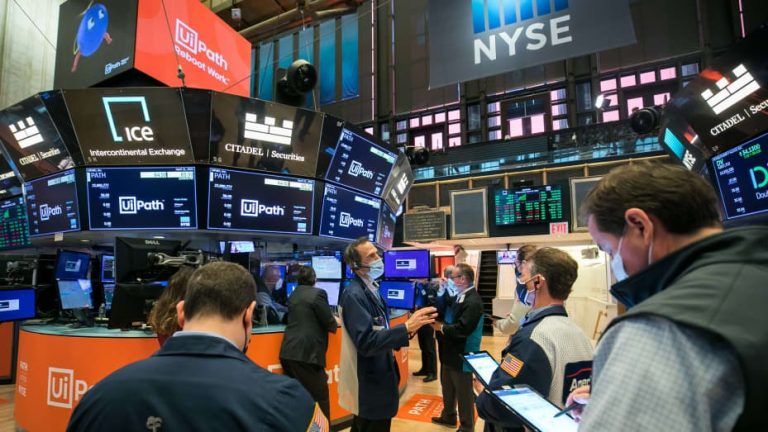
Wall Street kicked off the week on a strong note on Monday, reversing part of a bruising November stretch as investors piled back into tech names and other mega-cap favorites.
Alphabet, Tesla, and Broadcom powered the rebound, helped by growing expectations that the Federal Reserve could finally deliver its first rate cut in December.
The renewed risk appetite followed a wave of dovish signals from influential Fed officials, including Governor Christopher Waller and New York Fed President John Williams. Their comments helped ease pressure after a month-long selloff that had left U.S. equities struggling for direction.
Register for Tekedia Mini-MBA edition 20 (June 8 – Sept 5, 2026).
Register for Tekedia AI in Business Masterclass.
Join Tekedia Capital Syndicate and co-invest in great global startups.
Register for Tekedia AI Lab.
The tone inside the central bank is far from unified, with other policymakers still warning against premature policy easing ahead of December’s FOMC meeting. But traders appear far more convinced the Fed is heading toward a pivot: market pricing now reflects a 76.9% probability of a 25-basis-point cut next month, up sharply from 42% just a week earlier, according to CME’s FedWatch Tool.
That shift alone was enough to ignite buying across the board.
Alphabet jumped 4.6%, Tesla surged 6.7%, and Broadcom notched a standout 10% gain. Communication Services led all S&P 500 sectors with a 3% rise, while chipmakers roared back as the semiconductor index climbed 4.3%.

“It’s a combination of rate-cut enthusiasm, which has completely turned around since Williams made his comments on Friday morning, and the usual fear of missing out,” said Steve Sosnick, chief market analyst at Interactive Brokers.
By late morning — around 11:40 a.m. ET — the indexes were all firmly higher:
• Dow Jones Industrial Average: +249.13 points, or 0.54%, at 46,494.54
• S&P 500: +87.81 points, or 1.33%, at 6,690.80
• Nasdaq Composite: +503.65 points, or 2.26%, at 22,776.74
A Tech Bounce Amid Bubble Concerns
The turnaround offered relief after weeks of turbulence. Markets had been grappling with fears that the artificial-intelligence boom — the engine behind this year’s enormous tech-sector gains — might be tipping toward bubble territory. The volatility was amplified by the prolonged U.S. government shutdown, which cut off key economic data releases that investors typically rely on to gauge demand, hiring, and inflation trends.

Both the S&P 500 and the Nasdaq remain on track for monthly losses in November, with the slide shaping up to be the steepest since the March selloff triggered by tariff-hike worries. Analysts warn that the market’s choppiness may not be over, even if Monday’s rally suggests investors are still willing to buy dips.
Deutsche Bank maintains its bullish long-term view, projecting the S&P 500 will reach 8,000 by the end of 2026, supported by resilient earnings and sustained AI-related productivity gains that bolster corporate margins.
Holiday Season to Test Consumer Strength
Investors will turn their focus later this week to September retail sales and producer price data — key indicators ahead of the crucial holiday shopping season. With Thanksgiving approaching, followed by Black Friday and Cyber Monday, retailers are hoping to capitalize on what could be a record-breaking period.
The National Retail Federation expects holiday sales to surpass $1 trillion for the first time, even as signs of household strain continue to emerge.
A string of layoff announcements, rising unemployment numbers, and new rounds of U.S. tariffs have clouded consumer sentiment. But spending has held up better than expected.
“The consumer sentiment numbers are still lousy. But it’s telling us the consumer is nervous but still somewhat resilient,” Sosnick said.
Sector Movers: Health Stocks, Pharma, and Insurers
In healthcare, Bristol-Myers rose 4.9% after Bayer reported strong late-stage trial data for a cardiovascular drug — news that lifted sentiment across the large-cap pharma space.
Health insurers and hospital operators registered broader gains following a report that President Trump’s health plan could extend certain subsidy provisions for two years. Centene climbed 7.5%, while Oscar Health surged 20% as investors bet on a more favourable short-term regulatory environment.
Advancers comfortably outpaced decliners, with a 1.96-to-1 ratio on the NYSE and 2.18-to-1 on the Nasdaq — evidence that the rally extended beyond the tech giants. The S&P 500 tallied 17 new 52-week highs against two new lows, while the Nasdaq recorded 87 new highs and 88 new lows, a sign the market remains bifurcated even amid Monday’s optimism.
The Bigger Picture
Monday’s upswing was powered by rate-cut optimism, but the market is still navigating a thorny backdrop. Inflation remains above the Fed’s comfort zone, the labor market is cooling unevenly, and trade tensions and lingering shutdown effects continue to distort forecasts.
For now, traders are betting that December marks the beginning of monetary easing — a shift that would relieve pressure on the tech sector’s stretched valuations and give consumers and corporates breathing room heading into 2026.
But with internal divisions at the Fed, a fragile consumer mood, and geopolitical crosswinds still swirling, the path ahead remains uncertain. While investors have embraced Monday’s rally, many remain cautious about calling it a turning point.