

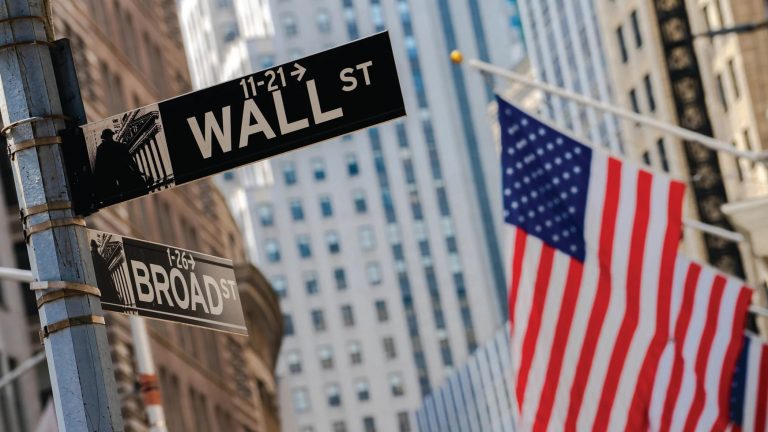
For years, Wall Street has promoted tokenization as the future of finance. The idea is simple but transformative: traditional financial assets such as stocks, bonds, real estate, and commodities can be represented digitally on blockchain networks.
Supporters have argued that tokenization could make markets faster, cheaper, more transparent, and accessible around the clock. Yet despite the excitement, critics long questioned whether tokenization was more theory than reality. Now, however, the financial industry may finally have its first genuine proof of concept.
The recent surge in institutional interest surrounding tokenized assets suggests that Wall Street’s ambitions are beginning to move beyond experimentation into practical implementation. Major financial institutions, exchanges, and asset managers are no longer discussing tokenization as a distant possibility. Instead, they are actively building infrastructure and launching products that demonstrate how blockchain technology can improve capital markets.
One of the clearest signs of progress is the growing adoption of tokenized Treasury products and money market funds. Firms such as BlackRock, Franklin Templeton, and JPMorgan have embraced blockchain-based financial instruments to streamline settlement and increase operational efficiency.
Register for the next Tekedia Mini-MBA.
Register for Tekedia AI in Business Masterclass.
Join Tekedia Capital Syndicate and co-invest in great global startups.
These products allow investors to gain exposure to traditional assets while benefiting from the programmability and instant settlement capabilities of blockchain systems. Unlike earlier crypto experiments that relied heavily on speculation, these offerings address real financial use cases with measurable value.
The appeal of tokenization lies in its ability to modernize outdated financial infrastructure. Traditional markets often rely on multiple intermediaries, delayed settlements, and limited trading hours. Transactions can take days to finalize, tying up billions of dollars in capital. Blockchain networks, by contrast, can settle transactions nearly instantly and operate continuously.
This reduces counterparty risk and improves liquidity efficiency. For large institutions handling trillions of dollars, even small improvements in settlement speed can create enormous savings. Another important development is regulatory momentum. Governments and regulators had previously treated tokenization cautiously because of concerns surrounding compliance, investor protection, and systemic risk.

Regulators are increasingly recognizing that tokenized assets can exist within established legal frameworks. The emergence of regulated tokenized securities and blockchain-based funds has helped legitimize the sector. As legal clarity improves, more institutional capital is likely to enter the market.
Importantly, Wall Street’s tokenization push is not about replacing traditional finance overnight. Instead, it represents an evolution of existing systems. Banks still play a central role, but blockchain technology enables them to operate more efficiently.
This distinction matters because institutional adoption depends on compatibility with current financial structures rather than radical disruption. Wall Street is effectively merging traditional finance with blockchain infrastructure instead of attempting to destroy the old system entirely. The proof of concept is becoming increasingly difficult to ignore.
Tokenized assets have already processed billions of dollars in value, while large financial firms continue expanding their blockchain initiatives. Even stock exchanges are exploring tokenized trading platforms that could eventually support equities, bonds, and private market assets. If these systems scale successfully, tokenization could reshape how global finance operates.

Of course, challenges remain. Questions surrounding interoperability, cybersecurity, liquidity fragmentation, and regulation still need to be resolved. Many blockchain systems also struggle with scalability. Nevertheless, the industry has crossed an important threshold. Tokenization is no longer merely a futuristic talking point or a niche crypto experiment. It is becoming a functioning component of institutional finance.
Wall Street’s tokenization ambitions finally appear to have their first real validation. The combination of institutional adoption, regulatory progress, and operational efficiency is demonstrating that blockchain technology can provide meaningful improvements to financial markets. What once seemed like speculative hype is now evolving into a practical financial innovation with the potential to redefine the architecture of global capital markets.