

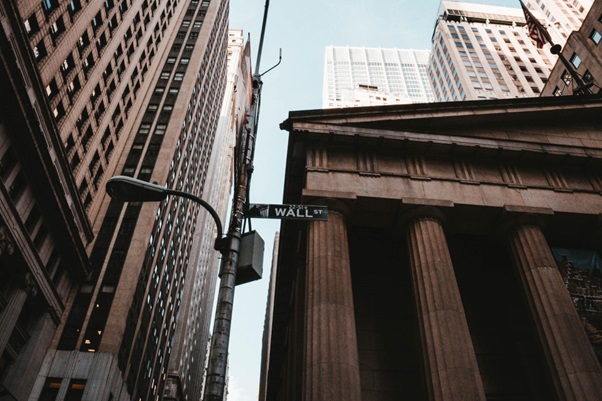
Wall Street is preparing for an important day for the technology sector as investors turn their attention to quarterly earnings from Tesla and Meta Platforms.
Both companies occupy influential positions in the global technology industry, but their financial results will be judged against different expectations, reflecting their business models, growth strategies, and exposure to artificial intelligence.
For Tesla, investors are expected to focus on vehicle deliveries, profit margins, pricing strategies, and the company’s ambitious plans to expand beyond traditional electric vehicle manufacturing.
Register for the next Tekedia Mini-MBA.
Register for Tekedia AI in Business Masterclass.
Join Tekedia Capital Syndicate and co-invest in great global startups.
Competition in the electric vehicle market remains intense, while changing consumer demand and pricing pressure continue to influence profitability. Investors will also look for updates on autonomous driving, robotaxis, energy storage, and the company’s broader artificial intelligence ambitions.
Tesla’s valuation has long depended on more than vehicle sales. Supporters believe its investments in robotics, autonomous technology, and AI could eventually transform the company into a much broader technology business.
However, investors will want evidence that these opportunities can translate into sustainable revenue and earnings. Any indication that margins are stabilizing or that new businesses are approaching commercial scale could influence market sentiment.

Meta faces a different set of expectations. The company behind Facebook, Instagram, and WhatsApp continues to benefit from digital advertising, supported by improvements in advertising technology and AI-driven recommendations.
Wall Street will examine advertising revenue, user engagement, operating expenses, and capital expenditure as investors assess whether Meta’s substantial AI investments can generate sufficient long-term returns.
A central question is whether the company can continue expanding its advertising business while spending heavily on computing infrastructure, data centers, and advanced AI models. Strong revenue growth could reassure investors that its core business can finance these investments.

Conversely, rising costs without corresponding improvements in revenue or productivity could increase concerns about profitability. The latest reports underline the importance of separating strong headline earnings from the cost of future growth.
Meta has reported third-quarter revenue of $64.60 billion, exceeding the approximately $63.37 billion expected by analysts, while raising its 2026 capital expenditure outlook to between $135 billion and $145 billion. The increased spending reflects its determination to expand AI infrastructure, but it also raises questions about future cash flow.
Tesla’s report has drawn attention to earnings quality, free cash flow, and investment spending, alongside its ambitions in autonomous driving and robotics.
The SpaceX-Tesla Merger Speculation
Beyond the earnings figures, Elon Musk has introduced another major development that could reshape the future of his business empire.
SpaceX and Tesla have officially established committees to explore a potential merger, reviving speculation about combining the electric vehicle manufacturer with the space exploration and satellite communications company.
The possibility has attracted significant attention because the companies share strategic interests in artificial intelligence, semiconductor development, robotics, and advanced computing infrastructure.
Tesla is developing autonomous driving technology and humanoid robots, while SpaceX is expanding its space operations and AI-related businesses. Combining their capabilities could create opportunities to share research, infrastructure, and technical expertise.
However, a merger remains uncertain. Musk has acknowledged that he has a conflict of interest and cannot participate directly in the committees’ deliberations. Any proposed transaction would also face shareholder approval requirements, particularly at Tesla.
Investors must therefore distinguish between discussions about a possible deal and an agreement that has actually been reached. For Tesla shareholders, the prospect of a merger introduces both opportunities and risks.
A combined business could strengthen Tesla’s position in AI and robotics, potentially giving investors exposure to a wider range of technologies. On the other hand, questions about valuation, corporate governance, financing, and the allocation of resources between businesses could complicate the transaction.
Meta faces a different challenge: demonstrating that its enormous AI investments will eventually produce sustainable financial returns. Its advertising business remains a powerful source of revenue.
But investors will scrutinize whether spending on data centers and computing capacity can deliver sufficient growth without undermining profitability. The market reaction to both companies will depend on more than earnings per share or revenue growth.
Investors want credible evidence that Tesla can improve margins while commercializing its next-generation technologies, and that Meta can expand its AI capabilities without allowing costs to spiral out of control.
The potential SpaceX-Tesla merger adds another layer of uncertainty to an already important earnings period. If the companies can demonstrate convincing strategic benefits, Musk’s ambitions could attract renewed investor enthusiasm.
Execution, shareholder approval, and financial discipline will remain decisive. For Wall Street, the central question is whether technological ambition can translate into lasting shareholder value. Tesla and Meta are pursuing different paths, but both must prove that their investments can justify elevated expectations.