

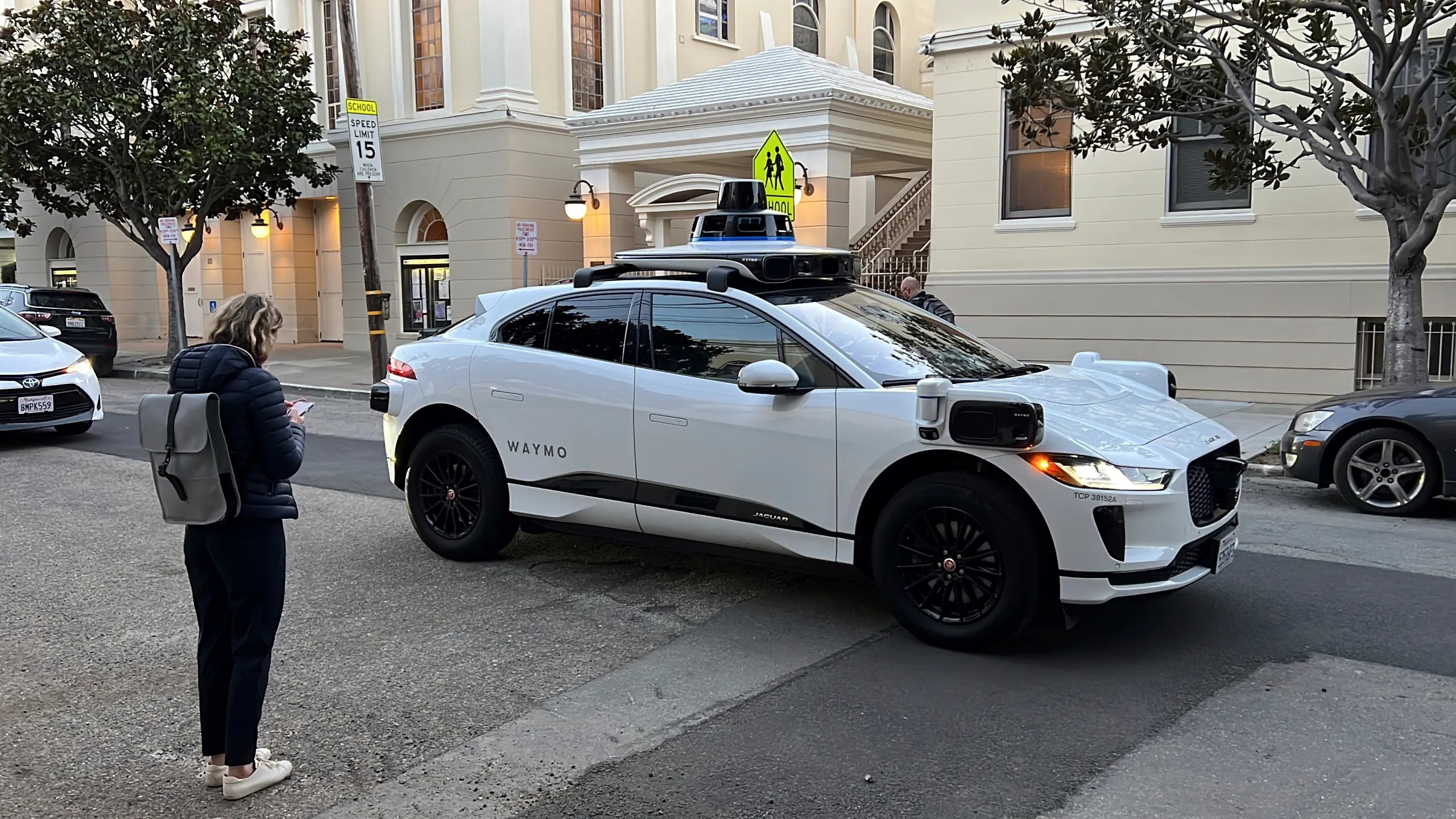
Waymo’s long-anticipated Nashville rollout has now moved from testing to commercial service, marking another significant step in the autonomous ride-hailing company’s rapid U.S. expansion.
The formal launch is the latest front in what has become one of the most consequential races in urban mobility: the battle to dominate the robotaxi market before it matures into a multi-billion-dollar industry.
After months of mapping Nashville’s roads, manually driving vehicles, and then testing autonomous software with human safety operators, the Alphabet-owned company has now opened its service to the public, making the Tennessee capital the 11th city in its growing commercial network. The rollout begins within a 60-square-mile service area and, in a notable strategic twist, launches first through the Waymo app before later expanding to Lyft’s platform.
Register for Tekedia Mini-MBA edition 20 (June 8 – Sept 5, 2026).
Register for Tekedia AI in Business Masterclass.
Join Tekedia Capital Syndicate and co-invest in great global startups.
Register for Tekedia AI Lab.
This dual-app structure is significant because it places Nashville at the center of a broader industry contest over who controls the customer relationship in autonomous transport. Waymo is not simply racing to deploy more self-driving cars. It is racing to secure territory, user habits, platform partnerships, and regulatory goodwill before rivals scale up.
The robotaxi competition is now unfolding along three major fronts: technology, platform access, and geographic footprint.
Waymo currently leads in real-world deployment. Its presence now spans Atlanta, Austin, Dallas, Houston, Los Angeles, Miami, Nashville, Orlando, Phoenix, San Antonio, and the San Francisco Bay Area. The company’s expansion pace has accelerated sharply over the past year, supported by fresh capital and Alphabet’s balance sheet. Nashville’s inclusion reinforces Waymo’s strategy of locking in high-demand urban corridors across the United States before competitors can establish themselves.

But the competitive pressure is intensifying. Tesla has now entered the commercial robotaxi conversation more aggressively, moving from years of promises into live public operations in Austin. That sets up what may become the defining rivalry in the autonomous vehicle sector: Waymo’s lidar-heavy, sensor-rich, safety-first model versus Tesla’s camera-based, software-centric approach.
Waymo has spent years building its reputation on slow, methodical deployment, extensive city-by-city mapping, and carefully geofenced operations. Tesla, by contrast, is pursuing a software scalability argument, betting that a vision-first architecture can be expanded more rapidly across cities and eventually through privately owned vehicles.
But this is where market share becomes central. In traditional ride-hailing, scale produces network effects: more vehicles reduce wait times, better availability attracts more riders, and higher ride volumes improve unit economics. The same logic applies to robotaxis, but with even higher stakes because the first company to scale safely across multiple cities could establish a durable moat.

Every city launch is therefore a land grab. Nashville is valuable not merely for its population, but for its transport patterns. It has dense tourism corridors, convention traffic, airport demand, and a vibrant nightlife economy centered around downtown entertainment districts. These are precisely the high-frequency trip zones where autonomous ride economics are most attractive.
Traditional Ride-hailing Operators Fight to Stay Alive
The larger fight, however, is no longer limited to vehicle makers. Ride-hailing platforms are themselves scrambling to avoid being cut out of the future mobility chain.
Lyft’s partnership with Waymo in Nashville is as much a defensive strategy as it is a growth initiative. By embedding Waymo’s vehicles into its ecosystem through Flexdrive’s fleet management and, eventually, app integration, Lyft is ensuring it retains relevance as transportation moves toward autonomy.
Uber is doing much the same, but on a broader scale. Having exited the business of building its own self-driving stack years ago, Uber is now positioning itself as the aggregator of autonomous fleets, partnering with multiple autonomous vehicle developers. Its recent tie-up with Zoox, Amazon’s autonomous vehicle unit, underscores that strategy.
This means the competition is no longer simply Waymo versus Tesla. It is increasingly: Waymo and Tesla for technology leadership, Uber and Lyft for distribution dominance,
and Amazon’s Zoox for platform disruption.
Zoox remains a serious contender, particularly because of Amazon’s capital strength and long-term logistics ambitions. Its custom-built, bidirectional robotaxi design is fundamentally different from retrofitted passenger vehicles and may appeal strongly in dense urban markets. Recent expansion plans in San Francisco and Las Vegas show it is moving to narrow the gap with Waymo.
There is also an international dimension to the race. Chinese players such as Baidu’s Apollo Go, Pony.ai, and WeRide are rapidly expanding and, in some cases, already handling large weekly ride volumes. That means the battle for market share is not just domestic but global, with companies trying to establish technological standards and city partnerships across multiple continents.
The central economic question is who can make the model profitable first. Robotaxis promise to remove the single biggest cost in ride-hailing: the human driver. In theory, that should dramatically improve margins. In practice, the industry still faces heavy capital costs tied to sensors, software development, remote assistance systems, charging infrastructure, insurance, and fleet maintenance.
Recent scrutiny over how frequently remote operators intervene shows that the “driverless” label still masks significant human oversight in many systems. That issue is of concern because profitability depends on minimizing those hidden labor costs while maintaining safety.
While Waymo appears to be ahead in commercial maturity and city-scale deployment, the race for market share is still in its early stages.