

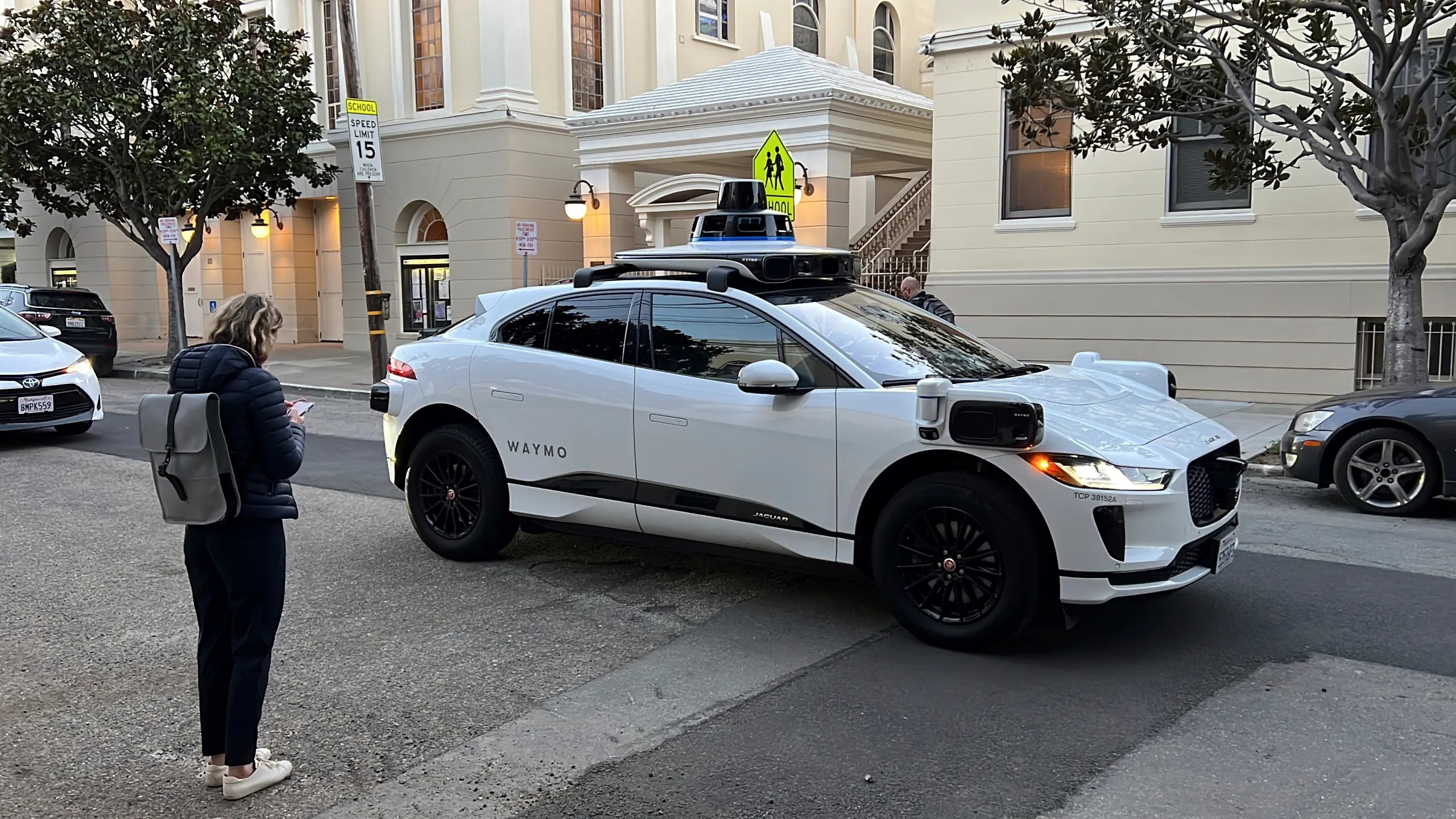
The slow-burn robotaxi race that started more than a decade ago has turned into a full-scale sprint, and on Friday, Waymo took another decisive step ahead of the pack.
The Alphabet-owned autonomous driving company announced that it is now “officially authorized to drive fully autonomously across more of the Golden State,” a regulatory win that deepens its lead in a U.S. field crowded with hype but short on real driverless deployment.
Waymo already runs commercial autonomous operations in San Francisco, Silicon Valley, and Los Angeles, and it operates in several cities outside California, including Atlanta, Austin, and Phoenix. But new maps published by the California Department of Motor Vehicles show that the company’s accessible testing and deployment territory has expanded dramatically in both Northern and Southern California.
Register for Tekedia Mini-MBA edition 20 (June 8 – Sept 5, 2026).
Register for Tekedia AI in Business Masterclass.
Join Tekedia Capital Syndicate and co-invest in great global startups.
Register for Tekedia AI Lab.
In the Bay Area, Waymo’s newly approved zone now covers most of the East Bay and North Bay — including Napa and the wider Wine Country — and stretches all the way to Sacramento. In Southern California, the company’s territory now reaches from Santa Clarita, north of Los Angeles, down to San Diego, significantly enlarging the corridor where its autonomous vehicles can operate without a human driver behind the wheel.
The approval allows full driverless testing and deployment, though the San Francisco Chronicle notes that Waymo still needs additional state authorization before carrying paying passengers in some of these new areas.
Even so, Waymo is already looking ahead. The company said, “Next stop: welcoming riders in San Diego in mid-2026!” That marks an adjustment from its earlier plan to begin service in San Diego next year, part of a rollout list that also included Dallas, Denver, Detroit, Houston, Las Vegas, Miami, Nashville, Orlando, San Antonio, Seattle, and Washington, D.C.

The announcement is just the latest in a flood of expansion news. Over the past two weeks, Waymo has revealed moves into Minneapolis, New Orleans, and Tampa; confirmed that it is removing safety drivers in preparation for a commercial launch in Miami; and said it will begin offering robotaxi rides that use freeways in Los Angeles, San Francisco, and Phoenix.
This pace is a direct result of a long U.S. robotaxi race that began in earnest in the early 2010s, when Google’s self-driving project — now Waymo — became the first major effort to pursue a fully autonomous, driverless ride-hailing future. Since then, competitors have entered the field, including Cruise, Zoox, Motional, and Tesla. But the companies have taken sharply different paths and achieved very different milestones.
Waymo has been the most consistent U.S. operator to secure permits for fully driverless commercial services, particularly in Arizona and California. It has deployed vehicles without human safety drivers in multiple cities and has carried paying passengers under approved programs. Cruise briefly reached similar milestones before a major safety incident in San Francisco triggered a suspension of its driverless permits in California and a significant pullback in operations.

Tesla, meanwhile, has pursued another model built around its advanced driver-assistance system, FSD, which still requires a human driver to remain attentive and ready to take control. Tesla does not operate a driverless robotaxi service, and regulators have not approved its vehicles for unsupervised autonomous operation. The company has announced plans to introduce a dedicated robotaxi vehicle, but it has not launched driverless ride-hailing operations of its own.
Waymo’s growing map — now including wine valleys, commuter belts, dense urban corridors, and the long stretch toward the U.S.–Mexico border — reflects how far it has moved ahead in the operational race. Instead of relying on supervised autonomy or limited pilot zones, it has pursued broad state-approved territories where its vehicles can operate without a human in the driver’s seat.
Its expansion has become a recurring topic on the Equity podcast. On the latest episode, co-host Sean O’Kane pointed out that as Waymo gains more unfettered access across the Bay Area, riders may begin spending longer periods in the cars, leading to new and unpredictable behavior inside the vehicles — something the company will have to manage as it grows.
The new California approval for Waymo is believed to represent a shift from operating isolated pockets of robotaxi service to building a connected network of regions that could eventually function as a single driverless ecosystem. With its mid-2026 San Diego target now on the calendar, the company appears ready to test how large and complex a driverless service can become.