

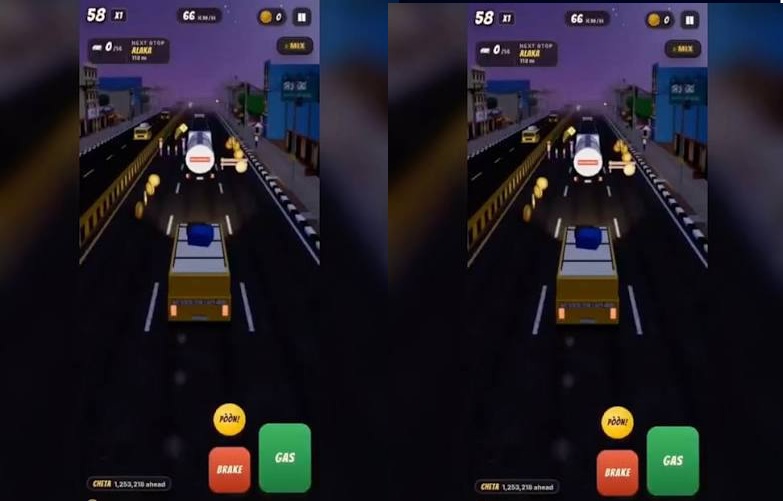
Nigerian Twitter has found a new way to turn the internet into a playground: racing through Lagos. What started with a web-based Lagos racing game created by a game developer has quickly grown into something bigger.
One game appeared, Nigerians noticed, and before long, a small ecosystem of Lagos-themed racing games began appearing across social media. The result is a uniquely Nigerian internet trend where people are not simply watching content—they are actively playing it.
The appeal is easy to understand. Lagos is already one of the most visually recognizable and chaotic cities in Africa. Its streets are crowded, its traffic is legendary, and its daily movement provides endless material for storytelling.
Register for the next Tekedia Mini-MBA.
Register for Tekedia AI in Business Masterclass.
Join Tekedia Capital Syndicate and co-invest in great global startups.
Turning that environment into a racing game transforms familiar experiences into something humorous, competitive and interactive. Instead of racing through fictional cities that could exist anywhere, players are navigating digital versions of places that feel recognizable.
The streets, vehicles and atmosphere can evoke the everyday experience of moving around Lagos, creating a stronger connection between the player and the game.
Lagos Run has been among the games attracting attention, particularly because it can be played directly through the web. That accessibility matters. Players do not necessarily need an expensive gaming console, a powerful computer or a complicated installation process.

A browser can be enough to enter the race. That lowers the barrier to participation and helps explain why these games can spread so quickly on social media. Someone can discover a game through a post, click through, play it, share their experience and challenge friends—all within minutes.
There is also an important cultural element behind the trend. Nigerians have a long history of turning everyday experiences into jokes, memes and online communities. A Lagos racing game takes that instinct one step further by making the city itself part of the entertainment.
The games are also a reminder that African developers do not always need to imitate global gaming franchises to attract attention. Local context can itself become a product.

Lagos has characters, landmarks, traffic patterns, cultural references and stories that can provide raw material for games designed specifically for people who understand the environment.
For developers, the sudden interest could represent something more significant than a temporary Twitter trend. It demonstrates how quickly a culturally relevant idea can generate engagement when it is easy to access and easy to share. It also shows the potential of browser-based gaming as a distribution channel.
Particularly in markets where mobile phones are far more common than traditional gaming hardware. For players, the economics are probably secondary. The immediate attraction is simple: it is fun.
There is something satisfying about seeing a familiar city transformed into a virtual racetrack and competing with friends over who can survive the streets, avoid obstacles and post the better score.
Nigeria’s latest internet craze may eventually disappear as quickly as it arrived. But the experiment is already revealing something important. When developers build around experiences people recognize, social media can become more than a place to discuss culture—it can become the distribution network for the culture itself.
For now, Nigerians are doing what they do best online: turning a simple idea into a movement, one race at a time.