

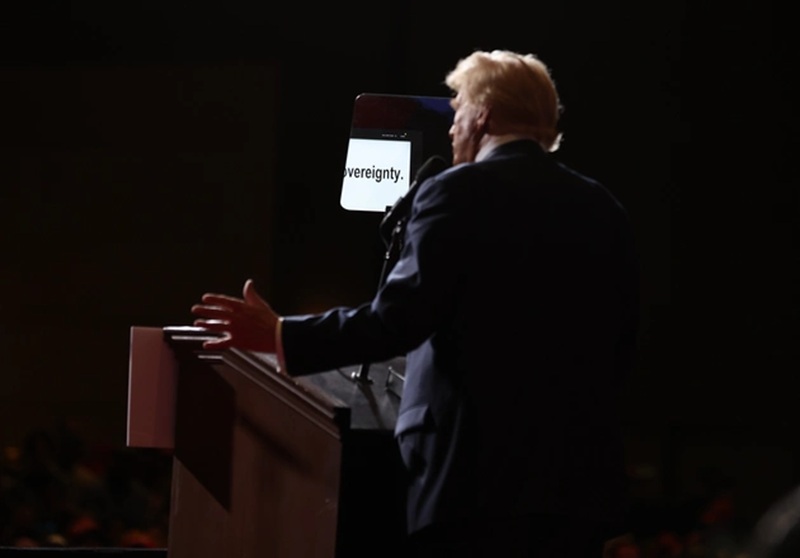
The decision to place a White House teleprompter operator on unpaid leave following reports that he allegedly earned more than $100,000 betting on President Donald Trump’s speeches has sparked serious questions about ethics, insider information, and the growing influence of political prediction markets.
At the center of the controversy is the possibility that someone with privileged access to presidential remarks may have used that information to profit from betting platforms. In modern political markets, traders increasingly wager on specific outcomes, including whether certain words or policy announcements will appear in speeches.
Whether executive actions will be announced, or how markets may react to presidential statements. Such platforms have transformed politics into a new frontier for speculative finance.
A teleprompter operator occupies a uniquely sensitive position within the White House communication structure. Such individuals often gain access to prepared remarks before they are publicly delivered.
Register for the next Tekedia Mini-MBA.
Register for Tekedia AI in Business Masterclass.
Join Tekedia Capital Syndicate and co-invest in great global startups.
If reports are accurate, this raises concerns that non-public information may have been exploited for financial gain. While political prediction markets operate in a legal gray area in many jurisdictions, the use of confidential government information for personal enrichment presents profound ethical and potentially legal implications.
The incident also highlights the broader challenge governments face in the age of information markets. Financial markets have long been regulated to prevent insider trading, where individuals use material non-public information to profit from stocks or securities. However, prediction markets tied to politics and public events remain relatively new, and regulations have struggled to keep pace with their rapid expansion.
In recent years, platforms allowing bets on elections, legislative outcomes, and geopolitical developments have experienced explosive growth. Traders often seek every possible informational advantage, leading to concerns that government employees, journalists, consultants, and campaign staff may become targets for market participants seeking early intelligence.

The alleged actions of the White House employee demonstrate how easily access to sensitive information could potentially be monetized. Beyond legal considerations, the situation also poses significant reputational risks for the White House.
Public trust in government institutions depends heavily on the perception that officials and staff act in the national interest rather than personal financial gain. Even allegations of impropriety can undermine confidence in governmental processes and fuel broader skepticism regarding political transparency.
The decision to place the employee on unpaid leave suggests that authorities are taking the matter seriously while investigations proceed. Such administrative actions are often intended to preserve institutional integrity and prevent any further conflicts of interest during inquiries. Depending on the findings, the case could lead to disciplinary action, regulatory reforms, or renewed discussions about ethics guidelines for government personnel.

This controversy may become a defining example in debates surrounding the intersection of politics, technology, and financial speculation. Prediction markets can provide valuable insights into public expectations and aggregate information efficiently. However, they also create incentives for individuals with privileged access to exploit information asymmetries.
As political betting markets continue to expand globally, governments may be compelled to establish clearer rules governing participation by public officials and employees. Transparency requirements, stricter disclosure standards, and explicit prohibitions on trading using confidential information may become increasingly necessary.
The case serves as a reminder that information itself has become a valuable financial asset. In an era where a single speech can move markets and influence billions of dollars in economic activity, safeguarding privileged information is more important than ever.
The outcome of this investigation may not only determine the future of one White House employee but could also shape how governments address the growing convergence of politics, prediction markets, and financial ethics.