

White House AI and crypto adviser David Sacks has come out in full defense of the Biden administration’s decision to allow Nvidia to resume sales of its H20 AI chips to China, arguing that the move is a tactical step to stop China’s tech giant Huawei from gaining unchallenged dominance in the world’s second-largest economy.
In an interview with Bloomberg on Tuesday, Sacks said the government’s shift in position “makes a lot of sense” given Huawei’s fast-rising capabilities.
“There is a compelling argument here that you just don’t want to hand Huawei the entire Chinese market when Nvidia is capable of competing for a big slice of it with a deprecated, less capable chip,” he said.
Register for Tekedia Mini-MBA edition 20 (June 8 – Sept 5, 2026).
Register for Tekedia AI in Business Masterclass.
Join Tekedia Capital Syndicate and co-invest in great global startups.
Register for Tekedia AI Lab.
Nvidia’s H20 chip — designed specifically to comply with earlier U.S. restrictions — had its sales halted in April after the U.S. government said licenses would be required for any such transactions. But in a blog post on July 14, Nvidia confirmed that the U.S. had now given assurances that licenses will be granted and that the company hopes to begin deliveries soon.
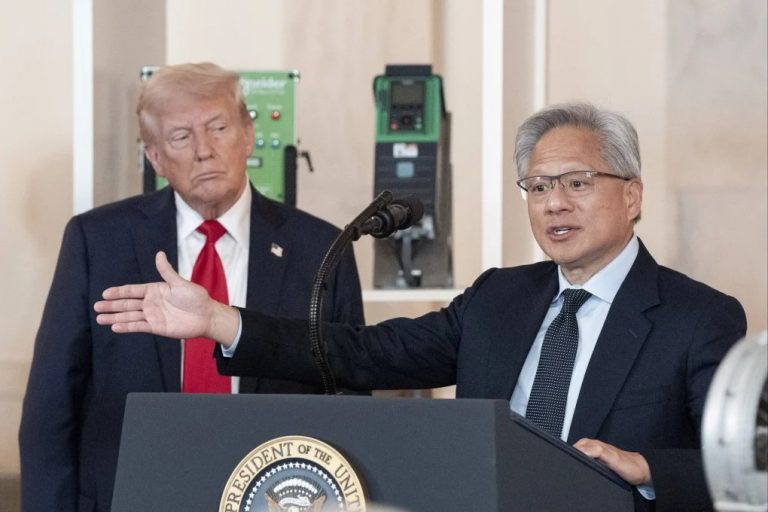
The announcement followed a private meeting between Nvidia CEO Jensen Huang and President Donald Trump last week, where Nvidia reaffirmed its support for the administration’s goals of job creation, onshoring, and AI leadership. Commerce Secretary Howard Lutnick later said the green light to resume H20 sales was part of a wider negotiation involving rare-earth deals with China. Lutnick emphasized that the administration wants Chinese developers to remain tied to American technology by giving them “the fourth best” chip, not the most advanced models like the H100 or H200.
“We want to keep having the Chinese use the American technology stack, because they still rely upon it,” Lutnick said. “You want to sell the Chinese enough that their developers get addicted to the American technology stack.”

But Nvidia’s CEO, Jensen Huang, has not hidden his frustration with the export curbs. He has repeatedly warned that Washington’s clampdown is self-defeating and risks backfiring — both on U.S. companies and on America’s long-term tech leadership.
Speaking the Financial Times in March, Huang said that the restrictions hurt Nvidia’s bottom line, cost it significant market share, and undermine America’s chip supremacy. added that Huawei’s “presence in AI is growing every single year” and Nvidia “can’t assume they are not going to be a factor.”
He further called the U.S. strategy “poorly executed,” noting that restricting chip access was emboldening Beijing’s push for semiconductor independence. Huang added that Huawei, in particular, had become “the single most formidable technology company” in China.

“Their presence in AI is growing every single year, and we can’t assume they are not going to be a factor. They have conquered every market they’ve engaged,” Huang said.
Despite sweeping U.S. sanctions intended to hobble China’s access to advanced semiconductors, Huawei has emerged more resilient than expected. With massive support from the Chinese government — including funding, partnerships, and intellectual property protections — the tech giant has defied Western expectations and built cutting-edge chips that power everything from smartphones to AI data centers.
In 2023, Huawei shocked the industry by unveiling a 7-nanometer chip inside its Mate 60 Pro smartphone — a feat once thought to be impossible under U.S. restrictions. The move drew global attention and exposed gaps in the effectiveness of U.S. export bans.
U.S. intelligence officials have since warned that China’s semiconductor ambitions are gaining traction faster than predicted, partly because companies like Huawei are using sanctions as a rallying cry for tech self-reliance.
“China is maybe one and a half to two years behind us in chip design,” Sacks admitted, “but Huawei is moving fast to catch up. Even before they fully catch up, I think you will see them exporting their chips for the global market.”
Nvidia’s ability to sell to China is not just about quarterly earnings. China represents one of the largest markets for AI chips globally, with data centers, cloud computing, surveillance, and military sectors all demanding high-powered GPUs. U.S. companies dominate this segment, but with restrictions in place, they are now at risk of being squeezed out.
Without access to Chinese buyers, American chipmakers risk losing out to domestic rivals like Huawei, SMIC, and new players backed by Beijing’s multibillion-dollar semiconductor funds.
Dan Ives of Wedbush Securities echoed that view in a note following the H20 decision. “Nvidia resuming H20 chip sales in China is a gamechanger in our view. Trump knows there is one chip in the world fueling the AI revolution, and it’s Nvidia,” Ives wrote. “Giving the green light to Jensen/Nvidia is all part of negotiations with China. Nvidia gets $30 billion+ annual biz back.”
Following the news, Nvidia’s stock surged by over 5% on Tuesday, closing at a record high of $170.70. Investors interpreted the decision as a strategic win for Nvidia, ensuring it can reclaim lost ground in China’s rapidly growing AI sector while staying within the bounds of national security.
The move reflects Washington’s delicate balancing act — protecting U.S. innovation and security interests without triggering a full-scale decoupling that could alienate key markets and accelerate China’s tech independence.
“We’re not selling our latest greatest chips to China, but we can deprive Huawei of basically having this giant market share in China that they can then use to scale up and compete with us globally,” Sacks told Ludlow.