

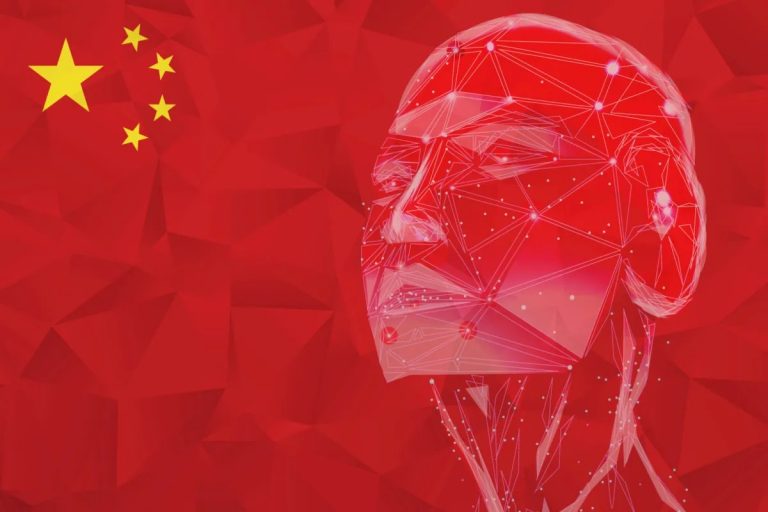
China’s consideration of restricting its most advanced artificial intelligence models from being accessed overseas marks another significant development in the global AI race.
As governments increasingly view artificial intelligence as both an economic engine and a strategic national asset, policies surrounding the export and international availability of cutting-edge AI technologies are becoming more restrictive.
If implemented, such measures could reshape international AI competition, affect multinational businesses, and deepen the technological divide between major global powers.
Reports suggest that Chinese policymakers are evaluating new controls that would limit foreign users’ access to the country’s highest-performing AI models.
Register for the next Tekedia Mini-MBA.
Register for Tekedia AI in Business Masterclass.
Join Tekedia Capital Syndicate and co-invest in great global startups.
The proposal reflects growing concerns that advanced AI systems possess strategic importance comparable to critical technologies such as semiconductors, quantum computing, and aerospace innovations.
By keeping frontier AI capabilities within national borders, China aims to protect intellectual property, strengthen domestic competitiveness, and reduce potential security risks.
The move comes amid an increasingly tense technological rivalry between China and the United States. In recent years, Washington has introduced a series of export controls targeting advanced AI chips, semiconductor manufacturing equipment, and high-performance computing technologies destined for China.
These restrictions have prompted Chinese companies and regulators to accelerate efforts toward technological self-sufficiency while also considering reciprocal measures to safeguard domestic innovations.

Restricting overseas access to leading Chinese AI models could significantly impact global developers and enterprises that have begun experimenting with Chinese large language models.
Many organizations seek alternatives to Western AI providers due to pricing, language capabilities, customization options, or regulatory considerations. Reduced international availability would limit those choices and could encourage businesses to rely more heavily on domestic or regional AI providers.
Chinese AI firms have made remarkable progress over the past few years despite hardware constraints and international sanctions.
Companies have released increasingly capable language models that compete with many global offerings in areas such as multilingual understanding, software development assistance, reasoning tasks, and enterprise applications.

Limiting international access could allow these companies to focus resources on serving domestic industries while protecting proprietary research from foreign competitors.
Tighter restrictions may also carry economic costs. International customers represent an important source of revenue, user feedback, and real-world deployment experience. Global adoption helps AI companies improve their products through diverse datasets and practical applications.
Restricting access could slow international expansion and reduce opportunities for Chinese firms to establish themselves as major global AI platforms. For multinational corporations, the policy could introduce additional complexity into AI procurement strategies.
Businesses operating across multiple jurisdictions may need to maintain different AI systems depending on regional regulations, creating higher compliance costs and operational challenges. The fragmentation of AI ecosystems may become increasingly pronounced as governments establish separate rules governing model access, data governance, and cloud infrastructure.
The broader trend reflects the growing recognition that AI is no longer viewed solely as a commercial technology.
Instead, governments increasingly regard frontier AI as critical infrastructure with implications for national security, economic resilience, cybersecurity, and geopolitical influence. Similar debates are occurring worldwide as policymakers attempt to balance innovation, competitiveness, and security.
China’s consideration of restricting access to its top AI models illustrates how artificial intelligence is becoming a central element of global strategic competition. Whether or not the proposal is fully implemented, it signals that access to advanced AI capabilities may increasingly be determined by national policy rather than open global markets.
As countries continue to develop their own AI ecosystems, the future of artificial intelligence may be defined not only by technological breakthroughs but also by the regulatory boundaries that shape who can access them and under what conditions.