

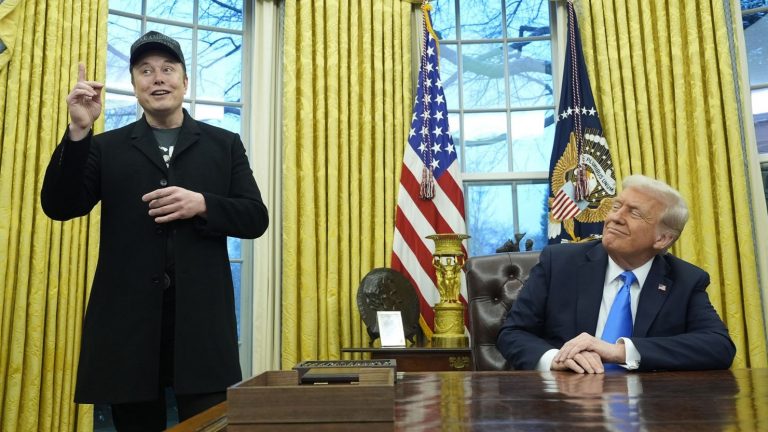
Elon Musk has publicly pushed back against President Donald Trump’s tariff policies, arguing they harm businesses and consumers. Musk, a key figure in Trump’s orbit and head of the Department of Government Efficiency, has called for a “zero-tariff situation,” particularly between the U.S. and Europe, emphasizing free trade as a driver of economic growth. He’s expressed concerns that tariffs, like the 10% baseline on imports and higher duties on countries like China, inflate costs for companies like Tesla, which rely on global supply chains. For example, Tesla imports components from China, and retaliatory tariffs could hit its sales in key markets.
Musk even posted a video of economist Milton Friedman praising free trade to underline his point. On the flip side, Trump’s tariffs aim to boost U.S. manufacturing by making foreign goods pricier, potentially creating jobs and reducing trade deficits. Supporters argue this protects American industries from cheap imports and counters unfair trade practices by countries like China. However, critics, including Musk, warn of higher consumer prices, supply chain disruptions, and risks of a trade war that could tank markets—global stocks already took a hit after Trump’s tariff announcements.
Musk’s stance isn’t just about Tesla’s bottom line; it reflects a broader clash between free-market ideals and protectionism. Despite his influence, reports suggest Trump hasn’t budged, doubling down with threats of 50% tariffs on Chinese imports. The tension highlights a rare rift between the two, though it’s unclear if Musk’s lobbying will shift policy. Tariffs are a gamble—potentially revitalizing U.S. industry or triggering economic chaos. Time will tell which side’s right.
Register for Tekedia Mini-MBA edition 20 (June 8 – Sept 5, 2026).
Register for Tekedia AI in Business Masterclass.
Join Tekedia Capital Syndicate and co-invest in great global startups.
Register for Tekedia AI Lab.
Business interests (Tesla and Supply Chains), Tesla relies heavily on a global supply chain, importing components like batteries and electronics from China and elsewhere. Tariffs—such as Trump’s proposed 10% on all imports and 50% on Chinese goods—raise Tesla’s production costs. Higher costs could force price hikes, making Tesla vehicles less competitive, especially in markets like Europe or China, where retaliatory tariffs might hit back. Musk has said tariffs “hurt American companies more than they help,” pointing to this direct impact.
Musk aligns with free-trade advocates like Milton Friedman, whom he’s quoted approvingly. He believes tariffs distort markets, stifle innovation, and slow economic growth. His vision—whether for Tesla, SpaceX, or xAI—thrives on unrestricted global exchange, not protectionist barriers. He’s called for a “zero-tariff situation” between the U.S. and Europe, arguing it would boost prosperity on both sides. Musk warns that tariffs risk sparking trade wars, as seen when China retaliated to past U.S. tariffs with duties on American goods. This could disrupt Tesla’s massive market in China (over 50% of its global deliveries) and destabilize the broader economy—something Musk, as a Trump advisor, likely wants to avoid.
Reduced tariff threats could calm markets, avoiding the 2-3% stock drops seen after Trump’s tariff talks (e.g., November 2024). Strengthens U.S.-Europe ties and aligns with Musk’s vision of frictionless commerce. Industries like steel or automotive parts, which tariffs aim to protect, might lose ground to cheaper imports. Trump’s base, favoring protectionism, could see Musk as undermining “America First” goals, straining their alliance. Higher costs for imports could revive U.S. manufacturing, as seen with steel jobs under earlier tariffs (though gains were modest, ~1,000 jobs).

Less reliance on foreign goods might shrink the $800 billion U.S. trade deficit (2023 figures). High tariffs could force concessions on trade practices like IP theft. Everyday goods—electronics, clothing, cars—could rise 5-10%, per economic models, hitting lower-income households hardest. Tesla’s costs could jump $1-2 billion annually (analyst estimates), squeezing margins or forcing layoffs. China’s past retaliation (e.g., 25% tariffs on U.S. autos) could escalate, crashing exports and rattling global markets further (e.g., Dow fell 800 points after tariff news in late 2024).
Musk’s “why” is rooted in Tesla’s bottom line and a belief in open markets, but the impacts hinge on execution. Tariffs historically have mixed results—Reagan’s 1980s tariffs saved some jobs but raised prices; Trump’s 2018 tariffs added $80 billion in taxes but didn’t fully reshape trade. If Musk sways Trump, it’s a win for globalists; if not, protectionism might spark short-term gains but long-term chaos. Either way, the U.S. economy—and Musk’s empire—will feel the ripple effects by mid-2025.