

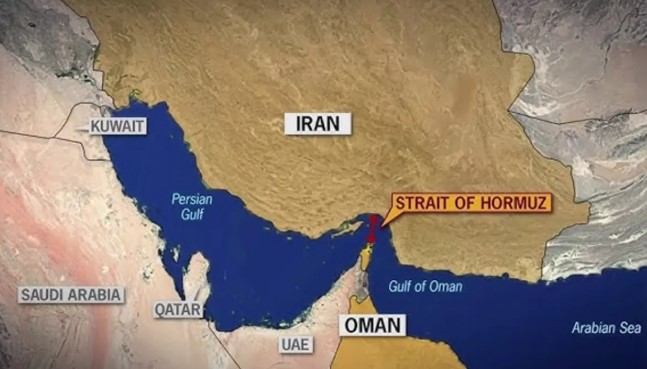
In modern geopolitics, geography often determines the trajectory of conflict as much as military capability. Few locations demonstrate this reality more clearly than the Strait of Hormuz. As tensions surrounding Iran intensify, this narrow maritime passage has emerged not simply as a shipping route but as the central strategic point that may determine whether the crisis escalates or moves toward de-escalation.
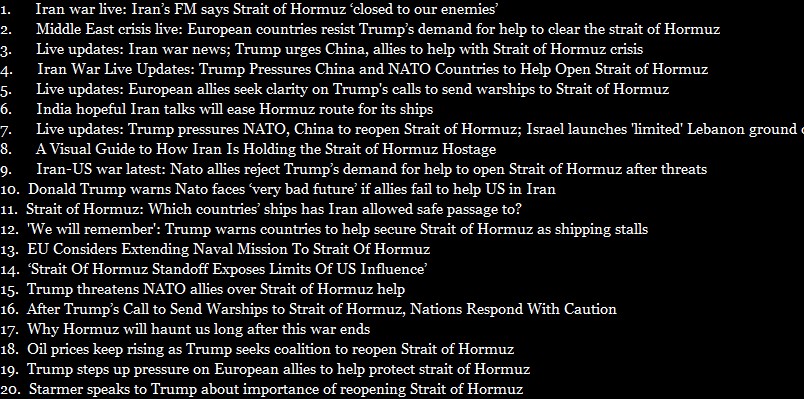
This article draws analytical insights from twenty international news headlines that focus on the unfolding crisis. The headlines originate from different media outlets and emphasize various aspects of the situation, including diplomacy, naval deployments, oil markets, and alliance politics. When examined together, however, they reveal a consistent pattern. The Strait of Hormuz has become the pivotal lever in the broader geopolitical confrontation.
The World’s Most Powerful Maritime Chokepoint
The Strait of Hormuz occupies a unique place in the global economic system. It connects the Persian Gulf to international waters and carries roughly one fifth of the world’s oil supply. Several major energy exporters rely heavily on this route. These include Saudi Arabia, Iraq, Kuwait, Qatar, and the United Arab Emirates. A disruption to shipping through this narrow passage quickly affects global energy prices and supply chains.
Register for Tekedia Mini-MBA edition 20 (June 8 – Sept 5, 2026).
Register for Tekedia AI in Business Masterclass.
Join Tekedia Capital Syndicate and co-invest in great global startups.
Register for Tekedia AI Lab.
For this reason, the Strait has become the focal point of strategic competition in the current crisis. Control over access to this waterway gives Iran the ability to influence events far beyond its immediate geographic environment. The Strait therefore functions not only as a physical passage but also as a strategic instrument.
Asymmetric Strategy and Strategic Geography
Iran’s posture around the Strait reflects an asymmetric strategic calculation. Tehran understands that it cannot compete with the conventional military power of the United States in a direct confrontation. Instead, it leverages geography to amplify its influence.
The ability to threaten shipping lanes in Hormuz allows Iran to impose costs on the global economy. Oil prices react quickly to uncertainty in the region. Shipping insurance premiums rise, and maritime traffic becomes more cautious. These economic consequences extend the impact of the conflict well beyond the Middle East. In this way, the Strait transforms a regional military standoff into a global strategic concern. Geography becomes a force multiplier for a state seeking to counterbalance stronger adversaries.

The Alliance Stress Test
The dataset of twenty headlines also highlights another important dynamic. The crisis has become a test of international alliances and collective security arrangements.
The United States, led by Donald Trump, has called for greater support from partners within NATO and from other maritime powers to ensure the security of shipping through the Strait. Yet the responses from several European governments have been measured and cautious. This hesitation reflects deeper political calculations. Many European states remain wary of becoming deeply involved in another conflict in the Middle East. Their reluctance also illustrates evolving debates within the transatlantic alliance about burden sharing, risk tolerance, and strategic priorities.
The Strait of Hormuz, therefore, serves not only as a maritime chokepoint but also as a political stress point for Western unity.

A Multipolar Strategic Arena
The significance of Hormuz extends far beyond the immediate parties to the conflict. Major energy importers in Asia are closely watching developments in the region because their economic stability depends on uninterrupted access to Gulf oil supplies.
Among these actors is China, which has become one of the largest consumers of Middle Eastern energy resources. Disruptions in the Strait could have significant consequences for its industrial production and energy security. Similarly, India relies heavily on oil shipments that pass through the same maritime corridor. For both countries, maintaining stability in Hormuz is a strategic priority that transcends regional politics.
This wider involvement illustrates how the Strait has evolved into a multipolar strategic arena where global economic interests intersect with regional security concerns.
Selective Pressure Instead of Total Closure
Another important feature of the current crisis is the possibility of selective restrictions rather than a complete shutdown of maritime traffic. By allowing certain ships to pass while restricting others, Iran could maintain pressure without provoking an immediate and overwhelming military response. This type of calibrated escalation allows Tehran to preserve leverage while keeping diplomatic options open.
Such a strategy transforms the Strait from a purely military battleground into a negotiation instrument. It creates opportunities for political bargaining while sustaining strategic pressure.
Economic Shockwaves Across the Globe
The global economy remains highly sensitive to developments in the Strait of Hormuz. Even limited disruptions or threats can push oil prices higher and increase the cost of maritime transport. Energy importing countries may experience inflationary pressures, while financial markets react to the uncertainty surrounding supply stability. These economic shockwaves demonstrate how a geographically small corridor can exert enormous influence over global economic stability.
In this context, the Strait functions as a transmission point through which geopolitical tensions translate into worldwide economic consequences.
The Strategic Switch of the Conflict
Emerged insights indicate that the Strait of Hormuz has become the strategic switch of the conflict. If the waterway were to close completely or if naval confrontations intensified within its narrow lanes, the crisis could escalate rapidly and draw in additional regional and global actors. On the other hand, diplomatic arrangements that guarantee safe passage for commercial shipping could significantly reduce tensions without requiring decisive military victory by either side.
The future trajectory of the conflict therefore hinges on what happens within this narrow maritime corridor. As long as global energy flows depend on it, the Strait of Hormuz will remain one of the most consequential pieces of strategic geography in the world.