

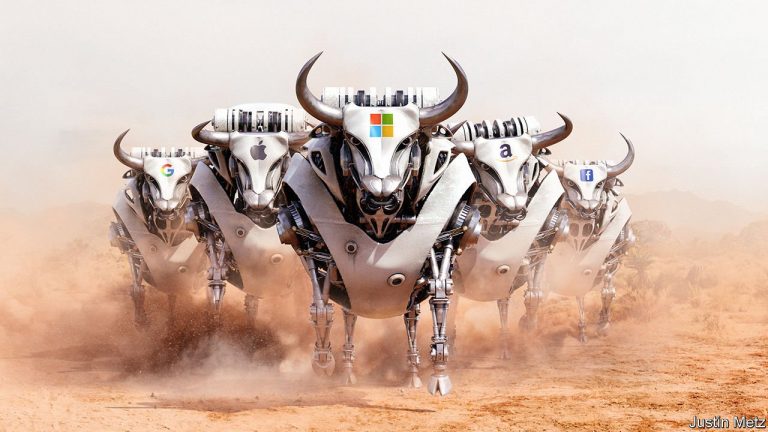
The idea of buying the “Magnificent Seven” as a single artificial intelligence trade is becoming increasingly difficult to justify, according to Plexo Capital founder Lo Toney.
While the seven technology giants are often grouped together as the primary beneficiaries of the AI boom, their business models, exposure to AI infrastructure and ability to generate returns from massive investments are increasingly different.
At the center of Toney’s argument is a simple dividing line: which companies control the infrastructure, and which companies can actually turn that infrastructure into sustainable profits.
Register for the next Tekedia Mini-MBA.
Register for Tekedia AI in Business Masterclass.
Join Tekedia Capital Syndicate and co-invest in great global startups.
The distinction matters because the AI revolution requires unprecedented levels of capital spending. Data centers, advanced chips, networking equipment and energy infrastructure require billions of dollars before companies can determine whether the resulting AI services will generate adequate returns.
Google, Microsoft and Amazon are among the companies making enormous investments in data centers and AI infrastructure.
These investments could strengthen their competitive positions, but they also create significant financial pressure.
Their challenge is not simply building AI capacity; it is demonstrating that the revenue generated from cloud computing, AI products and digital services can justify the enormous capital expenditures required to support them.

Nvidia occupies a different position in this equation. Rather than primarily financing the infrastructure needed to develop AI, Nvidia supplies the critical computing hardware that many of the world’s largest technology companies need.
Its customers are spending heavily on data centers and AI models, while Nvidia collects revenue from the demand for its GPUs and related technology. That distinction gives Nvidia an important position in the AI value chain.
If companies continue competing to build increasingly powerful AI systems, demand for high-performance computing could remain strong. Nvidia is not completely insulated from the broader AI investment cycle.

If customers eventually reduce capital expenditures because AI returns disappoint, demand for its products could also weaken. Meta and Apple represent another category. Both companies can use AI to reinforce businesses that already have established revenue engines.
Meta can integrate AI into advertising, recommendation systems and consumer products, potentially improving the efficiency and value of its enormous digital ecosystem.
Apple, meanwhile, can use AI to make its hardware and software more useful while strengthening the attractiveness of its devices and services.
Tesla presents a different proposition again. Its AI strategy is closely connected to autonomous driving, robotics and physical products. That could create a massive opportunity if Tesla successfully commercializes these technologies.
Yet the path is more complicated because regulatory requirements, manufacturing economics and profitability remain important considerations. For Toney, Google stands out because it combines several advantages.
The company owns significant data-center infrastructure, develops its own custom AI chips and operates businesses capable of monetizing that infrastructure. Search, cloud computing, advertising and emerging AI products provide multiple potential channels through which Google’s AI investments can translate into revenue.
The broader lesson is that investors may need to stop treating the Magnificent Seven as a uniform AI basket. The companies occupy different positions across the AI economy, from semiconductor suppliers and infrastructure owners to advertising platforms, hardware manufacturers and autonomous-technology developers.
As AI spending grows, the key question may therefore shift from who is investing the most to who can capture the most value. Companies that control critical infrastructure or possess established mechanisms for monetizing AI could have an advantage over those still trying to prove that enormous AI investments can become profitable businesses.