

Congratulations to the Governor of Anambra State, Professor C.C. Soludo, the State House of Assembly, and the people of Anambra for the passing of the Igbo Apprenticeship System into law, which takes effect on September 10, 2025. This legislation aims to regulate, monitor, and enforce compliance with the world’s largest business incubation framework, popularly known as Igba Boi.
The new law introduces key requirements for apprentices, including the completion of junior secondary education and capping the apprenticeship period at seven years. This is a commendable effort by Governor Soludo and his team.
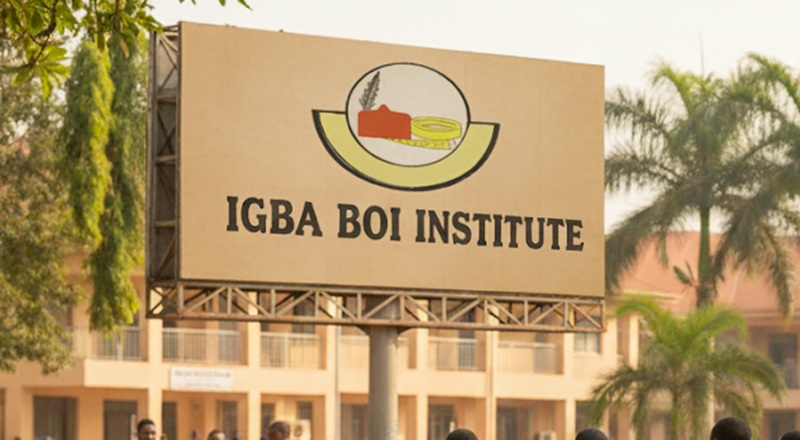
The Need for an “Igba Boi Institute”: The construct of this law now calls for the establishment of an Igba Boi Institute within a Nigerian university. We need to mirror institutions like the Confucius Institute (one exists in Nnamdi Azikiwe University, Awka), which serve as a platform for China to project its worldview. Nigeria and specifically the Igbo Nation need to export Igba Boi framework especially in this age where the world is experiencing wealth inequality.
Register for Tekedia Mini-MBA edition 20 (June 8 – Sept 5, 2026).
Register for Tekedia AI in Business Masterclass.
Join Tekedia Capital Syndicate and co-invest in great global startups.
Register for Tekedia AI Lab.
As I highlighted in the Harvard Business Review, Igba Boi is a form of stakeholder capitalism that the Igbo people have been practicing for centuries. The Ghanaian concept of “sankofa”—which means “go back and get it”—is a powerful reminder that Africa can advance by leveraging its own historical knowledge and practices.
Silicon Valley calls it an “accelerator”, we call it “Igba Boi”. London calls it “stakeholder capitalism”, we call it “Umunneona Economics”. Simply, the fundamentals of these systems have long existed within Africa and we must relearn to advance.
Comment on Feed
Comment 1: It’s a good thing that the Igba Boi has been formalized and given a legal backing, so settlement at the end of service is no longer as the spirit leads. Creating an institute across educational institutions will also help, to create actionable and portable frameworks and validate case studies that can be scalable and exportable. It’s lack of intellectual framework that makes human creations seem like mystics and divine ordinance.

There will also be need for special tribunal or arbitration to speedily handle disputes. The traditional open market system is due for innovation, it cannot continue to remain as though it’s immune to evolution. Creating a legal framework is just the starting point.
Documented wisdom will always outperform and outlive folklore and fairytale.
My Response to a comment: “very wrong nomenclature for this famed Igbo practice” – I am not sure about “Ô na-amû ahia” which is “he/she is learning a trade”. The fact is this: he is my “Nwa Boi” [contextually, a young person, usually male, helping in business] is not a new phrase in the Igbo Nation. And no one uses it in a derogatory way because even boys are happy to be called “nwa boi”. What you wrote is a long-form explanation of what is happening, but that is not how to describe it.

It is like saying “He is in a university to learn” instead of saying “University Student”. The origin of Nwa Boi and Igba Boi if you look deep into Igbo etymology could be traced well before 1929. So, the 1990 case is just an isolated issue. But everything was scaled after the war as “Onye aghara nwanne ya” [do not leave your brethren behind] was put into action.
When the federal government cripped the Igbos with so many policies after the war, freezing their bank accounts, etc, the Greatest Generation of Igbos made decisions: young men must leave homeland and look for opportunities outside the Igbo Nation since it was in ruins. But as soon as they find opportunities, they must return to pick their brethren. And parents lobbied uncles, brothers, etc to take their kids since nothing was there in the Southeast as everything was bombed and destroyed.
That spirit picked up and after Christmas, boys will say “I am going to be Nwa Boi to Mazi Uche”. By January, they’re gone. And as they did that, those Elders then said “Aku ruo ulo” [your wealth must reach home] which means even if you have found success in Kano, Lagos, etc bring some home as schools, clinics, etc are in ruins and no help is here. Check well there is that chieftaincy title “Ochi ri ozuo” [one who takes many people and train them] became iconic as those were men who raised many people]. There is nothing wrong with the “Igba Boi” phrase.
---
Connect via my
LinkedIn |
Facebook |
X |
TikTok |
Instagram |
YouTube