

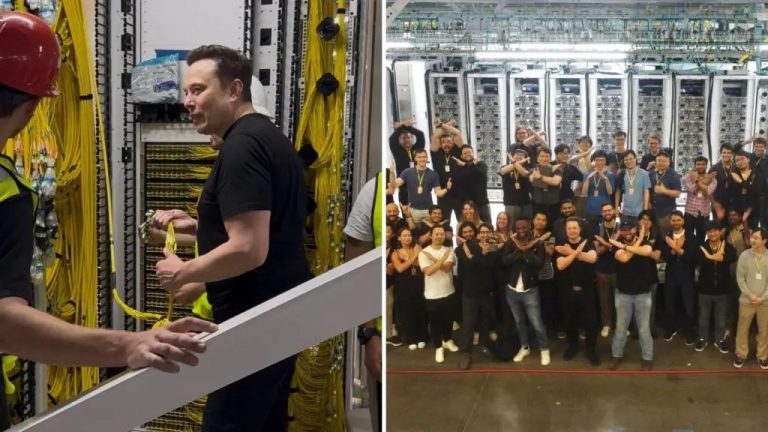
Elon Musk’s artificial intelligence company xAI and rocket manufacturer SpaceX are facing a new legal challenge that highlights the growing tensions between the rapid expansion of AI infrastructure and the communities hosting it.
A group of Mississippi residents has filed a proposed class-action lawsuit in federal court, alleging that a gas-fired power plant built to support xAI’s data center operations in Southaven has subjected thousands of people to relentless noise, vibrations, and declining property values.
The lawsuit, filed in Oxford, Mississippi, claims the companies created both a public nuisance and a private nuisance by failing to control what residents describe as “omnipresent and inescapable” noise generated by turbines powering nearby AI facilities.
Register for the next Tekedia Mini-MBA.
Register for Tekedia AI in Business Masterclass.
Join Tekedia Capital Syndicate and co-invest in great global startups.
Three residents brought the suit on behalf of an estimated class of more than 10,000 people.
“The artificial intelligence (AI) boom is wreaking havoc on communities across the United States” by subjecting thousands of residents to near-constant noise and vibrations, the complaint states.
The plaintiffs are seeking compensation for alleged emotional distress, loss of enjoyment of their properties, declining home values, and other damages. They are also asking the court to order the disgorgement of profits allegedly generated through the operations.

The case adds to mounting scrutiny over the physical footprint of the AI industry, which has increasingly become one of the most significant consumers of electricity in the United States.
AI’s hidden infrastructure challenge
Much of the public discussion around artificial intelligence has focused on breakthrough models, soaring valuations, and intense competition among technology giants. Less attention has been paid to the infrastructure required to power those systems.
Training and operating advanced AI models require enormous computing capacity, forcing companies to rapidly build data centers and secure dedicated power sources. xAI has emerged as one of the most aggressive investors in that race. Although CEO Elon Musk is floating a space-based infrastructure alternative that will completely eliminate environmental concerns, the idea is still theoretical.

According to the lawsuit, xAI invested more than $20 billion in the Southaven project, supported by Mississippi state officials, including Tate Reeves. The facility relies on gas-fired turbines that supply electricity to AI data centers in and around Southaven.
For local residents, however, the lawsuit argues that the economic benefits have come with high costs.
“Our homes are supposed to be a sanctuary for us against the world,” plaintiffs’ attorney Robert Wiygul said in a statement. “When they are invaded by noise 24 hours a day, it takes that fundamental peace of a good and decent life away from us.”
The allegations bolster a growing national debate over whether communities are bearing an unequal share of the burdens associated with the AI boom while receiving relatively few of the financial rewards.
Growing legal pressure on xAI
The latest complaint is not the only legal challenge facing xAI in Mississippi. In April, the NAACP filed a separate lawsuit accusing the company of violating federal environmental regulations through the operation of the power plant and associated data center infrastructure.
That case remains pending.
The dispute has drawn attention from Washington as well. Last month, the U.S. Department of Justice signaled that it may intervene in the NAACP lawsuit, stating in a court filing that the case raises broader legal and policy questions regarding the federal government’s role in supporting and regulating AI infrastructure.
The possibility of federal involvement highlights how AI development is increasingly intersecting with environmental, energy, and community-impact concerns.
The Southaven lawsuit arrives at a time when technology companies are spending hundreds of billions of dollars to build AI infrastructure. Industry leaders, including OpenAI, Anthropic, Google, and xAI, are racing to secure computing capacity, power supplies, and data center space to support increasingly powerful AI systems.
That buildout has sparked concerns among environmental groups, local governments, and residents over electricity demand, water usage, emissions, and quality-of-life impacts.
The Mississippi case could become an important test of how courts balance the economic importance of AI infrastructure against claims from communities that say they are paying the price for the industry’s rapid expansion.
The lawsuit presents another challenge for xAI, which is seeking to strengthen its position in the global AI race when investor attention increasingly focuses on the sustainability and social consequences of the industry’s unprecedented growth.