

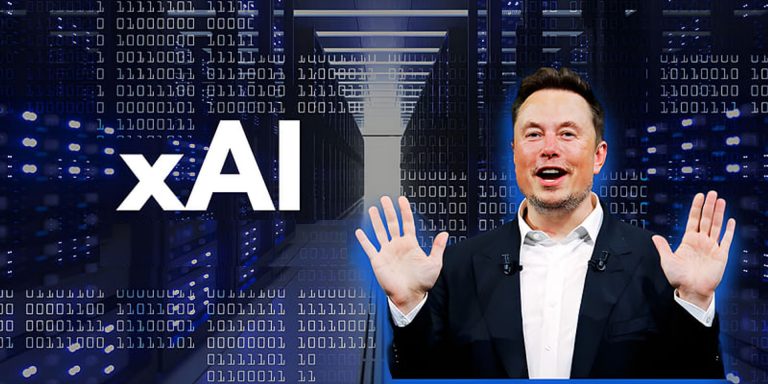
Elon Musk’s xAI is in advanced discussions to raise approximately $15 billion in equity funding at a $230 billion pre-money valuation, according to multiple reports from late November 2025.
This would more than double the company’s valuation from $113 billion, as disclosed during its all-stock merger with the social media platform X back in March 2025. The deal is expected to close by December 19, 2025, after an extension from an earlier deadline, giving investors more time to commit.
The round is primarily equity-based, with terms outlined to investors by Musk’s wealth manager, Jared Birchall. It’s positioned as xAI’s Series E, following prior raises including $6 billion in Series B (May 2024) and another $6 billion in Series C (December 2024), bringing total funding to over $37 billion if this closes.
Register for Tekedia Mini-MBA edition 20 (June 8 – Sept 5, 2026).
Register for Tekedia AI in Business Masterclass.
Join Tekedia Capital Syndicate and co-invest in great global startups.
Register for Tekedia AI Lab.
At $230 billion pre-money, the post-money valuation would hit around $245 billion—still below rivals like OpenAI valued at ~$500 billion after a $40 billion raise earlier in 2025 but a massive leap for a two-year-old startup founded in July 2023.
Appetite remains high due to xAI’s aggressive scaling in AI infrastructure. NVIDIA’s CEO, Jensen Huang, recently expressed regret over not investing more, calling it a “great future company.”
Strategic backers like SpaceX which contributed $2 billion in a prior round and potential Tesla involvement approved by shareholders in November 2025 add to the momentum.

However, Musk publicly dismissed an earlier CNBC report on a $15 billion raise at $200 billion as “false,” though subsequent reporting aligned with the higher $230 billion figure without rebuttal.
xAI’s surge reflects the broader AI “arms race,” where investors prioritize compute power, talent, and speed over immediate revenue. The funds are earmarked for. Expanding the Colossus supercomputer in Memphis, Tennessee—a 1-million-square-foot data center already partially funded by a $10 billion equity/debt mix in June 2025.
Advancing Grok, xAI’s AI chatbot, including the recent launch of Grokipedia an AI-powered Wikipedia alternative aimed at reducing “propaganda”. Securing GPUs amid shortages, with xAI burning cash on training runs to catch up to OpenAI’s ChatGPT and Anthropic’s Claude.
The idea for Grokipedia emerged in September 2025 during a conversation at the All-In podcast conference between Musk and David Sacks, a White House advisor on AI and cryptocurrency.

Sacks criticized Wikipedia’s biases, calling it a “constant war” maintained by left-wing activists, and suggested publishing Grok’s knowledge base as “Grokipedia.” Musk quickly endorsed the concept, announcing on X that xAI was building it as a “massive improvement over Wikipedia.”
Musk calls for xAI engineers to join the project, emphasizing its open-source nature and unlimited public use. Musk announces version 0.1 beta in two weeks, highlighting Grok’s process of analyzing sources like Wikipedia for truthfulness and rewriting entries accordingly.
Musk envisions renaming it “Encyclopedia Galactica” once mature, with copies preserved on the Moon and Mars. Version ~0.2 released with proposed edits beta.
Musk has repeatedly claimed Grokipedia will surpass Wikipedia “by several orders of magnitude in breadth, depth, and accuracy,” with version 1.0 promising to be “10X better.”
Powered by Grok, which analyzes and rewrites sources for biases, falsehoods, and omissions. It uses real-time data from X (formerly Twitter) and web searches for dynamic updates.
However, it drew sharp criticism for promoting right-wing views, conspiracy theories, and Musk’s perspectives—e.g., linking pornography to worsening the AIDS epidemic or suggesting social media fuels transgender identities.
Entries on figures like Parag Agrawal (ex-Twitter CEO) amplify Musk’s criticisms absent from Wikipedia. xAI’s response to media inquiries was an automated “Legacy Media Lies” message.
Wikipedia’s foundation stated it doesn’t interfere with such experiments, noting AI reliance on human-curated data. Experts like Ryan McGrady warn it exemplifies “controlling knowledge” for power.
It’s a bold, polarizing entry in the “encyclopedia wars,” prioritizing AI speed over crowdsourced consensus—but its long-term impact hinges on balancing ambition with verifiable accuracy. Critics argue the valuation is “vibes-based” rather than fundamentals-driven—Musk’s track record fuels FOMO.
Still, with AI projected to require $1 trillion in compute by 2027, backers see xAI as a high-upside bet on rapid iteration. This raise cements xAI as one of the world’s most valuable private companies, intensifying competition.
X Users hail it as “the most Elon move ever,” emphasizing xAI’s “anti-corporate” speed, while skeptics question if it’s sustainable hype. If it closes, expect accelerated Grok updates and deeper ties to Musk’s ecosystem like Tesla robotics. For now, it’s a bold signal: In AI, ambition prices like reality.